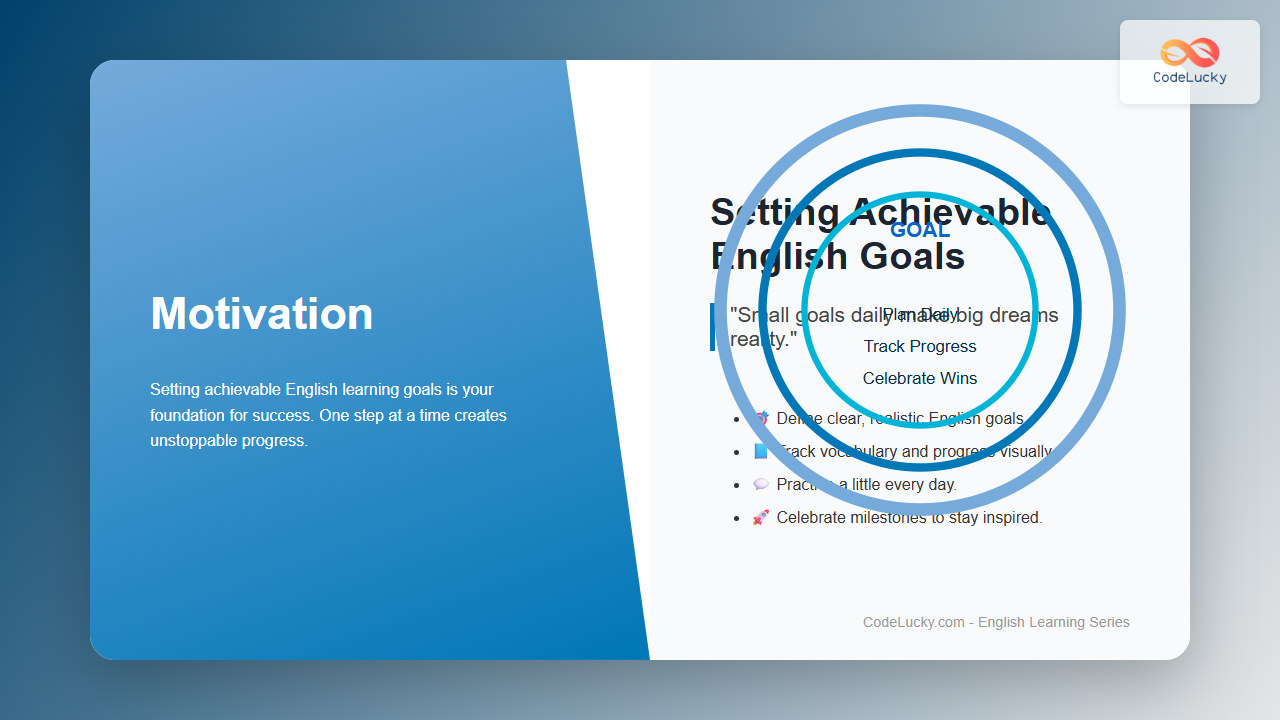
Motivation: Setting Achievable English Learning Goals is one of the first steps toward mastering the English language. Many learners start enthusiastically but lose focus after a few weeks. The key to long-term progress is not just effort—it’s strategic goal setting. In this article, we’ll explore how to define clear, realistic, and measurable English learning goals that keep you inspired.
Why Motivation Matters in English Learning
Motivation gives purpose to your effort. It helps you wake up on time for that morning vocabulary session or practice pronunciation instead of scrolling social media. Without motivation, even the best resources will sit unused.
There are two types of motivation:
- Intrinsic Motivation: You learn because you love the process—understanding new expressions or being able to read books in English.
- Extrinsic Motivation: You learn English to achieve an external goal—like getting a better job or passing an exam.
Ideally, both should work together. But the key to sustaining motivation is setting realistic goals that fit your pace and lifestyle.
How to Set Achievable English Learning Goals
Most learners make the mistake of setting broad goals such as “I want to be fluent in English.” While this is a great aspiration, it’s too vague to measure. Instead, use the SMART Goal Framework.

The SMART Method Explained
- Specific: Define your goal clearly. Example: “I want to learn 50 new English words related to travel.”
- Measurable: Track progress. Example: “I’ll learn 10 words every week.”
- Achievable: Ensure it’s realistic for your current skill level and schedule.
- Relevant: Align it with your broader goal—like improving communication skills for work.
- Time-bound: Set a completion date to create urgency.
Example: From Vague to Actionable Goal
Let’s transform a common vague goal into something SMART.
| Vague Goal | SMART Goal |
|---|---|
| “I want to improve my English.” | “I will improve my English by practicing speaking 15 minutes daily using online conversation platforms for one month.” |
| “I’ll read more English books.” | “I’ll read one English short story every week and summarize the main idea in my journal.” |
| “I’ll learn grammar.” | “I’ll finish one grammar topic per week and complete 10 exercises related to it.” |
Visualizing Progress for Consistency
Tracking progress visually helps reinforce motivation. Let’s look at an example progress diagram that you can adapt to your goals.

Each stage creates a small reward system for your mind. Checking boxes or coloring progress bars boosts dopamine levels, which builds positive reinforcement.
Interactive Practice Plan Example
Here’s how a 4-week interactive English learning plan could look. You can tweak it to match your current level.
- Week 1: Learn 10 new words related to your interests, record 2 self-introductions, and note grammar mistakes.
- Week 2: Watch a 5-minute English YouTube video daily and summarize it in 3 sentences.
- Week 3: Join one live English conversation class or practice with a partner.
- Week 4: Write a 150-word paragraph about your favorite movie, then self-correct using a grammar tool.

Common Mistakes to Avoid
- Setting goals without measurement criteria.
- Skipping review sessions after tasks are completed.
- Not celebrating small wins.
- Comparing your progress to others instead of your past self.
Remember, language learning is a marathon, not a sprint. Progress builds slowly but consistently if you focus on manageable goals.
Keeping Motivation High
To maintain long-term motivation:
- Reward yourself after completing each milestone. Even small treats matter.
- Reflect weekly on what worked and what didn’t.
- Visualize success—imagine yourself confidently using English in your dream scenario.
- Connect with community—join online English forums or social media challenges.

Conclusion
Motivation is not a fixed trait—it’s a skill that strengthens with consistent action. By setting achievable, measurable goals, you turn abstract ambitions into attainable results. Whether you’re building vocabulary, improving pronunciation, or preparing for an exam, structured goal-setting keeps your journey enjoyable and productive.
Now it’s your turn: set your first SMART English learning goal today, and watch how motivation naturally follows progress.