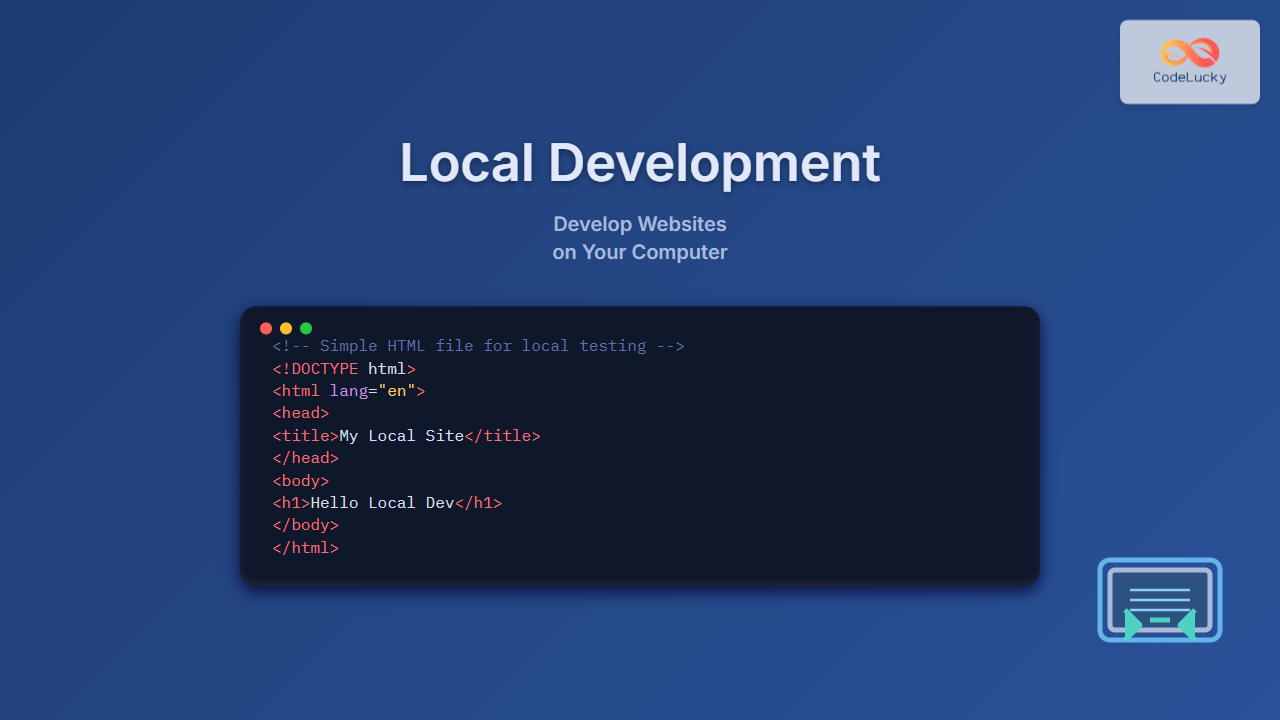
Building websites directly on your computer — local development — is an essential practice for modern web developers. It improves productivity, ensures safety, and allows rapid experimentation without risking a live environment. This comprehensive guide explains how to set up and optimize a local development environment for website projects, complete with practical examples, visual diagrams, and tips for smoother workflows.
What is Local Development?
Local development means creating, testing, and running your websites on your own computer rather than on a live web server. This approach provides a private sandbox environment where all changes are instantly reflected, allowing rapid coding and debugging. Websites develop faster because you don’t need to upload code for every change, and it offers a risk-free zone especially when working with databases or backend code.
Why Develop Websites Locally?
- Speed: Instant feedback loop without waiting for file uploads.
- Safety: Avoid breaking live sites; all errors stay local.
- Offline work: Develop anywhere without internet connectivity.
- Full control: Install and configure server software and extensions as needed.
- Collaboration: Share local code via version control before deploying.
Core Components of a Local Development Environment
At minimum, a local environment simulates a web server on your computer. This generally includes:
- Web server software: like Apache or Nginx
- Database: MySQL, MariaDB, or SQLite for storing data
- Programming language runtime: PHP, Node.js, Python, etc.
- Code editor or IDE: to write your code

Popular Tools for Local Development
Several tools bundle these components or offer them separately:
- XAMPP: Cross-platform Apache, MariaDB, PHP, and Perl package for quick setup.
- MAMP: Mac-focused Apache, MySQL, PHP stack, also available for Windows.
- Local by Flywheel: Beginner-friendly with GUI for WordPress local sites.
- Docker: Containerizes your entire stack for replicable environments.
- Node.js with Express: For JavaScript backend development with customizable servers.
Setting Up A Simple Local Website with Live Preview
This example uses VSCode editor and its Live Server extension, allowing instant preview of HTML and CSS changes without any complex server setup—ideal for frontend projects.
Step 1: Create Your Project Folder
Make a folder on your computer named my-local-site. Inside, create an index.html file:
<!DOCTYPE html>
<html lang="en">
<head>
  <meta charset="UTF-8">
  <meta name="viewport" content="width=device-width, initial-scale=1.0">
  <title>Local Development Example</title>
  <style>
    body { font-family: Arial, sans-serif; margin: 2rem; }
    h1 { color: #2c3e50; }
  </style>
</head>
<body>
  <h1>Welcome to Local Development!</h1>
  <p>This is a sample page served live from your computer.</p>
</body>
</html>
Step 2: Open VSCode and Install Live Server
Open the folder in VSCode. Go to Extensions and search for Live Server. Install and activate it.
Step 3: Launch Live Server
Right-click index.html and choose Open with Live Server. This opens your browser showing the simple page. Modify the HTML or CSS, save, and see instant updates in the browser.
Setting Up Full-Stack Local Development with XAMPP
XAMPP bundles Apache, MariaDB, and PHP. Perfect for dynamic sites like WordPress or custom PHP projects.
- Download and install XAMPP from the official website for your OS.
- Open the XAMPP control panel and start Apache and MySQL services.
- Place your site files in the
htdocsfolder inside XAMPP installation. - Visit
http://localhost/yourfoldernamein a browser to view your site. - Use PHPMyAdmin at
http://localhost/phpmyadminto manage databases.

Tips for Effective Local Development
- Use Version Control: Git tracks changes and integrates with platforms like GitHub.
- Isolate Environments: Use containers like Docker if you juggle multiple projects with different dependencies.
- Automate Tasks: Use build tools like Gulp, Webpack for stylesheet preprocessing, file watching, and live reloading.
- Test with Different Browsers: Even locally, test sites in multiple browsers to catch compatibility issues.
Interactive Example: Creating a Responsive HTML Page
Try this snippet that uses a simple responsive design with CSS media queries. Save this as index.html and open with Live Server to see how it adapts to different screen sizes when resizing the browser.
<!DOCTYPE html>
<html lang="en">
<head>
  <meta charset="UTF-8">
  <meta name="viewport" content="width=device-width, initial-scale=1">
  <title>Responsive Local Site</title>
  <style>
    body { font-family: Arial; padding: 2rem; }
    .container {
      background: #f0f0f0;
      padding: 1rem;
      max-width: 900px;
      margin: auto;
    }
    h2 { color: #34495e; }
    @media (max-width: 600px) {
      .container { background: #d1e7fd; }
    }
  </style>
</head>
<body>
  <div class="container">
    <h2>Resize the browser window</h2>
    <p>Background color changes for small screens.</p>
  </div>
</body>
</html>
Summary
Local development is a powerful strategy enabling faster, safer, and more flexible website creation. Using tools like Live Server, XAMPP, or Docker, developers can simulate production environments conveniently on their machines. This boosts productivity and confidence before sites go live. Experimenting locally also unlocks full control—from basic HTML/CSS tweaks to database-driven applications.
Start today by setting up a local server, writing your first page, and watching your changes happen in real time. With these foundations, web development becomes an enjoyable, efficient process optimized for growth and learning.