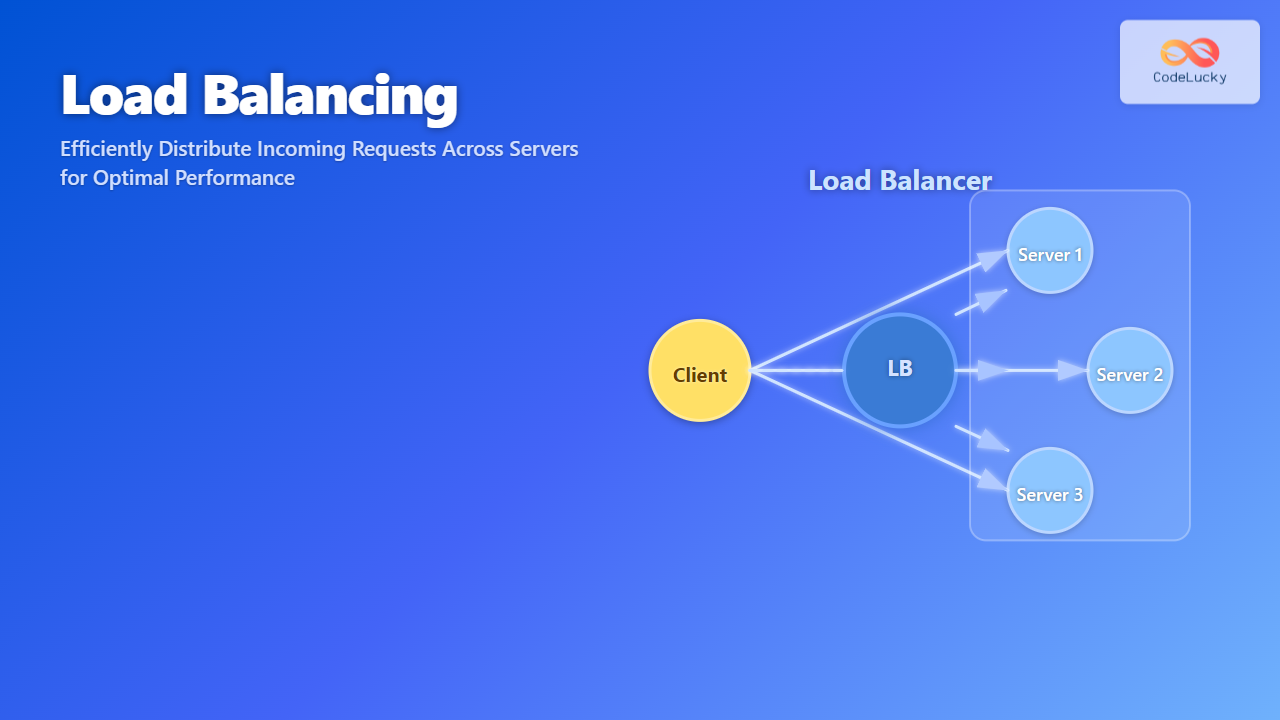
In modern distributed systems, efficiently managing the flow of incoming requests is critical to maintain performance, availability, and scalability. Load balancing is a fundamental algorithmic strategy used to distribute these requests evenly or optimally across a pool of servers or resources. This article explores the core concepts of load balancing, popular algorithms, practical examples, and visualizations to deepen understanding.
What is Load Balancing?
Load balancing is the process of distributing workload or client requests across multiple servers to ensure no single server is overwhelmed, improving system responsiveness and fault tolerance. It is widely used in web servers, cloud environments, and large-scale distributed applications.
The main goals of load balancing include:
- Maximizing throughput by utilizing resources efficiently
- Minimizing response time for requests
- Ensuring high availability by rerouting traffic from failed servers
How Load Balancing Works: A Conceptual View
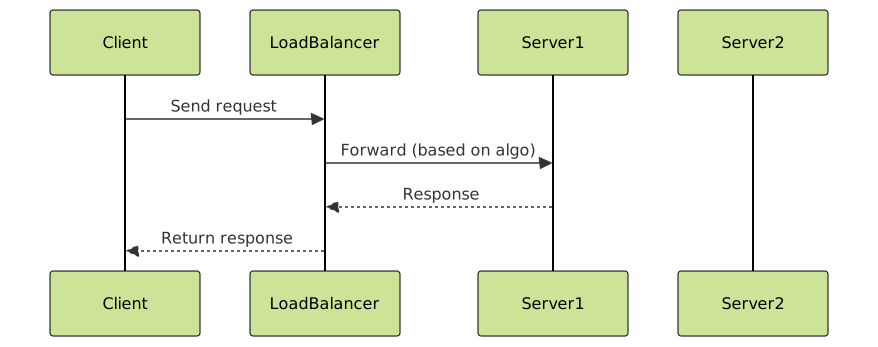
A load balancer acts as an intermediary that receives all incoming client requests and decides to which backend server each request should be forwarded. The decision is based on various algorithms that consider factors such as server capacity, current load, or simple round-robin rotations.

Popular Load Balancing Algorithms
1. Round Robin
This is the simplest load balancing algorithm where the load balancer passes each incoming request to the next server in a cyclic order. It assumes all servers have equal processing capability.
2. Least Connections
The load balancer directs each request to the server with the fewest active connections, balancing the load more dynamically than round robin.
3. Weighted Round Robin
A variation of round robin where each server is assigned a weight based on its capacity or priority. Servers with higher weights receive more requests.
4. IP Hash
Requests are distributed based on a hash of the client’s IP address, ensuring clients consistently connect to the same server, useful for session persistence.

Example: Simulating Round Robin Load Balancing
Consider three servers and six incoming requests. Using the round robin algorithm, requests are assigned sequentially:
| Request | Assigned Server |
|---|---|
| Request 1 | Server 1 |
| Request 2 | Server 2 |
| Request 3 | Server 3 |
| Request 4 | Server 1 |
| Request 5 | Server 2 |
| Request 6 | Server 3 |
Interactive Code Example (JavaScript)
The following example simulates round robin load balancing with a pool of servers. It outputs which server each request gets assigned to:
const servers = ["Server 1", "Server 2", "Server 3"];
let currentIndex = 0;

function assignRequest(requestId) {
  const server = servers[currentIndex];
  console.log(`Request ${requestId} assigned to ${server}`);
  currentIndex = (currentIndex + 1) % servers.length;
}

// Simulate 6 requests
for (let i = 1; i <= 6; i++) {
  assignRequest(i);
}
Load Balancer Types
- Hardware Load Balancer: Physical appliances designed for handling high traffic with dedicated hardware acceleration.
- Software Load Balancer: Run on standard servers or cloud environments; flexible and often open source.
- DNS Load Balancer: Uses DNS to distribute traffic by resolving a hostname to multiple IPs.
Benefits of Load Balancing
- Improved reliability: By distributing traffic, the system avoids becoming a single point of failure.
- Scalability: Easily add or remove servers without downtime or impact on user experience.
- Flexibility: Choose from various algorithms to best suit the application needs.
Challenges and Considerations
- Maintaining session persistence (sticky sessions) when required by some applications.
- Handling unequal server capacities and varying request processing times.
- Detecting server failures quickly and rerouting traffic appropriately.
Conclusion
Load balancing is a cornerstone technique for building robust, scalable distributed systems. Understanding different load balancing algorithms, their strengths and limitations, allows architects and developers to design efficient systems that gracefully handle traffic spikes and failures. Employing visualizations and practical examples can further clarify these concepts and assist in implementing customized load balancing strategies tailored for specific use cases.