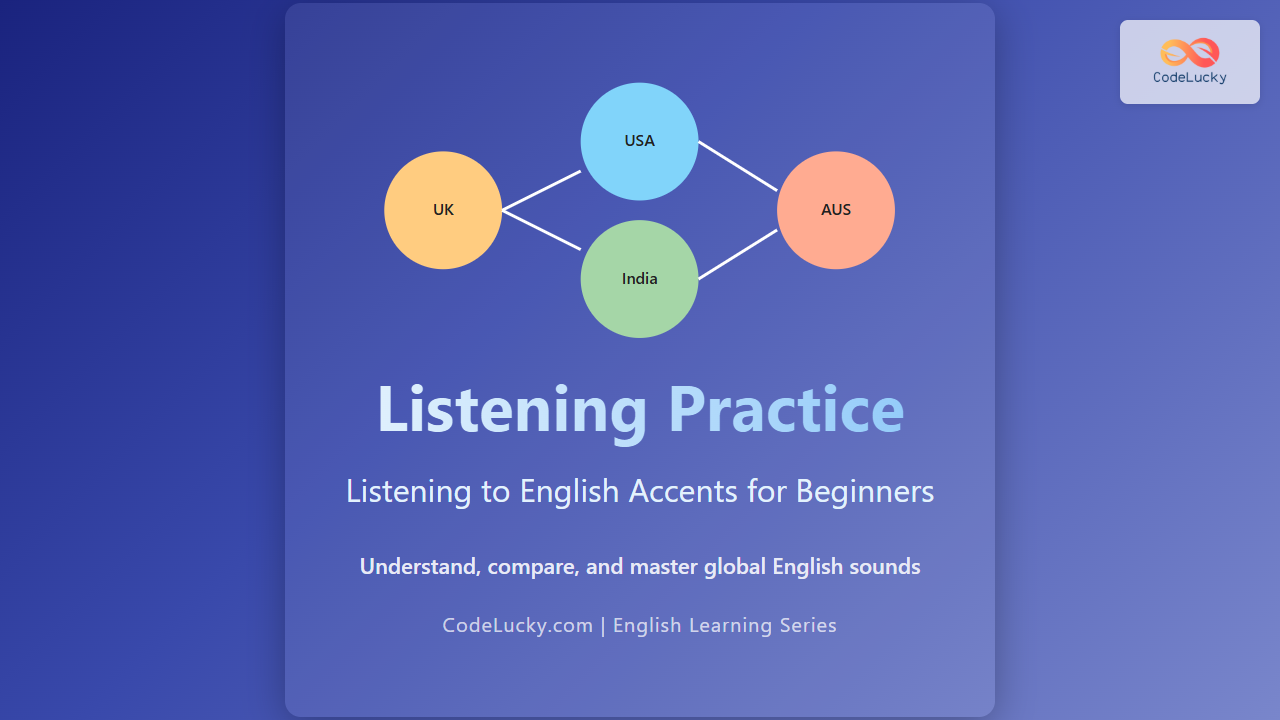
Listening Practice is one of the most essential parts of learning English effectively. However, for beginners, the wide variety of English accents—such as British, American, Australian, and Indian—can make comprehension tricky. In this complete beginner-friendly guide, we’ll explore how to train your ear, identify key differences between accents, and practice listening interactively for real improvement.
Why Understanding English Accents Matters
English is spoken across the world, and every region brings its own flavor to pronunciation, tone, and speed. By familiarizing yourself with different accents early, you improve your listening ability, speaking accuracy, and confidence in conversations—whether it’s in travel, study, or workplace communication.
- Global understanding: You’ll understand movies, songs, and international podcasts better.
- Better communication: You’ll respond more accurately in discussions with native or non-native speakers.
- Pronunciation improvement: You’ll unconsciously develop clearer pronunciation habits.
Common English Accents Beginners Should Know
Let’s understand the main English accents that a beginner should focus on:

Example differences:
- British English: “Water” sounds like “wo-tah”.
- American English: “Water” sounds like “wah-der”.
- Australian English: “Water” sounds like “wo-tuh”.
These subtle variations help learners tune their ears to global English communication.
Step-by-Step Listening Practice for Beginners
1. Start with Slow, Clear Accents
Choose audio materials where speakers talk slowly and clearly—British educational videos, American news podcasts, or beginner-level YouTube tutorials are great for this. Listen for word endings and stress patterns.
2. Focus on Vowel and Consonant Sounds
Different accents often change how vowels are pronounced. For example:
- British: “Can’t” = cahnt
- American: “Can’t” = kant
Record yourself saying the same words and compare your voice to the original.
3. Use Pause and Repeat Method
While listening, pause after every short phrase and try to mimic it. Focus on tone and rhythm, not just the words.

4. Visual Listening Practice with Transcripts
Always choose listening materials that include transcripts. Read along to connect sound with spelling. This reduces confusion between unfamiliar pronunciation and written words.
5. Explore Accent Varieties Weekly
Make a schedule like this:
| Day | Accent Focus | Listening Material |
|---|---|---|
| Monday | British | BBC News clips |
| Tuesday | American | TED Talks or NPR |
| Wednesday | Australian | ABC Radio or Podcasts |
| Thursday | Indian | Local interviews or YouTube |
| Friday | Mixed | Movies or International panels |
Interactive Accent Recognition Exercise
Try this simple exercise. Listen to an audio of a short conversation. Then answer these questions:
- Which accent did you hear (British, American, Australian, Indian)?
- Which words sounded different from your native accent?
- Did the speaker’s rhythm or intonation surprise you?
Repeat this exercise daily for 10 minutes—it trains your ear more effectively than passive listening.
Common Listening Mistakes to Avoid
- Focusing only on words: Focus instead on sentences, rhythm, and tone.
- Ignoring context: Even unfamiliar accents make sense when you follow the context.
- Listening without repetition: Replay audio multiple times to reinforce learning.

Best Resources for Accent Listening Practice
- YouTube Channels: BBC Learning English, VOA Learning English, Aussie English.
- Podcasts: “All Ears English”, “6 Minute English”, and “ESLPod”.
- Apps: ELSA Speak, Beelinguapp, and Listenwise for structured listening tracks.
Developing Confidence Over Time
At first, accents might sound confusing or too fast. But with regular listening and mimicking practice, your ear gradually adjusts. Over time, you’ll find yourself understanding unfamiliar accents automatically, improving both comprehension and speech clarity.

Quick Recap
- Understand key accent variations.
- Use repeat-and-shadow techniques.
- Practice consistently with diverse materials.
- Compare and analyze your pronunciation weekly.
In short: Accents are not obstacles—they are opportunities to understand the diversity of English and become truly fluent. Keep listening daily and interacting with different sounds, and soon you’ll find English accents easier and more enjoyable to follow.