Are you new to computer algorithms and not sure where to start? This detailed step-by-step plan will help you learn algorithms from zero, using practical advice, clear examples, and modern visualization techniques. Whether you want to ace interviews, succeed in coursework, or become a better developer, follow this beginner-friendly guide to master algorithms efficiently and confidently.
Why Learn Algorithms?
Understanding algorithms unlocks better problem-solving, makes programming efficient, and is crucial for interviews and real-world development. Algorithms help you break down complex tasks into manageable steps. Learning them boosts your skills and career prospects.
Step 1: Understand the Fundamentals
- What is an Algorithm? An algorithm is a step-by-step procedure to solve a problem or perform a computation.
- Example: Consider a recipe to make tea — it’s an algorithm for brewing tea.
- Start with basic programming skills in Python, C, or Java: variables, loops, functions, and arrays.

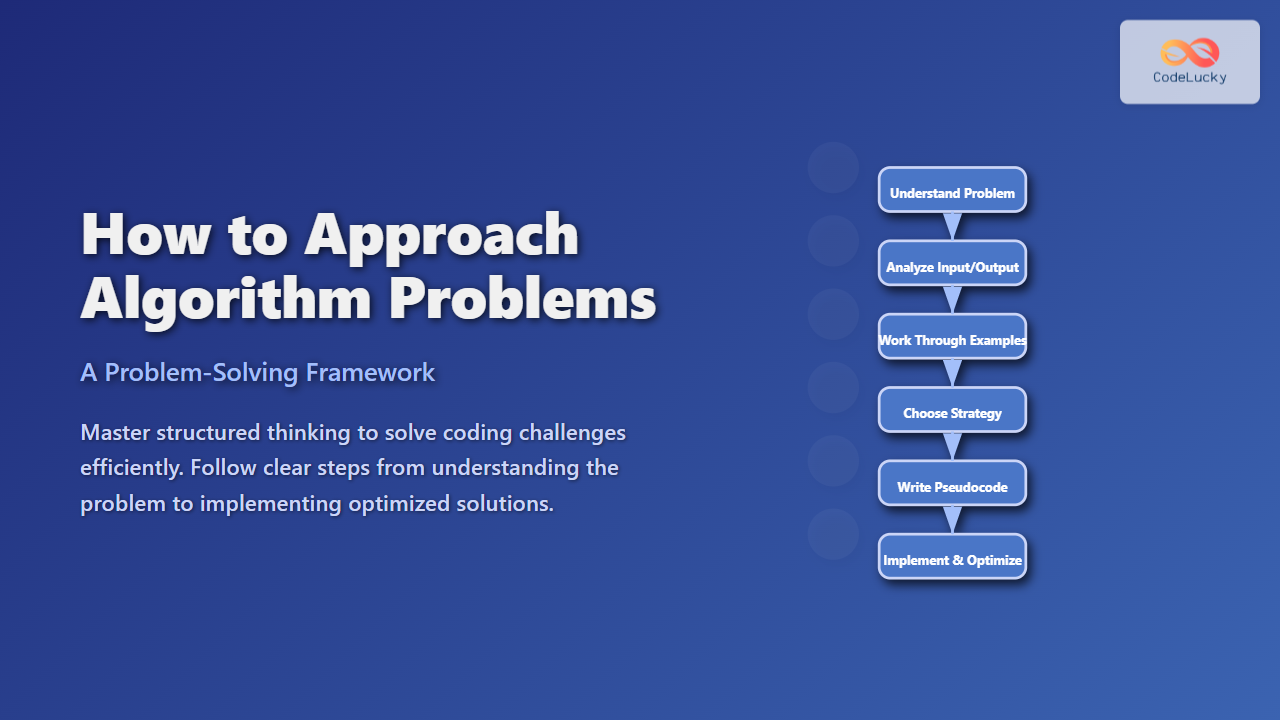
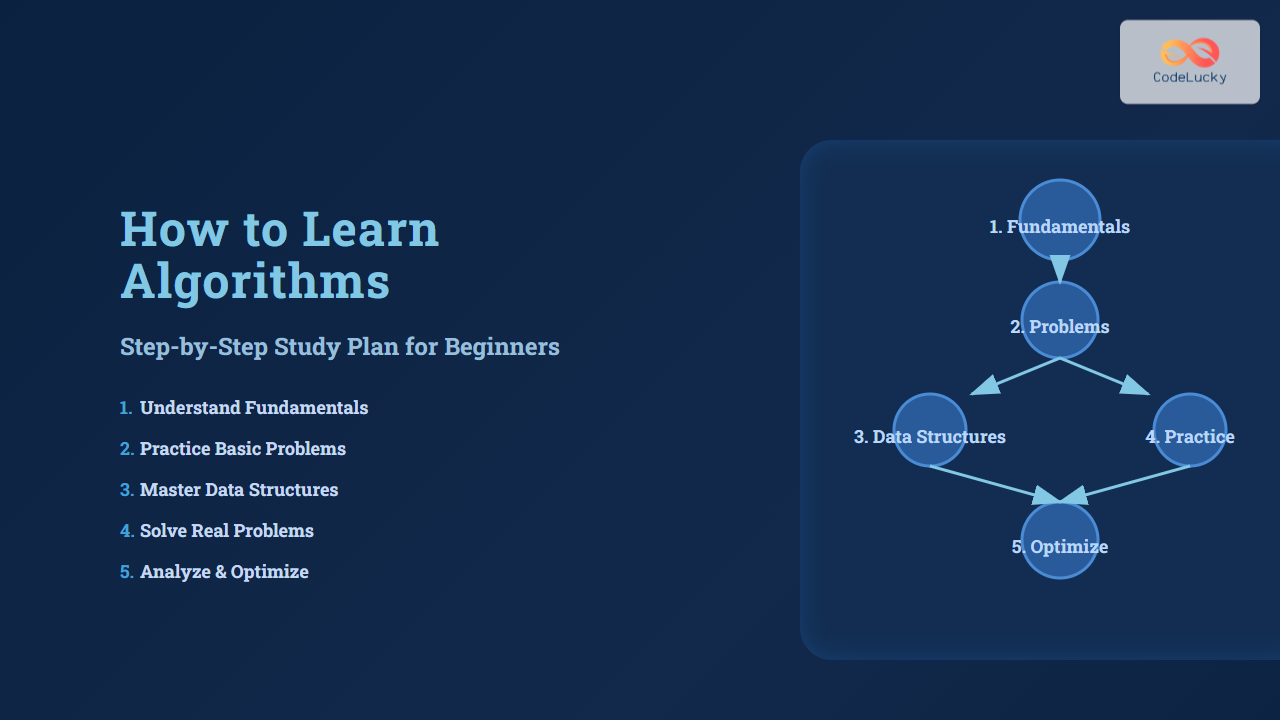
This diagram shows the typical algorithm solving cycle for beginners.
Step 2: Learn Common Algorithmic Problems
Get hands-on with these classics to build core problem-solving skills:
- Searching (Linear, Binary Search)
- Sorting (Bubble, Selection, Insertion, Merge Sort)
- Recursion (e.g., Factorial, Fibonacci)
Example: Linear Search
# Python Example:
def linear_search(arr, target):
    for i, val in enumerate(arr):
        if val == target:
            return i
    return -1
Sample Visual Output for Linear Search
Array: [2, 7, 3, 9], target = 3
Scans index 0: 2 → Not found
Scans index 1: 7 → Not found
Scans index 2: 3 → Found!
Returns: 2
Linear search decision diagram.
Step 3: Master Data Structures
Algorithms and data structures go hand-in-hand. Focus on:
- Arrays and Lists
- Stacks and Queues
- Linked Lists
- Trees and Graphs
- Hash Tables
Stack Example (Interactive)
# Simple stack usage (Python list as stack):
stack = []
stack.append(10)  # Push
stack.append(20)
stack.pop()       # Pop → returns 20
Interactive Practice
Try in Python:
stack = []
for x in [1,2,3]:
    stack.append(x)
print(stack.pop())  # Should output 3

Visualization of stack operations.
Step 4: Practice with Real Problems
- Use coding platforms (LeetCode, Codeforces, HackerRank) to solve problems daily.
- Start with easy problems, then move to medium and hard as you improve.
- Write your own test cases!

Your learning curve: tackle progressively harder problems.
Step 5: Study and Implement Key Algorithms
Learn the most-used algorithms for coding interviews and real-life:
- Sorting: Quick Sort, Merge Sort
- Searching: Binary Search
- Graph Algorithms: BFS, DFS, Dijkstra’s Algorithm
Example: Iterative Binary Search
def binary_search(arr, target):
    left, right = 0, len(arr)-1
    while left <= right:
        mid = (left + right) // 2
        if arr[mid] == target:
            return mid
        elif arr[mid] < target:
            left = mid + 1
        else:
            right = mid - 1
    return -1
Binary search workflow in flowchart.
Step 6: Learn Algorithm Analysis (Big O Notation)
Understand time and space complexity to compare algorithms:
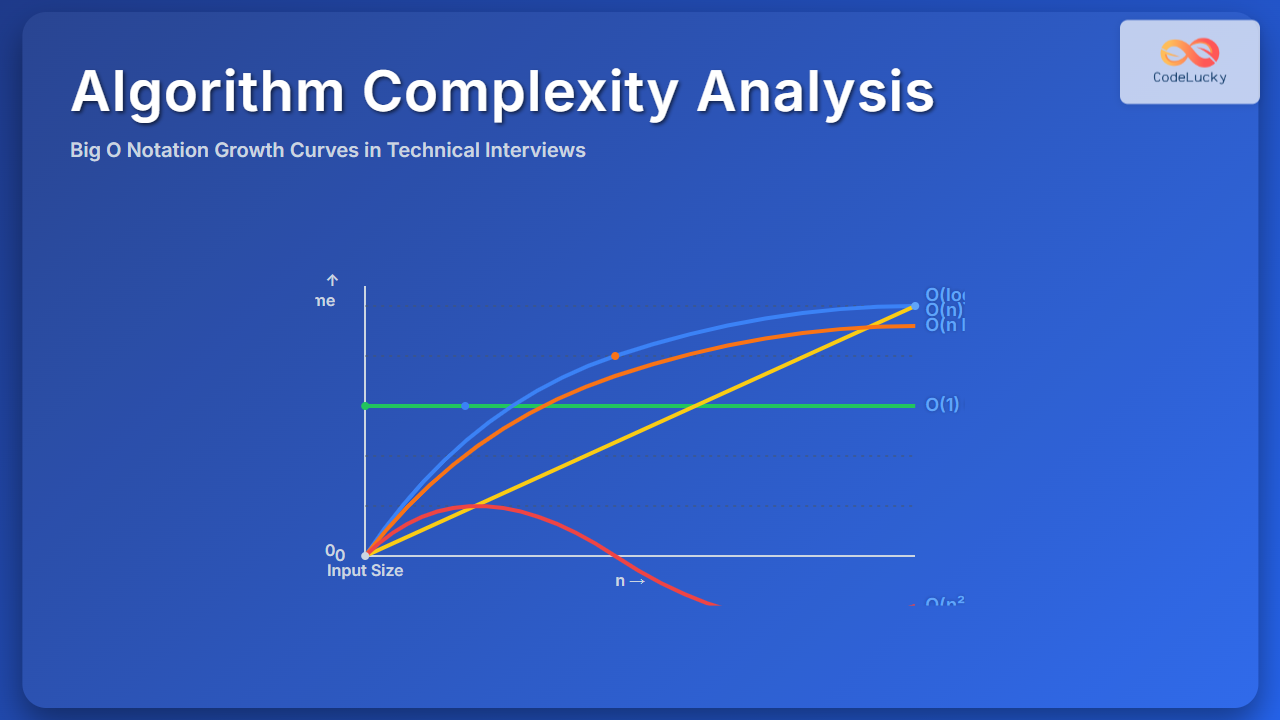
- Time Complexity: measures how execution time increases with input size (n).
- Space Complexity: estimates extra memory usage.
- Example: Linear search time:
O(n), binary search:O(log n).
Comparing time complexities visually.
Step 7: Build Projects and Reflect
- Apply algorithms to real-world mini-projects: sorting app, pathfinding in games, scheduling tasks, etc.
- Review what you learned. Try explaining core algorithms to others or writing blog posts.
Proven Tips for Effective Algorithm Learning
- Learn by doing: The best way to master algorithms is hands-on practice.
- Break down problems: Tackle big questions one step at a time.
- Study solutions: Analyze well-written solutions to learn new approaches.
- Use visuals: Diagrams and flowcharts help understand processes quickly.
Recommended Resources for Beginners
- Books: Grokking Algorithms by Aditya Bhargava, Algorithms by Dasgupta et al.
- Online: Khan Academy, Coursera (Algorithms Specialization), LeetCode patterns list.
- YouTube: Computerphile algorithms playlist, William Fiset’s visual DS & Algorithms.
FAQs About Learning Algorithms
Q: Do I need math for algorithms?
Basic math (logic, arithmetic) is plenty for most beginner/intermediate algorithm work.
Q: How long does it take to learn algorithms?
With consistent practice (30–60 minutes per day), foundational concepts can be mastered in 2–3 months.
Q: How do I stay motivated?
Join a community (Discord, forums) and solve problems with peers for accountability and fun.
Conclusion
Algorithms are tools for thinking critically, writing efficient code, and excelling in programming interviews. Follow this step-by-step plan, revise key concepts often, and practice. Persistence pays off. Ready to start your algorithms journey?