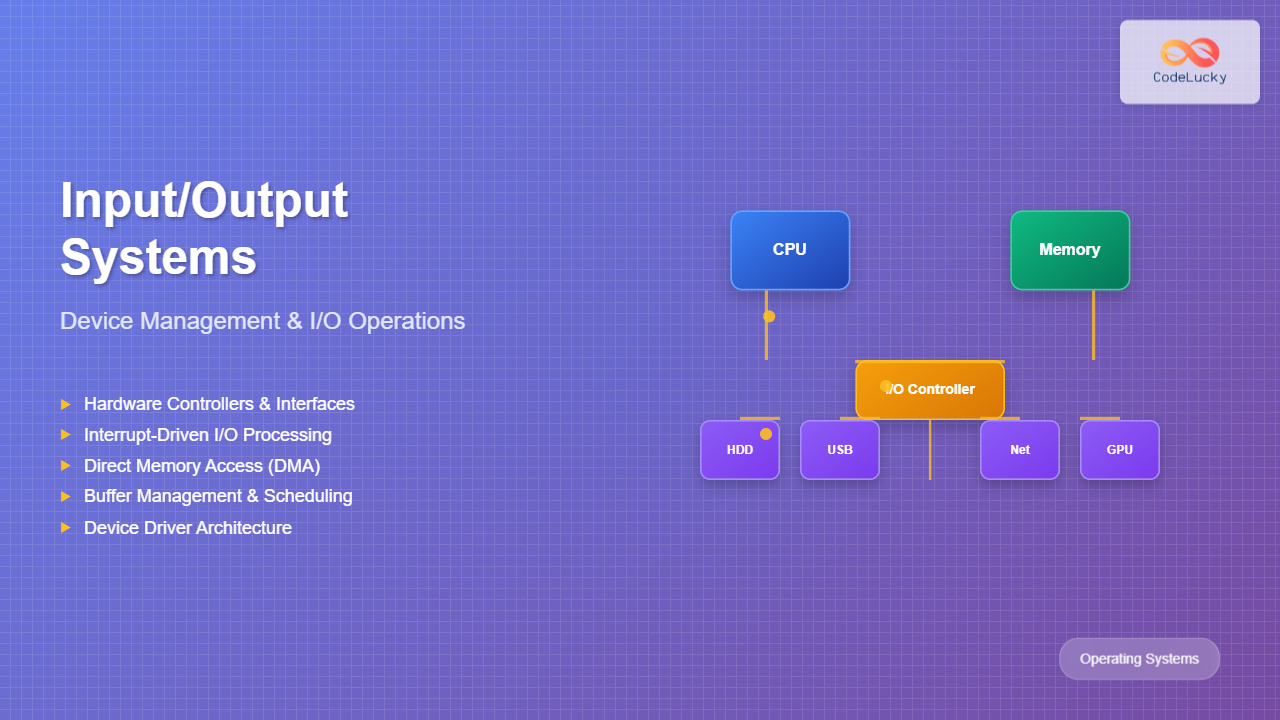
Input/Output (I/O) systems form the critical bridge between a computer’s internal processing capabilities and the external world. These systems manage the complex interactions between the CPU, memory, and peripheral devices, ensuring efficient data transfer and device coordination. Understanding I/O systems is essential for system programmers, operating system developers, and anyone working with hardware-software interfaces.
Understanding I/O Systems Architecture
The I/O subsystem represents one of the most complex components of modern operating systems. It encompasses hardware controllers, device drivers, kernel I/O subsystems, and user-level I/O libraries that work together to provide seamless device access.

This layered architecture ensures abstraction, portability, and efficiency in device management. Each layer has specific responsibilities, from high-level application interfaces down to low-level hardware control.
Core Components of I/O Systems
Hardware Layer
The hardware foundation consists of various components that facilitate I/O operations:
- I/O Controllers: Specialized processors that manage specific devices or device types
- System Bus: Communication pathway connecting CPU, memory, and I/O controllers
- Device Registers: Special memory locations for device control and status information
- Interrupt Controllers: Hardware that manages interrupt signals from devices
Device Controllers and Interfaces
Device controllers serve as intermediaries between the CPU and peripheral devices. They handle device-specific operations, data formatting, and error detection. Common controller types include:
- SATA Controllers: Manage hard drives and SSDs
- USB Controllers: Handle Universal Serial Bus devices
- Network Interface Controllers: Manage network communications
- Graphics Controllers: Control display output and GPU operations
I/O Methods and Techniques
Programmed I/O (Polling)
In programmed I/O, the CPU actively checks device status through continuous polling. While simple to implement, this method is CPU-intensive and inefficient for high-performance systems.
// Example of programmed I/O polling
void programmed_io_read() {
    while (!(inb(STATUS_PORT) & READY_BIT)) {
        // CPU waits in busy loop
        // Checking device status repeatedly
    }
    data = inb(DATA_PORT);  // Read data when ready
}
Interrupt-Driven I/O
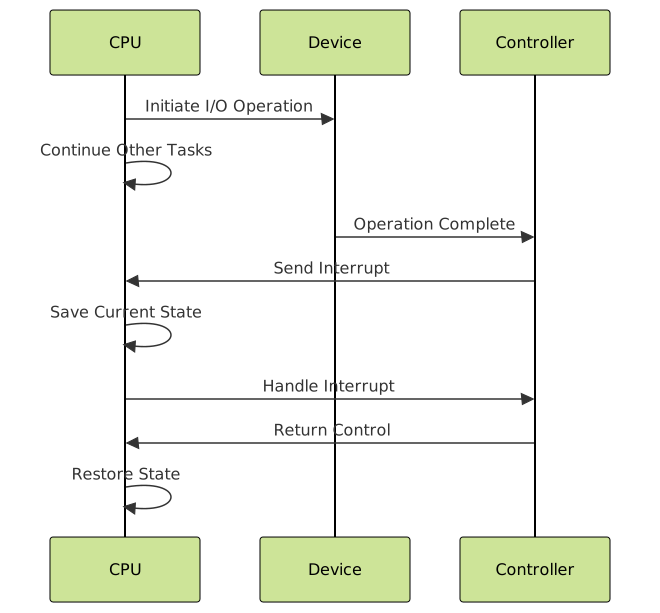
Interrupt-driven I/O allows devices to signal the CPU when they require attention, eliminating the need for constant polling. This approach significantly improves CPU utilization and system responsiveness.
Direct Memory Access (DMA)
DMA enables devices to transfer data directly to/from memory without CPU intervention. This technique is crucial for high-bandwidth devices like storage controllers and network interfaces.
// DMA transfer setup example
struct dma_descriptor {
    uint32_t source_addr;
    uint32_t dest_addr;
    uint32_t transfer_size;
    uint32_t control_flags;
};

void setup_dma_transfer(struct dma_descriptor *desc) {
    // Configure DMA controller
    write_dma_register(DMA_SOURCE, desc->source_addr);
    write_dma_register(DMA_DEST, desc->dest_addr);
    write_dma_register(DMA_SIZE, desc->transfer_size);
    write_dma_register(DMA_CONTROL, desc->control_flags | DMA_START);
}
Device Management Strategies
Device Classification
Operating systems categorize devices based on their characteristics and access patterns:
| Device Type | Characteristics | Examples | Access Method |
|---|---|---|---|
| Block Devices | Fixed-size data blocks, random access | Hard drives, SSDs, optical discs | Block-oriented I/O |
| Character Devices | Stream of characters, sequential access | Keyboards, mice, serial ports | Character-oriented I/O |
| Network Devices | Packet-based communication | Ethernet cards, WiFi adapters | Socket interface |
Device Drivers
Device drivers act as translators between the generic kernel I/O interface and device-specific hardware. They encapsulate device complexity and provide standardized access methods.
// Generic device driver structure
struct device_driver {
    char *name;
    int (*probe)(struct device *dev);
    int (*remove)(struct device *dev);
    int (*read)(struct device *dev, char *buffer, size_t count);
    int (*write)(struct device *dev, const char *buffer, size_t count);
    int (*ioctl)(struct device *dev, unsigned int cmd, unsigned long arg);
};
Buffering and Caching Mechanisms
Buffer Management
Buffering optimizes I/O performance by temporarily storing data in memory, reducing the frequency of hardware accesses and smoothing speed mismatches between devices.

Buffer Types and Strategies
- Single Buffering: One buffer alternates between input and processing
- Double Buffering: Two buffers enable simultaneous I/O and processing
- Circular Buffering: Multiple buffers in a ring structure for continuous operations
- Buffer Pool: Shared collection of buffers managed dynamically
// Double buffering implementation
struct double_buffer {
    char *buffer1;
    char *buffer2;
    char *active_buffer;
    char *fill_buffer;
    size_t buffer_size;
    int switch_flag;
};

void switch_buffers(struct double_buffer *db) {
    char *temp = db->active_buffer;
    db->active_buffer = db->fill_buffer;
    db->fill_buffer = temp;
    db->switch_flag = !db->switch_flag;
}
I/O Scheduling and Performance Optimization
I/O Scheduling Algorithms
I/O schedulers optimize request ordering to minimize seek times and maximize throughput, particularly important for mechanical storage devices.
- First-Come-First-Served (FCFS): Simple but potentially inefficient
- Shortest Seek Time First (SSTF): Minimizes head movement but may cause starvation
- SCAN (Elevator): Sweeps back and forth across the disk
- C-SCAN: Circular sweep in one direction only

Performance Metrics and Tuning
Key performance indicators for I/O systems include:
- Throughput: Amount of data transferred per unit time
- Latency: Time delay between request initiation and completion
- Bandwidth Utilization: Percentage of theoretical maximum bandwidth achieved
- Queue Depth: Number of outstanding I/O requests
Advanced I/O Concepts
Asynchronous I/O
Asynchronous I/O allows applications to initiate I/O operations without blocking, enabling better resource utilization and improved responsiveness in multi-threaded environments.
// Asynchronous I/O example
struct aiocb {
    int aio_fildes;          // File descriptor
    void *aio_buf;           // Buffer address
    size_t aio_nbytes;       // Number of bytes
    off_t aio_offset;        // File offset
    int aio_reqprio;         // Request priority
    struct sigevent aio_sigevent;  // Signal information
};

int result = aio_read(&my_aiocb);
if (result == 0) {
    // I/O operation started successfully
    // Continue with other work
    while (aio_error(&my_aiocb) == EINPROGRESS) {
        // Check periodically or wait for signal
        perform_other_tasks();
    }
}
Memory-Mapped I/O
Memory-mapped I/O maps device registers or file contents directly into the process address space, allowing standard memory operations to perform I/O functions.
// Memory-mapped file I/O
void *mapped_file = mmap(NULL, file_size,
                        PROT_READ | PROT_WRITE,
                        MAP_SHARED, fd, 0);

if (mapped_file != MAP_FAILED) {
    // Access file data directly through memory operations
    char *data = (char *)mapped_file;
    data[100] = 'A';  // Write directly to file
    char value = data[200];  // Read directly from file

    munmap(mapped_file, file_size);
}
Error Handling and Reliability
Error Detection and Recovery
Robust I/O systems implement comprehensive error handling mechanisms to maintain system stability and data integrity:
- Timeout Handling: Detecting unresponsive devices
- Retry Logic: Attempting failed operations multiple times
- Error Logging: Recording failures for analysis
- Graceful Degradation: Continuing operation with reduced functionality
// Error handling example
int robust_io_operation(int device_fd, void *buffer, size_t size) {
    int attempts = 0;
    int max_retries = 3;
    int result;

    while (attempts < max_retries) {
        result = perform_io(device_fd, buffer, size);

        if (result >= 0) {
            return result;  // Success
        }

        if (errno == EAGAIN || errno == EINTR) {
            attempts++;
            usleep(1000 * attempts);  // Exponential backoff
            continue;
        }

        // Non-recoverable error
        log_error("I/O operation failed", errno);
        return -1;
    }

    log_error("I/O operation failed after retries", errno);
    return -1;
}
Modern I/O Trends and Technologies
NVMe and High-Speed Storage
Non-Volatile Memory Express (NVMe) represents the latest evolution in storage interfaces, designed specifically for solid-state drives and modern computing architectures. NVMe provides:
- Low Latency: Direct PCIe connection reduces overhead
- High Queue Depth: Support for thousands of concurrent operations
- Parallelism: Multiple queues for different CPU cores
- Efficiency: Streamlined command set optimized for flash memory
Containerization and Virtualized I/O
Modern deployment models introduce additional I/O layers through containers and virtual machines, requiring specialized management techniques for performance and isolation.
Best Practices for I/O System Design
Performance Optimization Guidelines
- Minimize Context Switches: Batch operations when possible
- Use Appropriate Buffer Sizes: Balance memory usage with I/O efficiency
- Implement Proper Error Handling: Ensure graceful failure recovery
- Monitor Performance Metrics: Track throughput, latency, and utilization
- Consider Device Characteristics: Optimize for specific hardware properties
Security Considerations
I/O systems must implement security measures to protect against unauthorized access and malicious attacks:
- Access Control: Permission-based device access
- Input Validation: Sanitizing data from external devices
- Privilege Separation: Isolating device drivers from kernel core
- Audit Logging: Recording I/O operations for security analysis
Understanding I/O systems and device management is crucial for developing efficient, reliable, and secure computing systems. As hardware continues to evolve with faster storage, advanced networking capabilities, and new device types, the principles and techniques covered in this guide provide the foundation for adapting to future technological developments. Whether optimizing application performance, designing system software, or troubleshooting hardware issues, mastery of I/O concepts enables more effective problem-solving and system design decisions.
Related Posts
Virtual I/O: Complete Guide to Device Virtualization Techniques and Implementation
Introduction to Virtual I/O and Device Virtualization Virtual Input/Output (Virtual I/O) represents one of the most critical components in modern...

Device Drivers in Operating System: Complete Guide to Hardware Abstraction Layer
Device drivers serve as the critical bridge between your operating system and hardware components, forming what's known as the Hardware...
System Calls in Operating System: Complete Guide to User-Kernel Interface
System calls serve as the fundamental bridge between user applications and the operating system kernel, enabling programs to request services...
C in Embedded Systems: Basics of Embedded Programming
Embedded systems are ubiquitous in our modern world, powering everything from smart home devices to automotive control systems. At the...
Operating System Architecture: Monolithic vs Microkernel Design Patterns
Introduction to Operating System Architecture Operating system architecture defines how the core components of an OS are organized and interact...
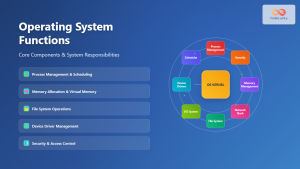
Operating System Functions: Core Components and System Responsibilities
An operating system (OS) serves as the fundamental software layer that manages computer hardware resources and provides essential services to...
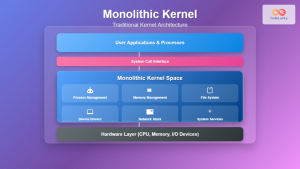
Monolithic Kernel: Complete Guide to Traditional Kernel Architecture
What is a Monolithic Kernel? A monolithic kernel is a traditional kernel architecture where the entire operating system runs in...
Embedded Operating System: Complete Guide to Resource-Constrained Environments
Embedded operating systems form the backbone of countless devices we interact with daily, from smart home appliances to automotive control...
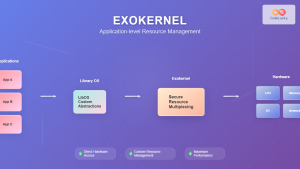
Exokernel: Application-level Resource Management Architecture in Operating Systems
Introduction to Exokernel Architecture The exokernel represents a revolutionary approach to operating system design that fundamentally challenges traditional kernel architectures....
Kernel in Operating System: Core Functions and Memory Management
The kernel stands as the fundamental cornerstone of any operating system, serving as the critical bridge between hardware components and...
Microkernel Operating System: Modular Architecture for Enhanced System Reliability
What is a Microkernel Operating System? A microkernel operating system represents a minimalist approach to kernel design where only the...
Spooling in OS: Complete Guide to Simultaneous Peripheral Operations Online
What is Spooling in Operating System? Spooling (Simultaneous Peripheral Operations Online) is a fundamental technique in operating systems that enables...
- Understanding I/O Systems Architecture
- Core Components of I/O Systems
- I/O Methods and Techniques
- Device Management Strategies
- Buffering and Caching Mechanisms
- I/O Scheduling and Performance Optimization
- Advanced I/O Concepts
- Error Handling and Reliability
- Modern I/O Trends and Technologies
- Best Practices for I/O System Design