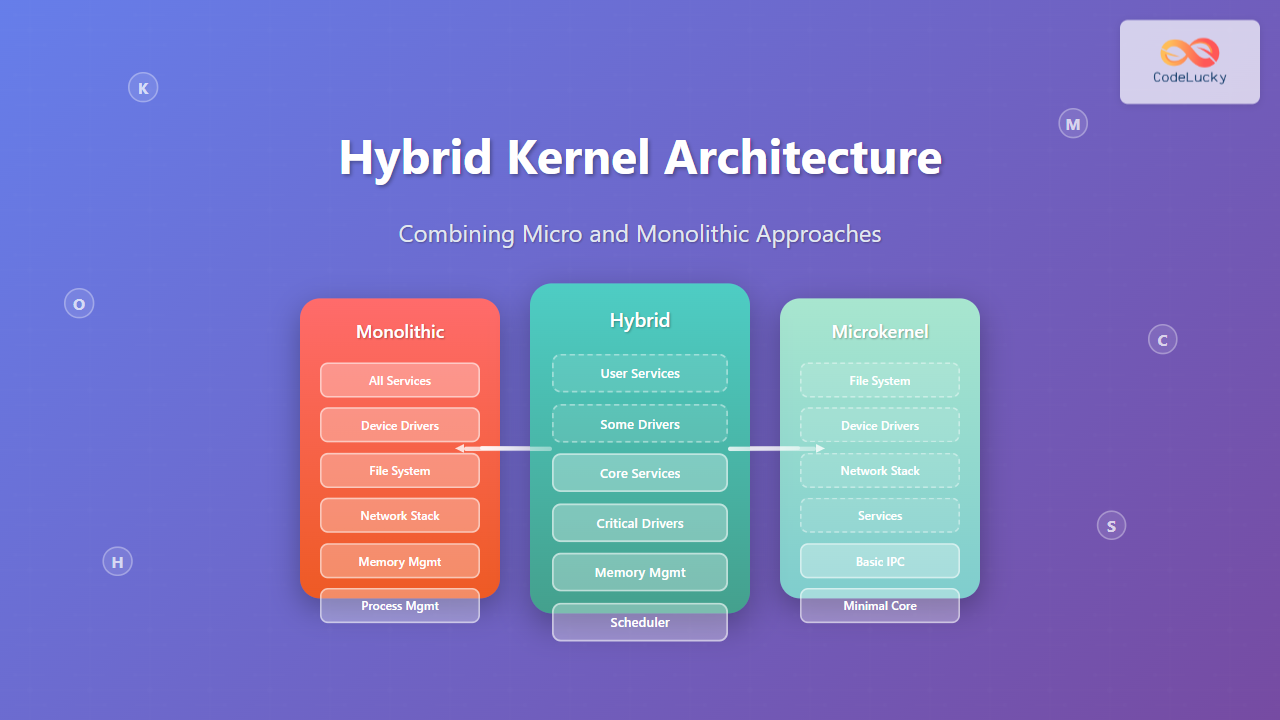
A hybrid kernel represents an evolutionary approach in operating system design that strategically combines elements from both microkernel and monolithic kernel architectures. This design philosophy aims to capture the performance benefits of monolithic kernels while maintaining some of the modularity and reliability advantages of microkernels.
Understanding Kernel Architectures
Before diving into hybrid kernels, it’s essential to understand the fundamental differences between the two primary kernel architectures that hybrid kernels attempt to unify.
Monolithic Kernel Architecture
In a monolithic kernel, all core operating system services run in kernel space with unrestricted access to hardware and system resources. This includes device drivers, file systems, network stacks, and memory management—all executing in the same privileged mode.

Advantages:
- High performance due to direct function calls
- Efficient inter-module communication
- Lower context switching overhead
- Simple implementation and debugging
Disadvantages:
- Poor fault isolation – one component failure can crash the entire system
- Difficult to maintain and modify
- Security vulnerabilities can affect the entire kernel
- Large kernel size
Microkernel Architecture
A microkernel implements only the most essential services in kernel space, such as inter-process communication (IPC), basic scheduling, and low-level memory management. All other services run as user-space processes.

Advantages:
- Better fault isolation and system stability
- Enhanced security through privilege separation
- Easier to maintain and extend
- Modular design allows hot-swapping of components
Disadvantages:
- Performance overhead due to frequent context switches
- Complex inter-process communication
- Higher latency for system calls
- More complex implementation
The Hybrid Kernel Approach
Hybrid kernels emerged as a pragmatic solution to bridge the gap between these two architectures. They selectively place performance-critical components in kernel space while keeping less critical or more stable components in user space.

Key Characteristics of Hybrid Kernels
Selective Privilege Separation: Critical performance components run in kernel space, while stability-focused services operate in user space.
Dynamic Loading: Support for loading and unloading kernel modules at runtime without system restart.
Multiple Communication Mechanisms: Both direct function calls (for kernel components) and IPC mechanisms (for user-space services).
Flexible Architecture: Ability to move components between kernel and user space based on requirements.
Real-World Hybrid Kernel Implementations
Windows NT Kernel
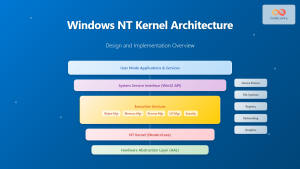
Microsoft’s Windows NT kernel is perhaps the most well-known hybrid kernel implementation. It features a microkernel-based architecture with performance optimizations that blur the line between micro and monolithic approaches.
Architecture Components:
- NT Executive: Runs in kernel mode and provides core system services
- Hardware Abstraction Layer (HAL): Provides hardware independence
- Win32 Subsystem: Runs in user mode but with kernel-mode components
- Device Drivers: Most run in kernel mode for performance
The NT kernel demonstrates hybrid characteristics by running the Win32 subsystem partially in kernel mode for performance while maintaining the theoretical separation of a microkernel design.
macOS XNU Kernel
Apple’s XNU (X is Not Unix) kernel combines elements from the Mach microkernel with BSD Unix components, creating a hybrid architecture optimized for desktop and mobile devices.
XNU Architecture:
- Mach Microkernel: Provides memory management, IPC, and task scheduling
- BSD Layer: Implements POSIX APIs, networking, and file systems
- I/O Kit: Object-oriented driver framework
- Kernel Extensions (KEXTs): Loadable kernel modules
BeOS/Haiku Kernel
The BeOS kernel, and its open-source successor Haiku, implements a hybrid approach specifically designed for multimedia performance and responsiveness.
Advantages of Hybrid Kernels
Performance Optimization
Hybrid kernels achieve near-monolithic performance by keeping performance-critical code paths in kernel space. System calls for essential operations like memory allocation, process scheduling, and critical I/O operations execute with minimal overhead.
Improved Fault Tolerance
By isolating non-critical components in user space, hybrid kernels offer better fault isolation than pure monolithic kernels. A failure in a user-space driver or service won’t necessarily crash the entire system.
Modularity and Maintainability
The hybrid approach allows developers to selectively optimize system components. Critical paths can be optimized for performance while maintaining clean interfaces for less critical components.
Flexibility in Design Decisions
System architects can make granular decisions about where to place each component based on specific requirements like performance, security, or stability.
Design Challenges and Trade-offs
Complexity Management
Hybrid kernels introduce architectural complexity as developers must carefully manage the boundary between kernel and user space components. This complexity can lead to:
- Increased development time
- More complex debugging scenarios
- Potential security vulnerabilities at interfaces
- Inconsistent performance characteristics
Interface Design
Creating efficient interfaces between kernel and user-space components requires careful consideration of:
- Data marshaling overhead
- Context switching costs
- Security boundary enforcement
- Backward compatibility requirements
Implementation Strategies
Component Classification
Successful hybrid kernel implementations use systematic approaches to classify components:

Kernel Space Candidates:
- Memory management
- Process scheduling
- Critical device drivers (graphics, storage)
- Network protocol stacks
- File system core
User Space Candidates:
- Print spoolers
- Non-critical device drivers
- Network services
- User interface servers
- Application-specific services
Dynamic Component Migration
Advanced hybrid kernels support runtime migration of components between kernel and user space based on system conditions or administrative policies.
Performance Considerations
Context Switching Overhead
Hybrid kernels must carefully balance the frequency of context switches. Strategies include:
- Batching: Grouping multiple operations to reduce switching frequency
- Asynchronous Operations: Using callbacks and event-driven architectures
- Shared Memory: Implementing zero-copy data sharing mechanisms
- Fast Path Optimization: Keeping common operations in kernel space
Memory Management
Effective memory management in hybrid kernels involves:
- Shared memory regions for efficient data transfer
- Separate address spaces for isolation
- Memory protection mechanisms
- Efficient virtual memory implementations
Security Implications
Attack Surface Reduction
Hybrid kernels can reduce the attack surface by moving non-critical code to user space where it runs with limited privileges. However, they must address:
- Interface security between kernel and user components
- Privilege escalation vulnerabilities
- Data validation at trust boundaries
- Secure communication channels
Privilege Management
Implementing fine-grained privilege management requires:
- Capability-based security models
- Sandboxing for user-space components
- Secure boot and code signing
- Runtime integrity checking
Development and Debugging
Development Challenges
Developing hybrid kernel systems presents unique challenges:
- Interface Design: Creating efficient and secure boundaries
- Testing Complexity: Validating interactions between components
- Performance Profiling: Understanding cross-boundary performance impacts
- Debugging: Tracing issues across privilege boundaries
Best Practices
Design Principles:
- Minimize the number of kernel-user transitions
- Use asynchronous communication where possible
- Implement comprehensive error handling
- Design for testability and observability
- Plan for component migration flexibility
Future Trends and Evolution
Container and Virtualization Integration
Modern hybrid kernels are evolving to better support containerization and virtualization technologies:
- Namespace isolation improvements
- Container-aware scheduling
- Efficient virtualization support
- Cloud-native optimizations
Real-time and Embedded Systems
Hybrid kernels are increasingly being adapted for real-time and embedded systems:
- Deterministic scheduling algorithms
- Low-latency interrupt handling
- Power management optimizations
- Resource-constrained implementations
Conclusion
Hybrid kernels represent a mature and practical approach to operating system design that successfully balances the competing demands of performance, stability, and maintainability. By selectively combining the best aspects of monolithic and microkernel architectures, they provide a foundation for modern operating systems that must handle diverse workloads while maintaining security and reliability.
The success of systems like Windows NT and macOS demonstrates that hybrid kernels can deliver production-ready performance while maintaining architectural flexibility. As computing environments continue to evolve with cloud computing, IoT devices, and real-time applications, hybrid kernel architectures will likely continue to adapt and provide the foundation for next-generation operating systems.
Understanding hybrid kernels is essential for system programmers, operating system developers, and computer science students who want to appreciate the nuanced trade-offs involved in modern operating system design. The hybrid approach exemplifies how practical engineering solutions often emerge from thoughtful combinations of theoretical approaches rather than adherence to pure architectural models.
Related Posts
Operating System Architecture: Monolithic vs Microkernel Design Patterns
Introduction to Operating System Architecture Operating system architecture defines how the core components of an OS are organized and interact...
Monolithic Kernel: Complete Guide to Traditional Kernel Architecture
What is a Monolithic Kernel? A monolithic kernel is a traditional kernel architecture where the entire operating system runs in...
Microkernel Operating System: Modular Architecture for Enhanced System Reliability
What is a Microkernel Operating System? A microkernel operating system represents a minimalist approach to kernel design where only the...
Windows NT Kernel: Complete Guide to Design, Architecture and Implementation
Introduction to Windows NT Kernel The Windows NT Kernel forms the foundation of all modern Windows operating systems, from Windows...
Kernel in Operating System: Core Functions and Memory Management
The kernel stands as the fundamental cornerstone of any operating system, serving as the critical bridge between hardware components and...
Embedded Operating System: Complete Guide to Resource-Constrained Environments
Embedded operating systems form the backbone of countless devices we interact with daily, from smart home appliances to automotive control...
Exokernel: Application-level Resource Management Architecture in Operating Systems
Introduction to Exokernel Architecture The exokernel represents a revolutionary approach to operating system design that fundamentally challenges traditional kernel architectures....

Container Virtualization: Complete Guide to OS-level Virtualization Technology
Container virtualization represents a revolutionary approach to application deployment and resource management through OS-level virtualization. Unlike traditional hardware virtualization, containers...

mesos Linux: Complete Guide to Distributed Systems Kernel and Cluster Management
Apache Mesos is a powerful distributed systems kernel that abstracts CPU, memory, storage, and other compute resources across machines, enabling...
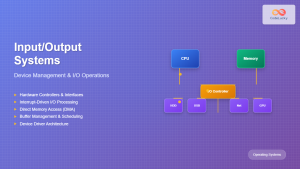
Input Output Systems: Complete Guide to Device Management and I/O Operations
Input/Output (I/O) systems form the critical bridge between a computer's internal processing capabilities and the external world. These systems manage...
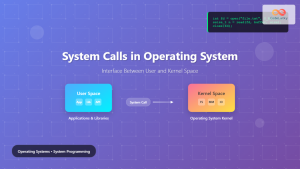
System Calls in Operating System: Complete Guide to User-Kernel Interface
System calls serve as the fundamental bridge between user applications and the operating system kernel, enabling programs to request services...
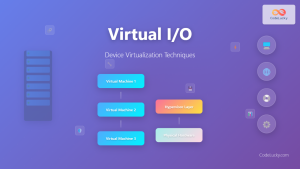
Virtual I/O: Complete Guide to Device Virtualization Techniques and Implementation
Introduction to Virtual I/O and Device Virtualization Virtual Input/Output (Virtual I/O) represents one of the most critical components in modern...