Conversation Practice: Hotel and Travel Conversations is one of the most useful areas of spoken English learning. Whether you’re checking into a hotel, booking a taxi, or asking for directions, confident language skills make travel smoother and more enjoyable. This detailed guide from CodeLucky.com helps you practice real-life dialogues, understand key vocabulary, and build the confidence to communicate naturally in different travel scenarios.
Why Practice Hotel and Travel Conversations?
Knowing how to communicate effectively during travel builds both fluency and confidence. These situations cover essential English expressions you’ll use with hotel staff, drivers, airport officers, and fellow travelers. For example:
- Booking and checking into hotels
- Talking to reception or housekeeping
- Ordering food or room service
- Asking for directions at airports or stations
- Explaining travel issues politely
Common English Phrases for Hotels
Before diving into full dialogues, here are a few common phrases you should know and remember:
| Situation | Useful Phrase | Example Usage |
|---|---|---|
| Making a reservation | “I’d like to book a room for two nights.” | “Hello, I’d like to book a double room for two nights, please.” |
| Checking in | “I have a reservation under the name…” | “Good evening! I have a reservation under the name John Smith.” |
| Requesting service | “Could I get some extra towels, please?” | “Excuse me, can I have some extra towels sent to room 309?” |
| Checking out | “I’d like to check out, please.” | “Hi, I’d like to check out. Can you arrange a taxi to the airport?” |
Hotel Conversation Examples with Visual Flow
Let’s see an interactive example of a conversation flow between a guest and a hotel receptionist using a simple flowchart.
This visual shows a logical conversation structure that most check-in interactions follow. Practicing this pattern helps you remember polite phrases and speaking rhythm.
Conversation Practice: Checking In
Example Dialogue
Receptionist: Good afternoon! How may I help you?
Guest: Hello, I have a reservation under the name Priya Kapoor.
Receptionist: Let me check... yes, Ms. Kapoor, a single deluxe room for two nights.
Guest: That’s correct.
Receptionist: May I have your ID and a credit card, please?
Guest: Sure. Here you go.
Receptionist: Thank you. Here’s your room key. It’s on the second floor.
Guest: Perfect. Thank you so much.
Tip: Always respond politely with phrases like “Sure,” “Of course,” “Thank you,” or “I appreciate it.”
Interactive Practice — Fill-in-the-Blanks
Try finishing the conversation below with correct phrases.
Receptionist: Good morning! How can I help you today?
You: ________________________ (Hint: say you have a booking)
Receptionist: Certainly! May I have your name, please?
You: ________________________ (Hint: give your name politely)
Suggested Answers: “I have a reservation for tonight.” / “My name is Ritu Sharma.”
Travel Conversations — At the Airport
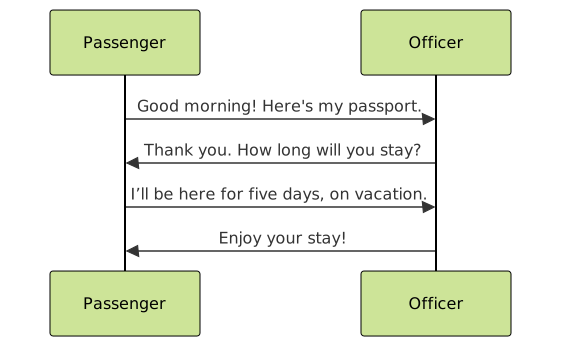
Besides hotel settings, airports and travel checkpoints often require specific types of communication. Here’s a summary of common expressions:
- At the check-in counter: “Where is the check-in desk for Air India?”
- At security: “Do I need to remove my laptop?”
- On the flight: “Could I have some water, please?”
- At immigration: “I’m here on vacation for five days.”
Directions and Transportation Dialogues
If you’re traveling in a new city, knowing how to ask for directions or book transportation is essential. Here are short examples:
You: Excuse me, can you tell me how to get to the nearest metro station?
Local: Sure, go straight and take the second left.
You: Hi, I’d like to go to the airport. How much is the taxi fare?
Driver: It’s around 800 rupees, depending on traffic.
You: Okay, let’s go!

Role-Play Exercises for Self-Practice
Role-play helps build conversational flow and confidence. Here’s how you can practice:
- Choose a scenario — like “booking a hotel” or “ordering food.”
- Write 6–8 lines of dialogue.
- Record yourself and listen to your tone and speed.
- Repeat using alternative phrases (e.g., “I’d like” instead of “I want”).

Tone and Politeness in Conversations
In hotel and travel interactions, maintaining a polite tone shows respect and makes communication smoother. Always include words like please, thank you, could, and would. For example:
- “Could you please help me with my luggage?”
- “Would it be possible to get a wake-up call at 6 AM?”
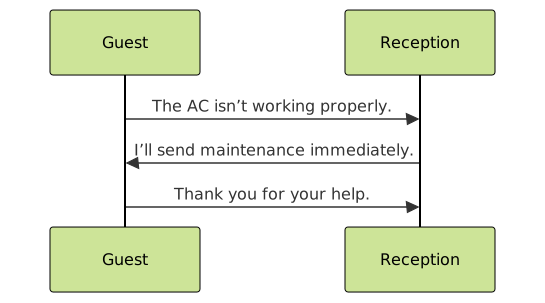
Advanced Practice: Handling Complaints
Sometimes, you need to raise concerns politely. Use indirect language to remain respectful:
Guest: Excuse me, my room’s air conditioner isn’t working properly.
Receptionist: I’m very sorry to hear that. I’ll have someone check it right away.
Guest: Thank you so much. I appreciate your help.
Final Tips for Mastering Hotel and Travel Conversations
- Listen to native speakers through travel vlogs and English podcasts.
- Practice aloud daily — speaking improves listening too.
- Keep a small notebook for new travel words and idioms.
- Try online drills or AI chat simulations for fluency.
Conclusion: Consistent conversation practice using real travel situations will transform your speaking confidence. Use the dialogues, visuals, and exercises in this guide to prepare for real-world English interactions on your next trip!
For more practical lessons and templates, explore other guides on CodeLucky.com under the English Learning category.