High availability (HA) architecture is crucial for modern applications and services, aiming to minimize downtime and ensure continuous operational performance. This detailed guide provides a comprehensive overview of HA principles, core components, and practical implementation strategies to help organizations architect resilient systems that withstand failures and maintain service uptime.
What is High Availability Architecture?
High availability architecture is a system design approach focusing on eliminating single points of failure and enabling fast recovery from disruptions. It involves redundancy, failover mechanisms, and fault tolerance to keep systems operational and accessible with minimal or zero downtime.
Key Principles of High Availability
- Redundancy: Duplicate critical components like servers, databases, and network devices.
- Failover: Automatic switch to a standby system upon failure detection.
- Fault Tolerance: Ability to continue functioning correctly despite hardware or software faults.
- Load Balancing: Distributes workload evenly across resources for optimal performance and availability.
- Monitoring & Alerting: Continuous health checks and notifications enable proactive issue detection.
Core Components of HA Architecture
Successful HA architecture depends on multiple components working in synergy:
- Load Balancers: Direct user requests to healthy servers, removing failed nodes from rotation.
- Clusters: Group of servers working together as a single system; failovers occur between nodes.
- Replication: Data duplication across nodes (e.g., database replication) ensuring availability of latest data.
- Distributed Storage: Shared or replicated storage solutions that prevent data loss.
- Failover Mechanisms: Health checkers and heartbeat signals trigger automatic resource switching.
High Availability Architecture Patterns

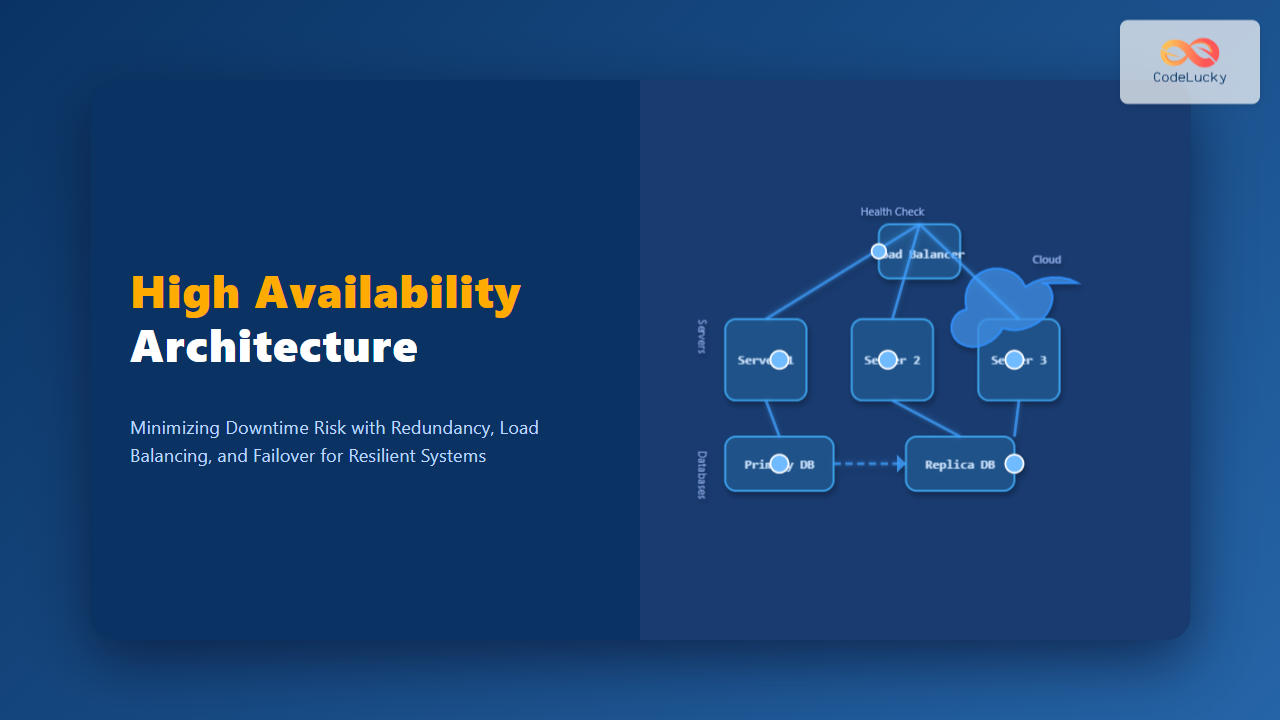
This diagram illustrates a typical HA pattern with a load balancer distributing traffic to multiple servers connected to a primary and replica database, ensuring data is replicated and failover mechanisms are in place.
Example: Setting Up a Highly Available Web Application
Consider a web application hosted on two or more virtual machines behind a load balancer. The backend database uses asynchronous replication to a secondary instance. The load balancer continuously monitors server health and directs traffic only to healthy nodes.
- Step 1: Deploy multiple web servers with identical application versions.
- Step 2: Configure a load balancer (hardware or cloud-based) to distribute incoming traffic.
- Step 3: Set up a primary database and one or more replicas with synchronous or asynchronous replication.
- Step 4: Implement health checks for web servers and database instances.
- Step 5: Establish automatic failover for the database to promote replicas during primary failure.
Visualizing Failover Flow
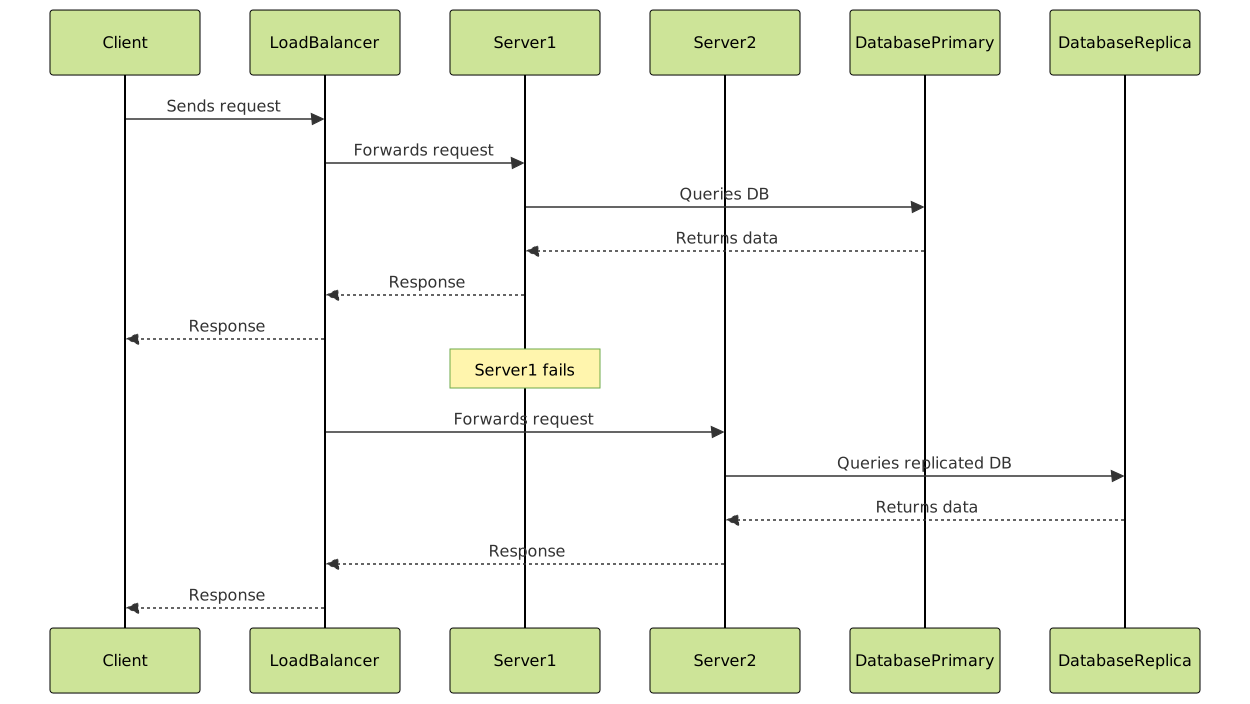
This sequence demonstrates how the load balancer routes traffic to a secondary server and replica database if the primary server fails, continuing service uninterrupted.
Best Practices for Building HA Systems
- Eliminate Single Points of Failure: Use redundant hardware, network paths, and power sources.
- Implement Multi-Zone or Multi-Region Deployment: Protect against data center or regional outages.
- Use Automated Failover Tools: Monitor system health and automate recovery and resource promotion.
- Data Backup & Recovery: Regular snapshots and offsite backups prevent data loss.
- Test Disaster Recovery Plan: Periodically simulate failures to validate HA mechanisms.
- Optimize Load Balancing Algorithms: Use weighted or least-connections policies to maximize availability.
Interactive Example: Simplified HA Setup
Below is a conceptual overview of how nodes interact in a simple HA web service environment. The load balancer redirects requests dynamically based on node health, ensuring real-time availability.

Conclusion
High availability architecture is vital for minimizing downtime risks and delivering seamless user experiences. By combining redundancy, failover capabilities, load balancing, and continuous monitoring, organizations can build resilient infrastructures that maintain uptime during failures. Implementing robust HA systems requires planning, thorough testing, and ongoing management—but the payoff is a reliable service environment that meets the stringent demands of today’s users and business needs.
Applying these strategies and architecture patterns as outlined can significantly enhance operational continuity and mitigate risks linked to outages.