Understanding Hero Culture in Agile Development
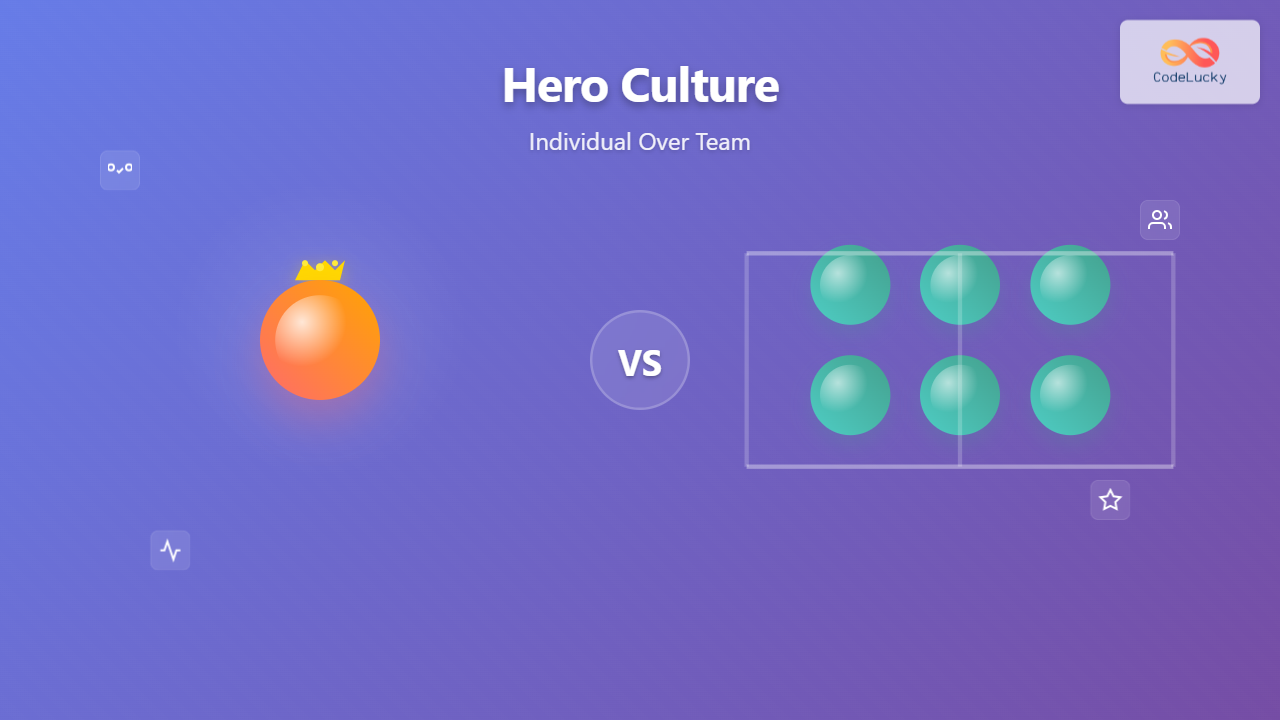
Hero culture represents one of the most pervasive anti-patterns in Agile software development, where organizations inadvertently or deliberately prioritize individual achievements over team collaboration. This phenomenon occurs when companies consistently rely on specific individuals to solve critical problems, meet tight deadlines, or rescue failing projects, creating an unhealthy dependency that undermines the core principles of Agile methodology.
In hero-driven environments, certain team members become indispensable “saviors” who work excessive hours, take on disproportionate responsibilities, and often bypass established processes to deliver results. While this might seem beneficial in the short term, it creates significant long-term risks including team burnout, knowledge silos, reduced collective ownership, and ultimately, project failure when these heroes become unavailable.
The Agile Principle: Individuals and Interactions Over Processes and Tools
The first principle of the Agile Manifesto states that we value “individuals and interactions over processes and tools.” However, this principle is often misinterpreted to justify hero culture. The principle actually emphasizes the importance of collaborative interactions between team members, not the elevation of individual performance above team dynamics.
True Agile methodology promotes collective responsibility, shared knowledge, and collaborative problem-solving. When teams function according to Agile principles, every member contributes their unique strengths while maintaining accountability to the group’s success. This creates a sustainable development environment where the team’s collective intelligence exceeds the sum of its individual parts.
How Hero Culture Manifests in Development Teams
The Star Developer Syndrome
Star developer syndrome occurs when organizations heavily depend on one or two exceptionally skilled programmers to handle complex technical challenges. These developers often possess deep knowledge of legacy systems, critical business logic, or specialized technologies that others lack. Management frequently assigns them to multiple projects simultaneously, expecting them to provide technical guidance and resolve complex issues across different initiatives.
This dependency creates several problems: other team members become reluctant to tackle challenging tasks, knowledge transfer becomes minimal, and the star developers experience increased pressure and workload. When these individuals leave the organization or become unavailable, projects often face significant delays or failures.
Crisis-Driven Leadership
Many organizations unknowingly reward crisis-driven behavior by consistently promoting individuals who excel during emergencies. These “firefighter” leaders gain recognition for their ability to work under pressure, solve urgent problems, and deliver results when stakes are high. However, this creates a culture where crisis management becomes more valued than proactive planning and sustainable development practices.
Teams operating under crisis-driven leadership often experience repeated cycles of urgent deadlines, technical debt accumulation, and reactive problem-solving. The constant state of emergency prevents proper planning, code reviews, testing, and documentation, ultimately creating more crises in the future.
Knowledge Hoarding and Silos
Hero culture frequently leads to knowledge hoarding, where individuals accumulate specialized expertise without sharing it with their teammates. This might happen intentionally, as some people view their unique knowledge as job security, or unintentionally, due to time constraints and lack of proper knowledge transfer processes.
Knowledge silos create significant risks for project continuity and team scalability. When critical information resides only in specific individuals’ minds, teams become vulnerable to disruptions, and onboarding new members becomes extremely challenging. Additionally, decision-making becomes centralized around these knowledge holders, slowing down development processes and reducing team autonomy.
The Hidden Costs of Hero Culture
Team Morale and Psychological Safety
Hero culture significantly impacts team morale by creating an environment where some members feel undervalued or incompetent. When organizations consistently highlight individual achievements while downplaying collaborative efforts, team members may develop feelings of inadequacy or competition rather than cooperation.
Psychological safety, a crucial component of high-performing teams, suffers when heroes dominate decision-making and problem-solving. Team members become hesitant to contribute ideas, ask questions, or admit mistakes, fearing judgment or comparison to the heroes. This reduces innovation, learning opportunities, and overall team effectiveness.
Technical Debt and Quality Issues
Heroes often prioritize speed over quality to meet urgent deadlines and maintain their reputation for quick delivery. This approach frequently results in accumulated technical debt, including poorly documented code, insufficient testing, and architectural shortcuts that create long-term maintenance challenges.
When heroes work independently without proper code reviews or collaborative design sessions, they may introduce solutions that work but are difficult for others to understand or maintain. This creates additional dependencies and makes future development more complex and time-consuming.
Scalability and Sustainability Challenges
Organizations relying on hero culture face significant scalability challenges because their success depends on specific individuals rather than repeatable processes and team capabilities. As projects grow in complexity or the organization expands, these dependencies become bottlenecks that limit growth and adaptability.
Hero-driven teams also struggle with sustainability because the intense workload and pressure eventually lead to burnout. When heroes leave or become unavailable, projects often face delays, quality issues, or complete failure, requiring significant time and resources to recover.
Identifying Hero Culture in Your Organization
Warning Signs and Red Flags
Several indicators suggest that your organization may be operating under hero culture. Look for patterns where specific individuals consistently work longer hours than their teammates, receive disproportionate recognition for project successes, or become the go-to person for resolving complex problems across multiple projects.
Pay attention to communication patterns during meetings and decision-making processes. If discussions frequently center around what specific individuals think or decide, rather than collaborative problem-solving, this indicates hero-driven dynamics. Additionally, observe whether team members defer to certain individuals consistently or seem reluctant to challenge their ideas and proposals.
Measuring Team Dependencies
Conduct regular assessments to identify knowledge dependencies and single points of failure within your teams. Create a skills matrix that maps team members’ expertise across different technologies, business domains, and project areas. Look for areas where only one or two people possess critical knowledge or skills.
Analyze your project history to identify patterns of individual contributions versus team collaboration. If project documentation, code commits, or problem resolution consistently shows heavy concentration around specific individuals, this indicates potential hero culture issues that need addressing.
Strategies to Combat Hero Culture
Implementing Pair Programming and Code Reviews
Pair programming serves as an effective strategy for combating hero culture by promoting knowledge sharing and collaborative problem-solving. When two developers work together on the same code, they naturally transfer knowledge, discuss different approaches, and create shared understanding of the solution.
Establish mandatory code review processes that require at least two team members to examine and approve every code change. This practice ensures that knowledge spreads beyond the original author and creates opportunities for learning and improvement. Code reviews also help maintain coding standards and catch potential issues before they reach production.
Cross-Training and Knowledge Sharing
Implement systematic cross-training programs that rotate team members across different project areas and technologies. Create learning paths that help developers expand their skills beyond their primary expertise, reducing dependencies on specific individuals for particular tasks or knowledge domains.
Establish regular knowledge sharing sessions where team members present their work, explain complex solutions, and teach others about their areas of expertise. Document these sessions and create searchable knowledge bases that preserve institutional knowledge and make it accessible to current and future team members.
Collaborative Planning and Decision-Making
Transform your planning processes to emphasize team collaboration rather than individual expertise. Use techniques like planning poker, where all team members contribute to effort estimation, and collaborative design sessions where multiple perspectives shape technical solutions.
Implement decision-making frameworks that require input from multiple team members before proceeding with significant technical or architectural choices. This approach ensures that decisions consider diverse viewpoints and creates shared ownership of the outcomes.
Building Sustainable Team Dynamics
Creating Collective Ownership
Foster an environment where the entire team takes responsibility for project success rather than relying on individual heroes. Establish team goals and metrics that emphasize collective achievement over individual performance. Recognize and reward collaborative efforts that demonstrate shared responsibility and mutual support.
Implement practices like collective code ownership, where any team member can modify any part of the codebase, supported by comprehensive testing and documentation. This approach reduces dependencies on specific individuals and encourages everyone to maintain high-quality standards across the entire project.
Developing Team Resilience
Build team resilience by ensuring that critical knowledge and capabilities exist across multiple team members. Create redundancy in skills and expertise so that the team can continue functioning effectively even when specific individuals are unavailable.
Establish robust documentation practices that capture not only what was built but also why specific decisions were made and how different components interact. This institutional knowledge helps new team members onboard quickly and enables the team to maintain and evolve the system over time.
Leadership’s Role in Transformation
Modeling Collaborative Behavior
Leaders play a crucial role in transforming hero culture by modeling collaborative behavior and emphasizing team achievements over individual heroics. Demonstrate vulnerability by admitting when you don’t know something and actively seeking input from team members with relevant expertise.
Restructure recognition and reward systems to celebrate collaborative achievements and team successes. When acknowledging individual contributions, always contextualize them within the broader team effort and highlight how collaboration made the success possible.
Creating Psychological Safety
Establish psychological safety by encouraging team members to voice opinions, ask questions, and admit mistakes without fear of judgment or retribution. Create environments where learning from failures is valued more than avoiding them, and where diverse perspectives are actively sought and respected.
Implement regular retrospectives that focus on team dynamics and collaboration effectiveness. Use these sessions to identify and address issues that might be contributing to hero culture, and continuously improve team processes and interactions.
Measuring Progress and Success
Key Performance Indicators
Develop metrics that measure team collaboration and knowledge distribution rather than individual performance alone. Track indicators like knowledge sharing frequency, cross-training completion rates, and the distribution of code contributions across team members.
Monitor team velocity and quality metrics to ensure that moving away from hero culture doesn’t negatively impact delivery capabilities. Look for improvements in predictability, sustainability, and overall team satisfaction as indicators of successful transformation.
Long-term Sustainability Metrics
Assess the long-term sustainability of your teams by measuring their ability to maintain performance when individual members are absent or leave the organization. Track how quickly new team members become productive and how effectively knowledge transfers during personnel changes.
Evaluate the health of your team culture through regular surveys and feedback sessions that assess psychological safety, collaboration satisfaction, and individual growth opportunities. These qualitative measures provide insights into the team’s overall well-being and sustainability.
Conclusion: Building Truly Agile Teams
Overcoming hero culture requires a fundamental shift from valuing individual heroics to celebrating team collaboration and collective success. This transformation doesn’t happen overnight but requires consistent effort, strong leadership commitment, and systematic changes to processes, recognition systems, and team dynamics.
True Agile teams distribute knowledge, share responsibilities, and create sustainable development practices that don’t depend on individual heroes. By implementing the strategies outlined in this article, organizations can build resilient, high-performing teams that deliver consistent value while maintaining healthy work environments and professional growth opportunities for all team members.
Remember that the goal isn’t to eliminate individual excellence but to channel it toward team success and collaborative achievement. When everyone on the team can contribute their unique strengths within a supportive, knowledge-sharing environment, the result is far greater than what any individual hero could achieve alone.
Related Posts

Scrum Anti-Patterns: Common Dysfunctional Practices That Kill Team Productivity
Scrum has revolutionized software development by providing a framework for iterative, collaborative work. However, many teams fall into destructive patterns...

Agile Team Dynamics: Building High-Performance Teams That Deliver Results
Agile team dynamics form the backbone of successful software development projects, determining whether teams thrive or struggle in today's fast-paced...

Agile Philosophy: Understanding Core Principles and Values for Modern Software Development
Introduction to Agile Philosophy Agile philosophy represents a fundamental shift in how software development teams approach project management, collaboration, and...

Scrum Master Anti-Patterns: 12 Common Pitfalls That Kill Team Performance
The Scrum Master role is one of the most misunderstood positions in Agile development. While the framework clearly defines the...

Agile Failure Modes: Common Reasons Why Agile Transformations Fail and How to Avoid Them
Agile methodologies promise faster delivery, better quality, and improved team collaboration. Yet despite widespread adoption, many organizations struggle with failed...

Systems Thinking: Complete Guide to Holistic Agile Development
Systems thinking revolutionizes how Agile teams approach software development by viewing projects as interconnected ecosystems rather than isolated components. This...
Conflict Resolution: Mastering Healthy Team Disagreements in Agile Development
Conflict in Agile teams isn't just inevitable—it's essential for innovation and growth. When managed effectively, healthy disagreements become the catalyst...

Agile in Non-Software: Complete Guide to Implementation Beyond IT Applications
Introduction to Agile Beyond Software Development While Agile methodologies originated in software development, their core principles of flexibility, collaboration, and...

Agile Anti-Patterns: Common Mistakes That Kill Team Productivity
Agile methodologies have revolutionized software development, but implementing them incorrectly can create more problems than they solve. Anti-patterns are common...

Analysis Paralysis: Breaking Free from Over-Planning in Agile Development
Analysis paralysis is one of the most insidious enemies of Agile development teams. While thorough planning seems like a virtue,...

Sprint Planning Mistakes: 12 Critical Anti-Patterns That Sabotage Agile Teams
Sprint planning serves as the foundation of successful Agile development, yet many teams fall into predictable traps that undermine their...

Scrum Development Team: Complete Guide to Roles, Responsibilities and Best Practices
What is a Scrum Development Team? The Scrum Development Team is the heart of any successful Agile project, consisting of...