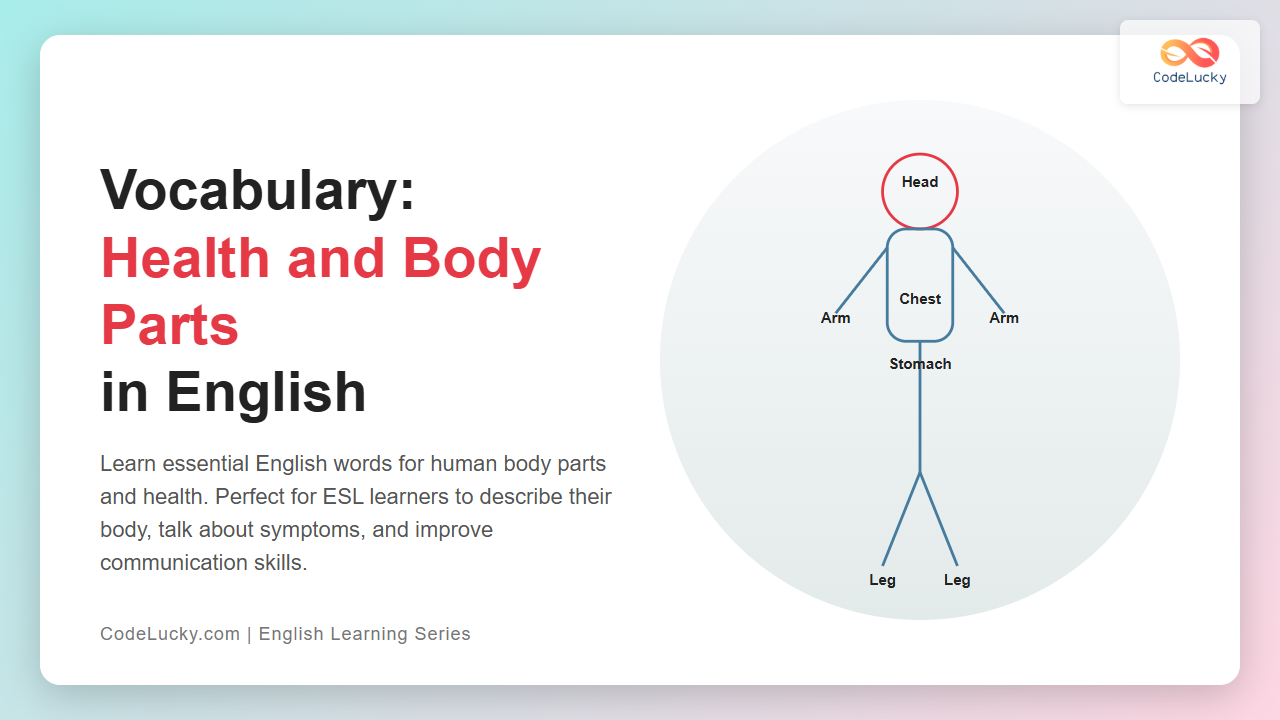
Learning English vocabulary related to health and body parts helps you describe your body, discuss symptoms, and communicate effectively with doctors or in everyday situations. This complete guide covers key body parts, internal organs, common health terms, and practical examples you can use immediately.
1. Importance of Health and Body Parts Vocabulary
Health-related vocabulary is crucial for daily interaction — whether you’re describing pain, booking an appointment, or understanding medical advice. Strong vocabulary helps you express yourself clearly and confidently.
2. The Human Body: Basic Vocabulary
Let’s start with the main external body parts. These are words you’ll use frequently while describing appearances or physical conditions.
| Part | Example Sentence |
|---|---|
| Head | My head hurts after studying all night. |
| Face | Wash your face every morning. |
| Eyes | Her eyes are green. |
| Ears | He listened carefully with his ears covered by headphones. |
| Arm | She raised her arm to answer the question. |
| Leg | I injured my leg while running. |
| Hand | Shake hands when you greet someone. |
| Foot | Wear comfortable shoes to support your feet. |

3. Internal Organs Vocabulary
Knowing internal body parts vocabulary helps you talk about health conditions or describe how your body functions.
- Heart – The organ that pumps blood through your body.
- Lungs – Organs that help you breathe air in and out.
- Brain – Controls thoughts, memory, and movement.
- Stomach – Helps digest food.
- Liver – Filters toxins from the blood.
- Kidneys – Clean waste from the blood.
Example: “The heart pumps blood through the veins to supply oxygen to every part of the body.”

4. Health and Illness Vocabulary
These common terms describe health conditions, treatments, and ways to stay healthy.
| Word | Meaning | Example |
|---|---|---|
| Doctor | A person trained to treat sick people. | The doctor prescribed some medicine. |
| Fever | High body temperature due to illness. | He has a fever and needs rest. |
| Cough | To expel air from lungs suddenly with a sound. | She has a bad cough because of cold weather. |
| Injury | Physical harm or damage to the body. | He got a minor injury on his hand. |
| Medicine | Substance used to treat illness. | Take your medicine after eating. |
| Hospital | Place for medical treatment and care. | She was admitted to the hospital last night. |

5. Common Phrases for Health Conversations
Use these sentences in real-life medical or casual situations:
- “I have a headache.”
- “My throat is sore.”
- “I feel dizzy.”
- “Can you recommend a good doctor?”
- “I need some rest.”
6. Interactive Learning Tip: Body Label Practice
Try an interactive mental exercise: visualize a human figure and label each body part from head to toe. Speak the word aloud — this helps pronunciation and memory. Alternatively, quiz yourself using flashcards or digital vocabulary apps.

7. Health-Related Verbs and Actions
These verbs describe common activities related to health and body care:
- Eat — I eat vegetables for better health.
- Breathe — Take a deep breath before speaking.
- Exercise — Regular exercise keeps your body fit.
- Sleep — You need 7–8 hours of sleep daily.
- Wash — Wash your hands before eating.
- Walk — Walking every day improves blood circulation.
8. Health and Body Idioms
English idioms often use body parts. Here are a few fun ones to learn:
- Break a leg! — A way to wish someone good luck.
- Head over heels — To be deeply in love.
- Cold feet — To feel nervous before an event.
- Catch one’s breath — Take a short rest after exertion.
- Cost an arm and a leg — Something very expensive.
9. Practice Exercise
Match the body parts with their correct function:
- Eyes — a. Helps you breathe
- Lungs — b. Helps you see
- Heart — c. Pumps blood
- Feet — d. Helps you walk
Answers: 1-b, 2-a, 3-c, 4-d
10. Summary
Mastering health and body parts vocabulary empowers you to engage in everyday communication, understand medical advice, and express yourself effectively. Practice daily with real examples and conversations to make these words part of your active vocabulary.
Keep exploring more vocabulary lessons on CodeLucky.com — your complete English learning companion!