Fluency Techniques: Improving English Thinking Skills explores how learners can move from translating words mentally to truly thinking in English. This shift is essential for achieving natural fluency, quick response in real conversations, and accurate self-expression. Below, we’ll dive into practical methods, interactive examples, and visually supported learning models to help learners build this mental fluency effectively.
Why Thinking in English Matters
When you first start learning English, you likely think in your native language and then translate. This slows down your replies, interrupts fluency, and makes communication feel mechanical. Thinking directly in English removes that middle step—your brain processes meaning, not translation.
Here’s a quick comparison to understand the difference:
| Translating | Thinking in English |
|---|---|
| “How do I say ‘Main bazaar jaa raha hoon’?” → “I am going to the main market.“ | “I’m heading to the main market.” |
| Slow and unsure. | Quick, natural, and confident. |
Stages of English Thinking Fluency
The journey from translation to fluency happens in stages. Understanding them gives clarity to your progress.

- Stage 1: Translate short words and memorize expressions.
- Stage 2: Begin framing thoughts using English sentence structure.
- Stage 3: Connect ideas using linking words, e.g. “because,” “so,” “then.”
- Stage 4: Develop natural flow, emotions, and humor—just like a native thinker.
Practical Techniques to Train Your English Thinking
The following techniques train your brain to build English-speaking reflexes faster than traditional grammar-based study.
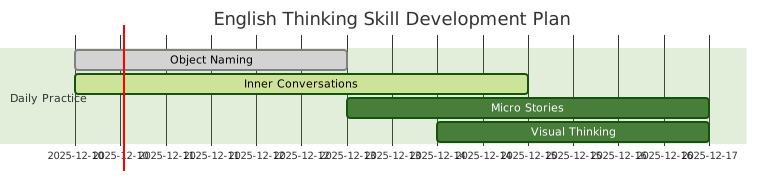
1. The Object-Naming Habit
Wherever you are, name objects mentally in English. Instead of thinking “yeh chair hai,” think “This is a chair.” This constant micro-practice rewires your language reflexes.
2. Visual Scene Thinking
Look at a scene and describe it mentally: “The woman is drinking coffee. A dog is sleeping near her.” Your goal is to think in complete English visuals.

3. Inner Conversations
Create English monologues in your mind during routine activities. Example: “I should pack my charger before I forget.” This builds fast, unfiltered English response capacity.
4. Micro Story Method
Use storytelling to train flow. Pick three words: “rain,” “bus,” “late.” Form a short story:
“I was running to catch the bus, but it started raining, and I got late.”
You just practiced real-world thinking, not textbook grammar.
5. Five-Second Thought Conversion Drill
Set a five-second timer. When you see a random word like “coffee,” instantly think and speak a sentence: “I drink coffee every morning.” Over time, this speed sharpens your language reaction skill.
How the Brain Switches Languages
Language shifting happens when certain neural circuits take dominance. Once English-thinking circuits strengthen, translation circuits activate less frequently.

Interactive Exercise: Trigger Associations
Take 5 everyday items: phone, door, pen, sky, water. For each, instantly create a thought in English. For example:
- Phone: “I need to charge my phone.”
- Door: “Someone knocked at the door.”
- Pen: “Where’s my blue pen?”
- Sky: “The sky looks bright today.”
- Water: “I should drink more water.”
Repeat the exercise daily until your English sentences appear automatically, not through planning.
Technique Integration Plan
To maintain consistent improvement, follow a weekly rotational approach that mixes all cognitive exercises.
Common Mistakes to Avoid
- Over-translating: Translation slows fluency-building.
- Perfectionism: Waiting for perfect grammar blocks natural flow.
- Passive learning only: Watching videos passively doesn’t create neural fluency. You must actively form English thoughts.
- Skipping self-talk: Silent thinking is 80% of real-world fluency practice.
Fluency Maintenance Routine
A consistent habit forms fluent thinking over time. Here’s a routine structure:

Incorporate English input through podcasts, audiobooks, and conversations—but balance it with active mental output too. Just like exercise builds muscles, active thinking strengthens language pathways.
Conclusion
Fluency Techniques for Improving English Thinking Skills aren’t about memorizing vocabulary—they’re about reshaping how the brain organizes thoughts. With daily mental English immersion, visual thinking, and self-talk, learners build an automatic connection between thought and expression. The more you think in English, the faster your words follow naturally without effort.