Understanding Firewall Fundamentals
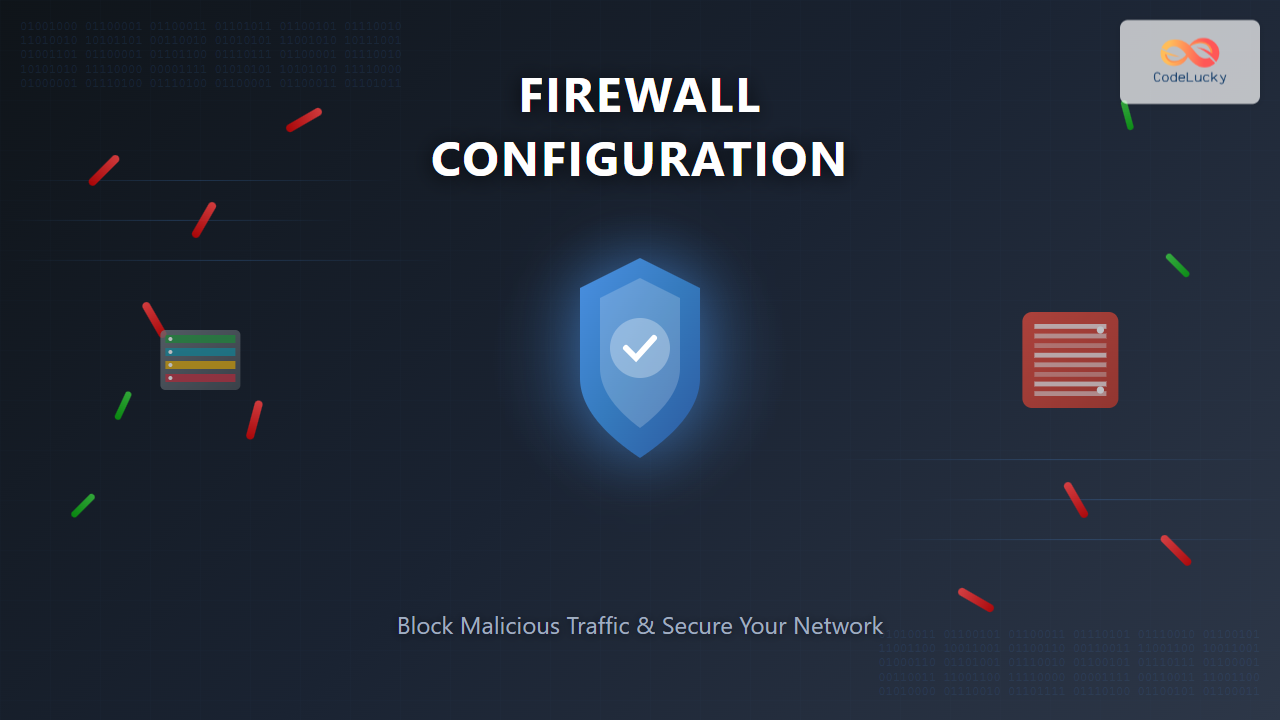
A firewall serves as the first line of defense between your network and potential threats from the internet. It acts as a digital gatekeeper, examining incoming and outgoing traffic based on predetermined security rules to allow or block data packets. Understanding how to properly configure your firewall is crucial for maintaining network security and protecting against malicious attacks.

Types of Firewall Technologies
Packet Filtering Firewalls
Packet filtering firewalls examine individual data packets and make decisions based on source and destination IP addresses, ports, and protocols. They operate at the network layer and are the most basic type of firewall protection.
Stateful Inspection Firewalls
These firewalls track the state of active connections and make decisions based on the context of traffic flow. They maintain a state table of all active connections, providing more sophisticated protection than simple packet filters.
Application Layer Firewalls
Also known as proxy firewalls, these operate at the application layer and can inspect the actual content of data packets, providing the highest level of security but with increased processing overhead.
Essential Firewall Configuration Steps
1. Default Policy Configuration
The first step in firewall configuration is establishing a default policy. The recommended approach is to deny all traffic by default and then explicitly allow only the traffic you need.
# Set default policies (iptables example)
iptables -P INPUT DROP
iptables -P FORWARD DROP
iptables -P OUTPUT ACCEPT

# Allow loopback traffic
iptables -A INPUT -i lo -j ACCEPT
iptables -A OUTPUT -o lo -j ACCEPT
2. Allow Essential Services
After setting restrictive defaults, configure rules to allow legitimate traffic for essential services like SSH, HTTP, and HTTPS.
# Allow SSH (port 22)
iptables -A INPUT -p tcp --dport 22 -j ACCEPT

# Allow HTTP (port 80)
iptables -A INPUT -p tcp --dport 80 -j ACCEPT

# Allow HTTPS (port 443)
iptables -A INPUT -p tcp --dport 443 -j ACCEPT

# Allow established and related connections
iptables -A INPUT -m conntrack --ctstate ESTABLISHED,RELATED -j ACCEPT
Blocking Common Malicious Traffic Patterns

1. Rate Limiting for DDoS Protection
Implement rate limiting to protect against distributed denial-of-service (DDoS) attacks by limiting the number of connections from a single IP address.
# Limit SSH connections to 3 per minute per IP
iptables -A INPUT -p tcp --dport 22 -m conntrack --ctstate NEW -m recent --set
iptables -A INPUT -p tcp --dport 22 -m conntrack --ctstate NEW -m recent --update --seconds 60 --hitcount 4 -j DROP

# Limit HTTP connections to prevent web server overload
iptables -A INPUT -p tcp --dport 80 -m conntrack --ctstate NEW -m limit --limit 25/minute --limit-burst 100 -j ACCEPT
2. Blocking Suspicious Port Scans
Configure rules to detect and block port scanning attempts, which are often precursors to more serious attacks.
# Block common scanning ports
iptables -A INPUT -p tcp --dport 23 -j DROP    # Telnet
iptables -A INPUT -p tcp --dport 135 -j DROP   # RPC
iptables -A INPUT -p tcp --dport 139 -j DROP   # NetBIOS
iptables -A INPUT -p tcp --dport 445 -j DROP   # SMB

# Log and drop stealth scans
iptables -A INPUT -p tcp --tcp-flags ALL NONE -j LOG --log-prefix "NULL scan: "
iptables -A INPUT -p tcp --tcp-flags ALL NONE -j DROP
3. Geographic IP Blocking
Block traffic from specific countries or regions known for malicious activity using IP range blocking.
# Block specific IP ranges (example: blocking a suspicious subnet)
iptables -A INPUT -s 192.0.2.0/24 -j DROP

# Using ipset for efficient large-scale blocking
ipset create malicious_ips hash:net
ipset add malicious_ips 198.51.100.0/24
ipset add malicious_ips 203.0.113.0/24
iptables -A INPUT -m set --match-set malicious_ips src -j DROP
Advanced Firewall Configuration Techniques

1. Connection State Tracking
Utilize connection state tracking to ensure that only legitimate response traffic is allowed back into your network.
# Allow established connections and related traffic
iptables -A INPUT -m conntrack --ctstate ESTABLISHED,RELATED -j ACCEPT

# Block invalid packets
iptables -A INPUT -m conntrack --ctstate INVALID -j DROP

# Limit new connections
iptables -A INPUT -m conntrack --ctstate NEW -m limit --limit 60/s --limit-burst 20 -j ACCEPT
2. Application-Specific Rules
Create targeted rules for specific applications and services running on your network.
# Database server protection (MySQL example)
iptables -A INPUT -p tcp --dport 3306 -s 192.168.1.0/24 -j ACCEPT
iptables -A INPUT -p tcp --dport 3306 -j DROP

# Web server with geo-blocking
iptables -A INPUT -p tcp --dport 80 -m geoip --src-cc CN,RU -j DROP
iptables -A INPUT -p tcp --dport 80 -j ACCEPT
3. Time-Based Access Control
Implement time-based rules to restrict access during specific hours or days.
# Allow SSH only during business hours (9 AM to 6 PM, weekdays)
iptables -A INPUT -p tcp --dport 22 -m time --timestart 09:00 --timestop 18:00 --weekdays Mon,Tue,Wed,Thu,Fri -j ACCEPT
iptables -A INPUT -p tcp --dport 22 -j DROP
Monitoring and Logging Configuration
Setting Up Comprehensive Logging
Proper logging is essential for monitoring firewall effectiveness and identifying security threats.
# Log dropped packets for analysis
iptables -A INPUT -m limit --limit 5/m --limit-burst 7 -j LOG --log-prefix "iptables denied: " --log-level 7

# Log accepted connections for audit
iptables -A INPUT -p tcp --dport 22 -j LOG --log-prefix "SSH connection: "
iptables -A INPUT -p tcp --dport 22 -j ACCEPT

Real-Time Monitoring Setup
Configure real-time monitoring to detect and respond to threats immediately.
# Monitor firewall logs in real-time
tail -f /var/log/iptables.log

# Set up fail2ban for automated response
# /etc/fail2ban/jail.local
[DEFAULT]
bantime = 3600
findtime = 600
maxretry = 3

[ssh]
enabled = true
port = 22
filter = sshd
logpath = /var/log/auth.log
maxretry = 3
Firewall Rule Optimization and Maintenance
Performance Optimization
Organize firewall rules for optimal performance by placing frequently matched rules at the beginning of the chain.
# Efficient rule ordering
# 1. Accept loopback traffic (most frequent)
iptables -A INPUT -i lo -j ACCEPT

# 2. Accept established connections (very frequent)
iptables -A INPUT -m conntrack --ctstate ESTABLISHED,RELATED -j ACCEPT

# 3. Drop invalid packets early
iptables -A INPUT -m conntrack --ctstate INVALID -j DROP

# 4. Rate limiting rules
# 5. Service-specific rules
# 6. Default drop policy
Regular Maintenance Tasks
Establish a routine maintenance schedule to keep your firewall configuration current and effective.
- Weekly: Review firewall logs for unusual patterns
- Monthly: Update malicious IP blacklists and threat intelligence
- Quarterly: Audit and optimize firewall rules
- Annually: Conduct penetration testing to validate firewall effectiveness
Testing and Validation
Firewall Rule Testing
Always test your firewall configuration before deploying it to production environments.
# Test connectivity from external sources
nmap -sS -O target_ip

# Verify specific ports are blocked
telnet target_ip 23

# Test rate limiting
for i in {1..10}; do ssh user@target_ip; done

# Check firewall status and statistics
iptables -L -v -n --line-numbers

Common Testing Scenarios
| Test Type | Command | Expected Result |
|---|---|---|
| Port Accessibility | nmap -p 22,80,443 target_ip |
Only allowed ports show as open |
| Rate Limiting | hping3 -S -p 80 --flood target_ip |
Connections limited/blocked after threshold |
| Geographic Blocking | VPN to blocked country and test access | Access denied from blocked regions |
| Service Accessibility | curl -I http://target_ip |
Legitimate services remain accessible |
Best Practices and Security Considerations
Principle of Least Privilege
Apply the principle of least privilege by allowing only the minimum necessary access for systems and users to function properly.
Defense in Depth
Implement multiple layers of security rather than relying solely on firewall protection. Combine firewalls with intrusion detection systems, antivirus software, and security monitoring tools.
Regular Updates and Patches
Keep your firewall software and rule sets updated to protect against newly discovered vulnerabilities and attack vectors.
# Backup current configuration before updates
iptables-save > /etc/iptables/rules.backup.$(date +%Y%m%d)

# Restore configuration if needed
iptables-restore < /etc/iptables/rules.backup.20241201
Conclusion
Effective firewall configuration is a critical component of network security that requires careful planning, implementation, and ongoing maintenance. By following the strategies and examples outlined in this guide, you can create a robust defense against malicious traffic while maintaining the accessibility and performance your applications require.
Remember that firewall configuration is not a one-time task but an ongoing process that must evolve with your network infrastructure and the changing threat landscape. Regular monitoring, testing, and updates ensure your firewall continues to provide effective protection against emerging security threats.
Start with a restrictive default policy, implement comprehensive logging, and gradually fine-tune your rules based on legitimate traffic patterns and security requirements. This methodical approach will help you build a firewall configuration that effectively blocks malicious traffic while supporting your organization’s operational needs.