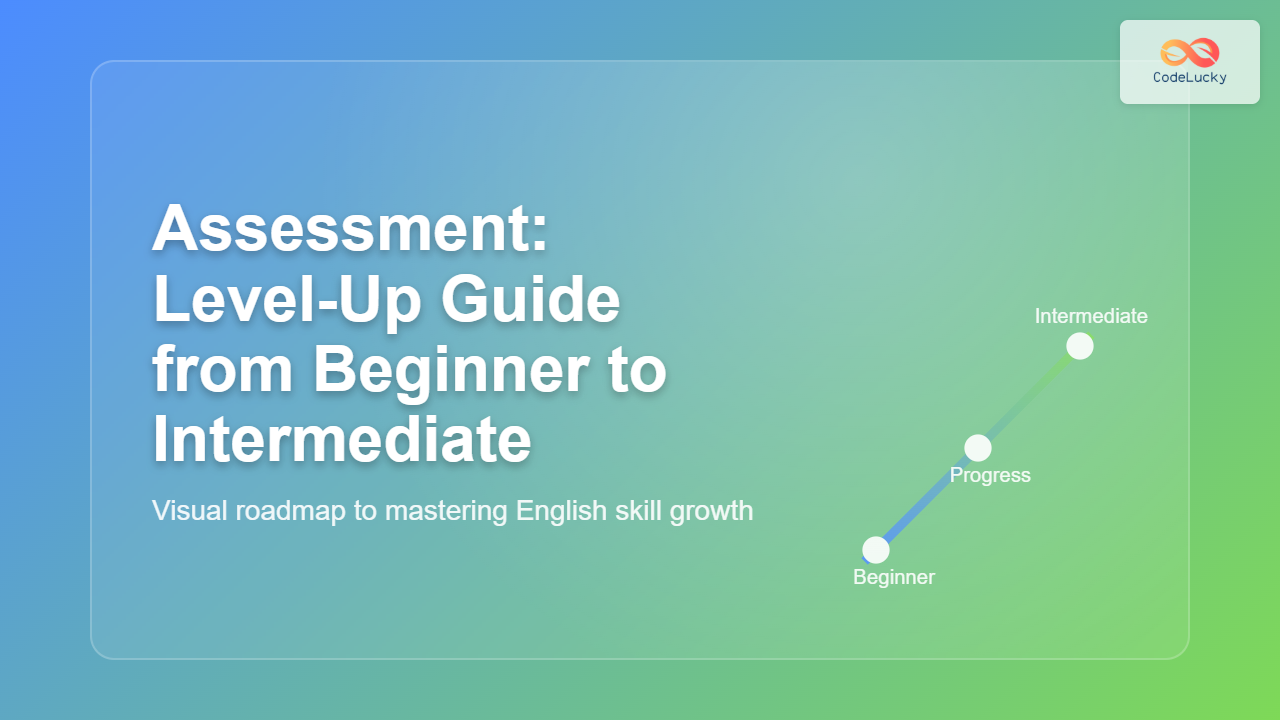
Assessment: Level-Up Guide from Beginner to Intermediate — a complete roadmap that helps English learners measure progress, identify weaknesses, and move confidently from the beginner to the intermediate stage. Whether you are self-learning or studying formally, this guide gives you clear checkpoints, interactive ideas, and visual tools to level up your English effectively.
1. Understanding English Learning Levels
Language progress can be classified using the CEFR scale (Common European Framework of Reference for Languages). The beginner level covers A1–A2, while intermediate covers B1–B2.

As you transition from A1–A2 to B1, you focus on real-time conversation ability, comprehension of everyday topics, and grammatical accuracy. Understanding this structure helps you set measurable learning goals.
2. Key Indicators of Moving Beyond Beginner Level
Before stepping into intermediate English, check if you can comfortably handle the following:
- Listening: Understand simple talks, directions, or daily expressions.
- Reading: Follow short texts, ads, or simple news articles.
- Speaking: Communicate daily needs or describe immediate surroundings.
- Writing: Write short emails, notes, or diary entries clearly.
If these feel easy, you’re already at A2 and ready to start your climb to B1.
3. Assessment Stages and Skill Focus
Here’s how you can evaluate your growth across the four main skills:

Listening
Listen to recordings of news or conversations and answer comprehension questions. Focus on main ideas, keywords, and tone. Example:
Audio: "Where is the nearest bus stop?"
Question: What information was requested in the audio?
Answer: Location of the nearest bus stop.
Reading
Try short paragraphs and paraphrase them. Here’s a sample visual comparison:
| Original Sentence | Rewritten (Intermediate Goal) |
|---|---|
| She likes reading books at night. | She enjoys spending her nights reading novels. |
Speaking
Record a 1-minute talk about your routine. Focus on fluency rather than perfection. Example outline:
- Greeting: “Good morning, I’d like to share my daily routine.”
- Body: Describe morning, work/school, and evening activities.
- Closing: “That’s a typical day for me.”
Writing
Write a short paragraph describing a recent experience, then review for grammar and sentence structure. Example:
I went to the market yesterday. I bought some fruits and vegetables. It was very crowded but enjoyable.4. Self-Assessment Techniques
Self-assessment helps maintain consistent progress and keeps you motivated.

Use a Reflective Chart
Build a simple checklist like:
| Skill | Confidence Level (1–5) | Comments |
|---|---|---|
| Listening | 3 | Can understand movies with subtitles. |
| Speaking | 2 | Need to speak longer without pausing. |
5. Interactive Practice Ideas
Make learning interactive through tech-friendly tools and communicative tasks:
- Online quizzes: Platforms like Quizizz or Kahoot help assess grammar.
- Voice-based apps: Practice pronunciation through speech comparison tools.
- Flashcards: Build vocabulary retention using low-frequency words from your reading material.
- Peer exchange: Talk weekly with a partner to track fluency gain.
Try using this simple exercise method with your own code-style tracker:
Goal: Improve sentence variety.
Action: Rewrite a 40-word paragraph using 3 different sentence types.
Output Example:
1. Simple: I study every morning.
2. Compound: I study every morning, and I revise in the evening.
3. Complex: Although I am busy, I make time for English practice.
6. Visual Roadmap of Your Learning Journey

This roadmap guides you from understanding simple everyday expressions to being capable of independent conversation and comprehension at the intermediate level.
7. Common Challenges and Solutions
- Lack of Progress Visibility: Keep a weekly log or journal of what you learned.
- Grammar Confusion: Focus on one tense per week with contextual examples.
- Fear of Speaking: Record short audio clips and listen to identify improvement areas.
- Low Motivation: Set realistic, fun goals like “Describe one movie every Friday.”
8. Final Assessment Checklist
Use this quick checklist to confirm readiness for the intermediate stage:
- ✅ Can listen and respond in short, natural conversations.
- ✅ Can read news articles and summarize them.
- ✅ Can write short paragraphs clearly and accurately.
- ✅ Can describe everyday experiences fluently.
Conclusion
Assessments are not merely tests—they’re mirrors reflecting your language journey. By identifying your strengths, tracking improvements, and continuously engaging in practice, you’ll level up from a beginner to an intermediate English learner confidently. Stay consistent, stay curious, and let every assessment become your stepping stone to fluency.