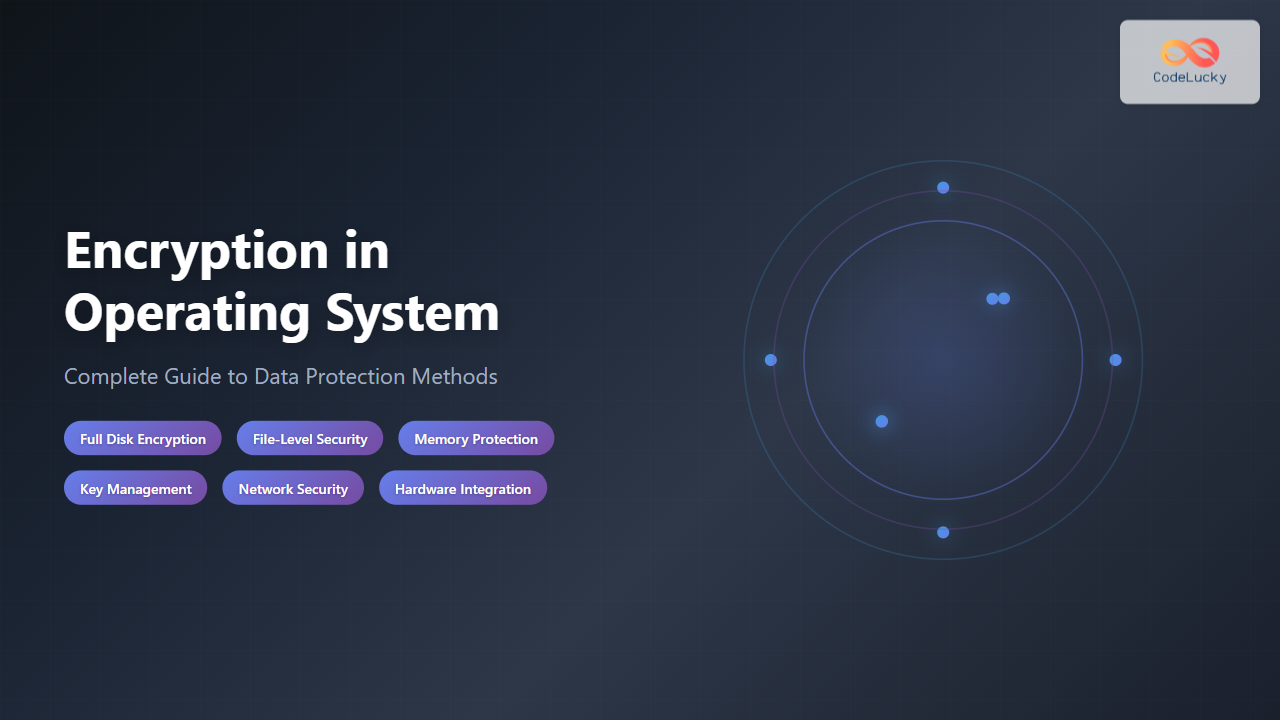
Operating system encryption serves as the cornerstone of modern data protection, safeguarding sensitive information from unauthorized access, data breaches, and cyber threats. As digital assets become increasingly valuable, understanding and implementing robust encryption mechanisms within operating systems has become essential for both individual users and enterprise environments.
Understanding Operating System Encryption
Encryption in operating systems involves the systematic conversion of readable data into an encoded format that can only be deciphered with the correct decryption key. This process occurs at multiple layers within the OS architecture, from file system level to memory protection, ensuring comprehensive data security across all system components.

Types of Encryption in Operating Systems
Symmetric Encryption
Symmetric encryption utilizes a single key for both encryption and decryption processes. This method offers high performance and is commonly implemented for bulk data encryption within operating systems.
Key Characteristics:
- Single shared key for encryption/decryption
- Fast processing speed
- Lower computational overhead
- Suitable for large data volumes
Common Algorithms:
- AES (Advanced Encryption Standard): 128, 192, or 256-bit keys
- DES (Data Encryption Standard): Legacy 56-bit encryption
- 3DES (Triple DES): Enhanced version using three DES operations
- ChaCha20: Modern stream cipher with high performance
Asymmetric Encryption
Asymmetric encryption employs a pair of mathematically related keys: a public key for encryption and a private key for decryption. This approach eliminates the need for shared secret keys but requires more computational resources.

Popular Algorithms:
- RSA: Widely used for key exchange and digital signatures
- ECC (Elliptic Curve Cryptography): Efficient alternative to RSA
- Diffie-Hellman: Key exchange protocol
Full Disk Encryption (FDE)
Full Disk Encryption represents the most comprehensive approach to data protection at the operating system level, encrypting entire storage devices including the operating system, applications, and user data.
Implementation Methods
Software-Based FDE:
- BitLocker (Windows): Integrated encryption solution using AES
- FileVault (macOS): XTS-AES 128 encryption with hardware acceleration
- LUKS (Linux): Flexible disk encryption specification
- dm-crypt (Linux): Kernel-level transparent disk encryption
Hardware-Based FDE:
- Self-Encrypting Drives (SEDs)
- Trusted Platform Module (TPM) integration
- Hardware Security Modules (HSMs)

File-Level Encryption
File-level encryption provides granular control over individual files and directories, allowing users to selectively protect sensitive data without encrypting the entire system.
Windows Encrypting File System (EFS)
EFS integrates seamlessly with NTFS file system, providing transparent encryption and decryption for authorized users.
Implementation Example:
cipher /e /s:C:\SecureFolder
cipher /u /n C:\SecureFolder\*.*
Linux File Encryption
eCryptfs Implementation:
# Mount encrypted directory
sudo mount -t ecryptfs /home/user/secure /home/user/secure

# Encrypt specific files using GPG
gpg --cipher-algo AES256 --compress-algo 1 --symmetric filename.txt
Memory Encryption
Memory encryption protects data while it resides in system RAM, preventing unauthorized access through physical memory dumps or cold boot attacks.
Technologies and Implementation
- Intel Total Memory Encryption (TME): Hardware-level RAM encryption
- AMD Secure Memory Encryption (SME): System memory protection
- ARM TrustZone: Secure and non-secure memory regions
Network and Communication Encryption
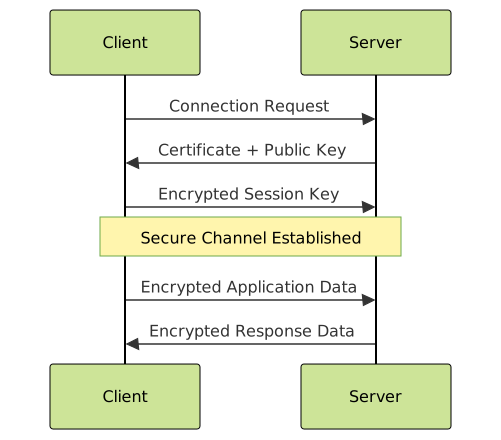
Operating systems implement various protocols to secure network communications and data transmission.
Transport Layer Security
- TLS/SSL: Secure web communications
- IPSec: Network layer security protocol
- VPN Integration: Virtual private network encryption
- SSH: Secure shell for remote access
Key Management Systems
Effective key management ensures the security and accessibility of encryption keys throughout their lifecycle.
Key Generation and Storage
- Hardware Random Number Generators: True entropy sources
- Key Derivation Functions (KDF): PBKDF2, Argon2, scrypt
- Secure Key Storage: Hardware security modules, TPM
- Key Escrow: Enterprise key recovery mechanisms
Key Rotation and Lifecycle
# Example key rotation implementation
import os
import hashlib
from cryptography.fernet import Fernet

class KeyManager:
    def __init__(self):
        self.current_key = None
        self.previous_keys = []

    def generate_new_key(self):
        """Generate new encryption key"""
        new_key = Fernet.generate_key()
        if self.current_key:
            self.previous_keys.append(self.current_key)
        self.current_key = new_key
        return new_key

    def rotate_keys(self, max_previous=5):
        """Rotate keys and maintain history"""
        self.generate_new_key()
        if len(self.previous_keys) > max_previous:
            self.previous_keys = self.previous_keys[-max_previous:]
Performance Considerations
Encryption implementation must balance security requirements with system performance to maintain optimal user experience.
Hardware Acceleration
- AES-NI Instructions: Intel/AMD processor acceleration
- Cryptographic Coprocessors: Dedicated encryption hardware
- GPU Acceleration: Parallel processing for encryption tasks
- ARM Cryptography Extensions: Mobile device optimization
Performance Optimization Strategies
- Algorithm Selection: Choose appropriate encryption methods
- Block Size Optimization: Efficient data chunking
- Caching Mechanisms: Reduce key derivation overhead
- Parallel Processing: Multi-threaded encryption operations

Security Best Practices
Implementation Guidelines
- Use Strong Algorithms: AES-256, RSA-2048 minimum
- Implement Perfect Forward Secrecy: Session key independence
- Regular Security Audits: Vulnerability assessments
- Multi-Factor Authentication: Enhanced access control
- Secure Key Storage: Hardware security modules
Common Vulnerabilities and Mitigation
- Side-Channel Attacks: Timing analysis, power consumption
- Key Exposure: Memory dumps, swap files
- Implementation Flaws: Weak random number generation
- Social Engineering: User education and awareness
Future Developments
The encryption landscape continues evolving with emerging technologies and quantum computing threats.
Quantum-Resistant Cryptography
- Post-Quantum Algorithms: NIST standardization process
- Lattice-Based Cryptography: Quantum-resistant foundations
- Code-Based Systems: Alternative mathematical approaches
- Multivariate Cryptography: Polynomial equation systems
Emerging Technologies
- Homomorphic Encryption: Computation on encrypted data
- Confidential Computing: Secure execution environments
- Zero-Knowledge Proofs: Privacy-preserving verification
- Blockchain Integration: Decentralized key management
Conclusion
Operating system encryption forms the backbone of modern cybersecurity, protecting valuable data through multiple layers of defense. From full disk encryption to granular file-level protection, implementing comprehensive encryption strategies requires careful consideration of security requirements, performance implications, and user accessibility. As threats evolve and quantum computing approaches, organizations must stay informed about emerging encryption technologies and maintain robust security practices to ensure long-term data protection.
The successful implementation of encryption in operating systems demands a holistic approach, combining strong algorithms, proper key management, hardware acceleration, and regular security assessments. By following established best practices and staying current with technological developments, system administrators and developers can create resilient security architectures that protect against both current and future threats.
Related Posts
Backup and Recovery: Complete Guide to Data Protection Strategies in Operating Systems
Data loss can be catastrophic for individuals and organizations alike. Modern operating systems provide robust backup and recovery mechanisms to...
Security in Operating System: Complete Guide to Access Control and Authentication
Introduction to Operating System Security Operating system security forms the foundation of computer security, protecting system resources and user data...
cryptsetup Command Linux: Complete Guide to LUKS Disk Encryption
The cryptsetup command is a powerful Linux utility that provides disk encryption capabilities through the Linux Unified Key Setup (LUKS)...
File Locking Mechanisms: Complete Guide to Advisory and Mandatory Locking in Operating Systems
File locking mechanisms are essential components of modern operating systems that prevent data corruption and ensure data integrity when multiple...
Windows Operating System: Complete Guide to Architecture and Core Components
The Windows Operating System stands as one of the most widely used operating systems globally, powering billions of devices from...
Operating System Basics: Complete Guide to What is an OS and How it Works
An operating system (OS) is the fundamental software that manages computer hardware and software resources, acting as an intermediary between...
Memory Protection: Hardware and Software Mechanisms for Secure Computing
Understanding Memory Protection in Modern Computing Memory protection is a fundamental security mechanism that prevents programs from accessing memory regions...
Python Cryptography: Securing Data with Encryption
In today's digital age, data security is paramount. Whether you're developing a web application, handling sensitive user information, or simply...
Trusted Computing Base: Security Kernel Design Fundamentals and Implementation
In the realm of operating system security, the Trusted Computing Base (TCB) represents the foundation upon which all system security...
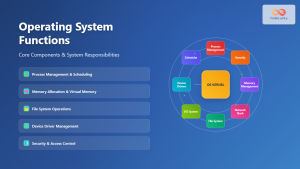
Operating System Functions: Core Components and System Responsibilities
An operating system (OS) serves as the fundamental software layer that manages computer hardware resources and provides essential services to...
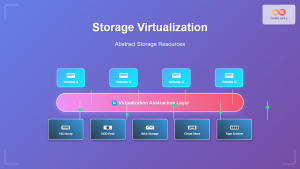
Storage Virtualization: Complete Guide to Abstract Storage Resources in Modern Computing
Storage virtualization represents one of the most critical technologies in modern computing infrastructure, enabling organizations to abstract physical storage resources...
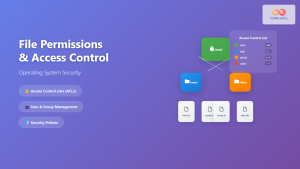
File Permissions in Operating System: Complete Guide to Access Control Lists (ACLs)
Introduction to File Permissions and Access Control File permissions form the backbone of operating system security, controlling who can access,...