Emergencies can strike at any time, and knowing how to communicate effectively in English during such situations is a vital life skill. Whether you’re reporting a fire, calling for medical help, or assisting someone in distress, using the right words and tone can make all the difference.
In this article from CodeLucky.com, you’ll learn how to handle key emergency-related conversations in English. We’ll explore essential vocabulary, natural dialogue examples, and interactive exercises to boost your confidence in real-life situations.
Why Learn Emergency Situation Conversations?
Emergency communication involves quick thinking, clear speech, and emotional control. Practicing these conversations helps you:
- Respond faster and more accurately in stressful situations.
- Use appropriate tone and expressions for emergencies.
- Gain confidence in speaking with authorities, medics, or bystanders.
- Prepare for travel, public spaces, or workplace safety incidents.
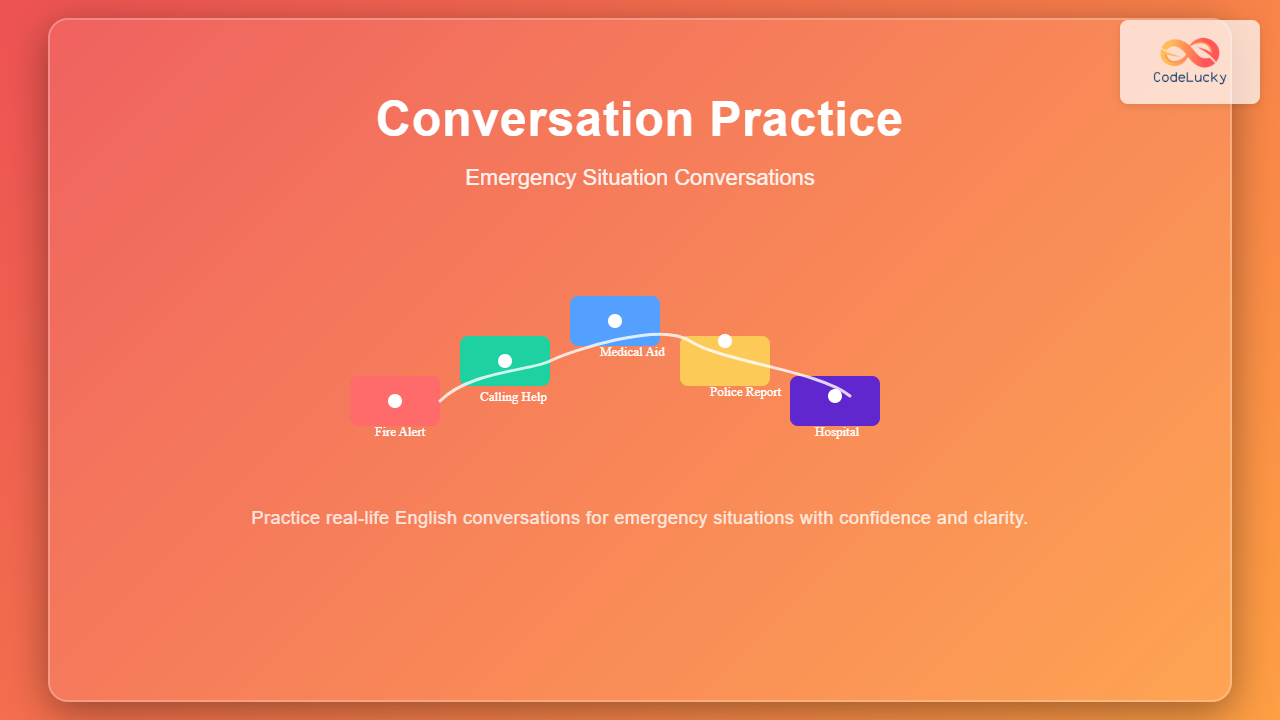
Common Emergency Scenarios in English Conversation
Below are the most common emergency situations where English conversations are essential. Each section includes a sample dialogue, expressions, and a quick vocabulary guide.
1. Reporting a Fire
Situation: You see smoke coming from a neighbor’s building. You immediately call the fire department.
Sample Conversation:
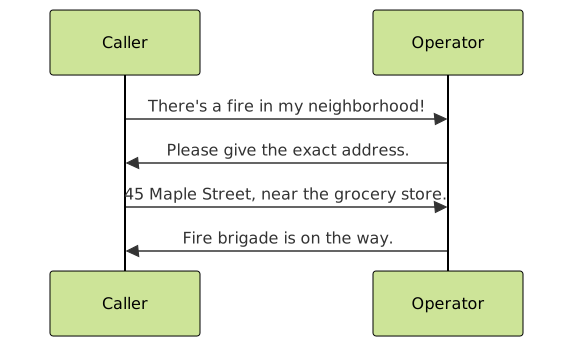
You: Hello, there’s a fire in my neighborhood!
Operator: Calm down, please. Can you tell me the exact address?
You: Yes, it’s 45 Maple Street, near the grocery store.
Operator: Thank you, the fire brigade is on the way. Please move to a safe area.
Useful Phrases:
- “There’s a fire at…”
- “Smoke is coming from…”
- “Someone might be inside!”
- “Please send help immediately.”
2. Calling for Medical Help
Situation: Someone suddenly collapses in front of you, and you need to call an ambulance.
Sample Conversation:
You: Hello, I need an ambulance. Someone just fainted!
Operator: Please share your location and describe their condition.
You: We’re at Central Park, near the main gate. The person is unconscious but breathing.
Operator: Help is on the way. Stay with them and keep them comfortable.
Emergency Vocabulary:
- Unconscious: Not awake or responsive.
- Pulse: The heartbeat felt through the arteries.
- Ambulance: Vehicle used for emergency medical care.

3. Reporting a Crime or Theft
Situation: Your bag was stolen in a public place. You report the incident to the police.
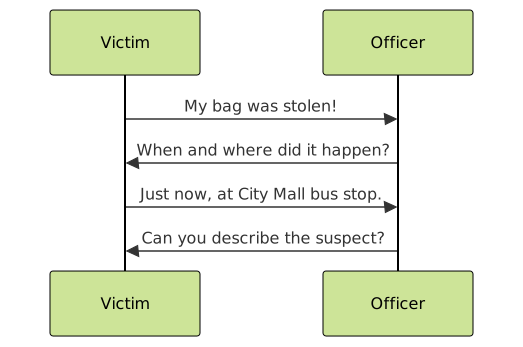
Sample Conversation:
You: Officer, someone stole my bag!
Police Officer: I’m sorry to hear that. When did it happen?
You: Just a few minutes ago, at the bus stop near City Mall.
Police Officer: Can you describe the person or the bag?
You: It’s a black leather bag. The thief was wearing a blue jacket and ran toward the station.
Key Expressions:
- “Someone has stolen my…”
- “I’d like to file a report.”
- “Can you help me track it?”
4. Asking for Help in an Accident
Situation: You witness a road accident and need to ask for quick help.
Sample Conversation:
You: Excuse me, please help! There’s been an accident!
Bystander: Is anyone injured?
You: Yes, I think the driver is hurt. We need an ambulance fast.
Bystander: I’ll call emergency right now. Stay with the driver.
Helpful Vocabulary:
- Injured: Hurt or wounded.
- Crash: Sudden impact, usually between vehicles.
- Emergency: A serious, unexpected situation requiring action.

5. At the Hospital Reception
Situation: You arrive at a hospital after bringing someone injured for treatment.
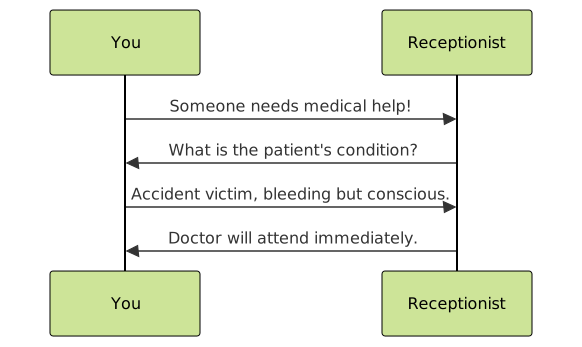
Sample Conversation:
You: Hello, I brought someone who needs medical help immediately.
Receptionist: What’s the patient’s condition?
You: They were in an accident. Bleeding from the arm but conscious.
Receptionist: Please wait here; a doctor will see them right away.
Useful Expressions:
- “We need a doctor immediately.”
- “The patient is conscious but hurt.”
- “Can you inform the emergency team?”
Interactive Practice Exercise
Try filling in the blanks in the following sentences:
- “Hello, I need an ________. Someone fainted.”
- “There’s a ________ in my building!”
- “Please send the police, my bag was ________.”
- “We’re at ________ Park, near the main gate.”
Tip: Practice these aloud with a friend or record yourself to improve pronunciation and fluency.
Conclusion
Learning Emergency Situation Conversations in English equips you to stay calm, clear, and confident in critical moments. By practicing realistic dialogues and mastering essential phrases, you not only improve your spoken English but also become more capable of handling real-world emergencies.
Keep practicing, stay safe, and use every situation as a chance to learn!