Understanding E-commerce Hosting Fundamentals
E-commerce hosting goes far beyond standard website hosting. Your online store requires specialized infrastructure to handle secure transactions, manage inventory, process payments, and deliver seamless shopping experiences. The right hosting solution directly impacts your conversion rates, customer trust, and business growth.
Unlike static websites or blogs, e-commerce platforms demand robust server resources, advanced security measures, and specialized software configurations. Every millisecond of loading time matters when customers are ready to purchase, and any downtime can result in immediate revenue loss.

Critical Performance Requirements
Server Resources and Specifications
E-commerce websites require significantly more server resources than typical websites due to dynamic content generation, database queries, and real-time inventory updates.
Minimum Server Specifications:
- RAM: 4GB minimum, 8GB+ recommended for medium to large stores
- CPU: Multi-core processors with at least 2.4GHz clock speed
- Storage: SSD storage with minimum 50GB, scalable based on product catalog size
- Bandwidth: Unmetered or high-limit bandwidth to handle traffic spikes
Page Loading Speed Optimization
Research shows that 53% of mobile users abandon sites that take longer than 3 seconds to load. For e-commerce sites, every 100ms delay in loading time can decrease conversion rates by 7%.
Speed Optimization Features:
- Content Delivery Network (CDN) integration
- Built-in caching mechanisms (Redis, Memcached)
- Image compression and optimization tools
- Database query optimization
- HTTP/2 support for faster content delivery
Security Requirements for Online Stores
SSL Certificates and Encryption
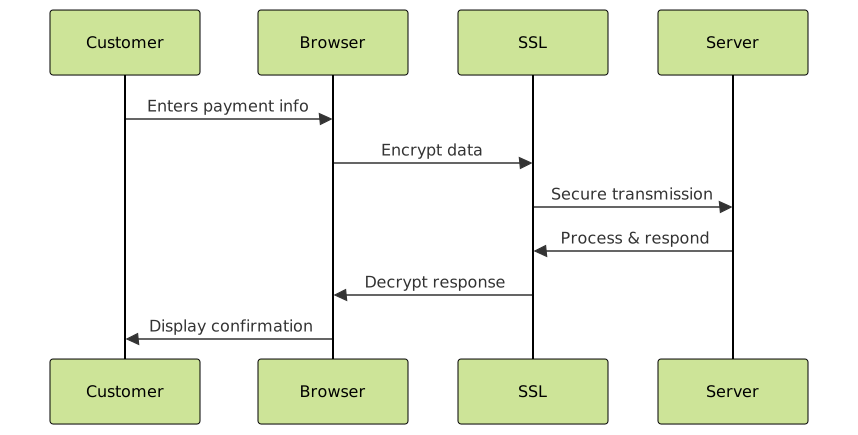
SSL certificates are non-negotiable for e-commerce websites. They encrypt data transmission between customers and servers, protecting sensitive information like credit card details and personal data.
SSL Certificate Types:
- Domain Validated (DV): Basic encryption, suitable for small stores
- Organization Validated (OV): Enhanced validation, better for established businesses
- Extended Validation (EV): Highest level of validation, displays company name in browser
PCI DSS Compliance
Payment Card Industry Data Security Standard (PCI DSS) compliance is mandatory for any website processing credit card transactions. Your hosting provider should offer PCI-compliant infrastructure and support compliance efforts.
PCI DSS Requirements:
- Secure network architecture with firewalls
- Regular security updates and patches
- Encrypted data transmission and storage
- Access control and monitoring systems
- Regular security testing and vulnerability assessments
Database Management and Storage
Database Performance Optimization
E-commerce platforms rely heavily on database operations for product catalogs, customer accounts, order processing, and inventory management. Database performance directly affects website speed and user experience.
Database Requirements:
- MySQL 8.0+ or PostgreSQL 12+ for optimal performance
- Database caching with Redis or Memcached
- Regular automated backups with point-in-time recovery
- Database clustering for high-availability setups
Backup and Recovery Solutions
Data loss can be catastrophic for online stores. Comprehensive backup strategies ensure business continuity and data protection.

Scalability and Traffic Management
Handling Traffic Spikes
E-commerce sites experience significant traffic variations, especially during sales events, holidays, and product launches. Your hosting solution must scale automatically to handle these spikes without performance degradation.
Scalability Solutions:
- Auto-scaling: Automatic resource allocation based on traffic
- Load balancing: Distribute traffic across multiple servers
- Cloud hosting: On-demand resource scaling
- CDN integration: Global content distribution
Resource Monitoring and Analytics
Continuous monitoring helps identify performance bottlenecks and optimize resource allocation. Essential monitoring metrics include:
- Server response times and uptime statistics
- Database query performance and optimization opportunities
- Traffic patterns and peak usage periods
- Resource utilization (CPU, RAM, storage)
- Security events and threat detection
E-commerce Platform Compatibility
Popular Platform Requirements
Different e-commerce platforms have specific hosting requirements that must be met for optimal performance.
| Platform | PHP Version | Database | Memory Limit | Special Requirements |
|---|---|---|---|---|
| WooCommerce | 7.4+ | MySQL 5.6+ | 256MB+ | WordPress optimized |
| Magento 2 | 8.1+ | MySQL 8.0+ | 2GB+ | Elasticsearch, Redis |
| Shopify Plus | N/A | Managed | N/A | App integrations |
| OpenCart | 7.4+ | MySQL 5.7+ | 128MB+ | cURL, ZIP support |
Third-party Integrations
Modern e-commerce sites integrate with numerous third-party services for payments, shipping, analytics, and marketing. Your hosting environment must support these integrations seamlessly.

Geographic Considerations and Global Reach
Content Delivery Networks
For stores serving global customers, CDN implementation is crucial for delivering fast loading times regardless of visitor location. CDNs cache static content across multiple geographic locations, reducing latency and improving user experience.
CDN Benefits:
- Reduced page loading times globally
- Decreased server load and bandwidth usage
- Improved SEO rankings due to faster speeds
- Enhanced security with DDoS protection
Multi-currency and Multi-language Support
International e-commerce requires hosting solutions that can handle multiple currencies, languages, and regional compliance requirements. Consider hosting providers with:
- Multi-region data centers
- GDPR compliance capabilities
- Currency conversion API support
- Localized payment method integrations
Hosting Types for E-commerce
Shared vs. Dedicated vs. Cloud Hosting
Choosing the right hosting type depends on your store size, traffic volume, and growth projections.
| Hosting Type | Best For | Pros | Cons |
|---|---|---|---|
| Shared Hosting | Small startups | Low cost, easy setup | Limited resources, security risks |
| VPS Hosting | Growing stores | Better performance, more control | Requires technical knowledge |
| Dedicated Hosting | Large enterprises | Maximum performance, full control | High cost, complex management |
| Cloud Hosting | Scalable businesses | Auto-scaling, high availability | Variable costs, complexity |
Managed vs. Unmanaged Hosting
Managed hosting services handle server maintenance, security updates, and technical support, allowing you to focus on business growth. Unmanaged hosting offers more control but requires technical expertise.

Cost Considerations and ROI
Total Cost of Ownership
E-commerce hosting costs extend beyond monthly fees. Consider the complete cost structure including:
- Hosting fees: Base hosting plan costs
- SSL certificates: Annual certificate renewal fees
- CDN services: Content delivery network costs
- Security tools: Firewalls, malware scanning, monitoring
- Backup services: Automated backup and recovery solutions
- Development costs: Technical support and maintenance
Performance Impact on Revenue
Investing in quality hosting directly impacts your bottom line. Studies show that:
- 1-second delay reduces conversions by 7%
- 40% of users abandon sites taking over 3 seconds to load
- Fast-loading sites achieve 2.5x higher conversion rates
- Google considers page speed in search rankings
Implementation Best Practices
Migration and Setup Strategy
Migrating an existing e-commerce site or setting up a new store requires careful planning to avoid downtime and data loss.
Migration Checklist:
- Complete database and file backups
- DNS propagation planning and timing
- SSL certificate installation and testing
- Payment gateway configuration and testing
- Performance testing and optimization
- Security scanning and vulnerability assessment
Ongoing Maintenance and Monitoring
Successful e-commerce hosting requires continuous monitoring and maintenance to ensure optimal performance and security.
Regular Maintenance Tasks:
- Security updates and patch management
- Database optimization and cleanup
- Performance monitoring and tuning
- Backup verification and testing
- Traffic analysis and capacity planning
Conclusion
Selecting the right e-commerce hosting solution is a critical business decision that affects customer experience, conversion rates, and long-term growth. Focus on performance, security, scalability, and support when evaluating hosting options. Remember that the cheapest solution often costs more in lost sales and customer trust.
Invest in hosting infrastructure that can grow with your business, provides robust security features, and delivers the fast, reliable experience modern consumers expect. The right hosting foundation will support your e-commerce success for years to come.