Doctor and Health Conversations are among the most useful real-life topics for English learners. Whether you’re traveling abroad, visiting a clinic, or simply improving your English fluency, understanding how to communicate health issues clearly can make a big difference. In this article by CodeLucky.com, we’ll explore common expressions, conversation tips, and practical dialogue examples to boost your confidence.
Understanding the Context
Health-related conversations often happen in medical clinics, hospitals, pharmacies, or even online consultations. The tone is polite, clear, and professional. You should know how to describe symptoms, ask questions, give information, and understand advice.
Typical Participants and Flow

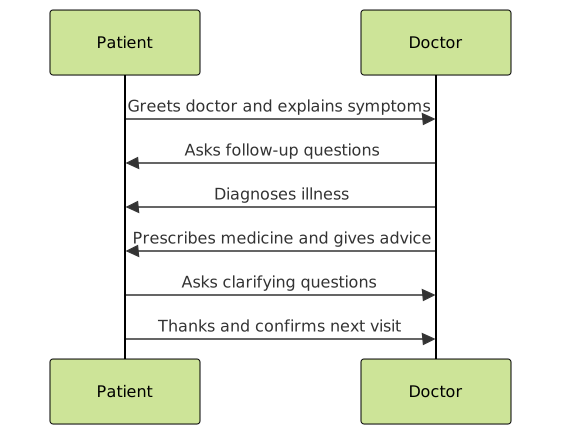
Most health-related conversations begin with registration or greeting, continue with describing the problem to the doctor, and end with treatment or prescription advice.
Useful Vocabulary and Phrases
- Symptoms: fever, cough, cold, headache, sore throat, stomach pain, dizziness
- Body Parts: chest, back, leg, arm, throat, ear, eyes
- Medical Phrases:
- “I’ve been feeling unwell since…”
- “I think I have a fever.”
- “Can you prescribe something for this?”
- “You should take this medicine twice a day.”
Example 1: Basic Doctor-Patient Conversation
This conversation uses simple English for beginners.
Doctor: Good morning. What brings you here today?
Patient: Good morning, doctor. I have a headache and slight fever.
Doctor: How long have you had these symptoms?
Patient: For two days.
Doctor: Any other problems like cough or sore throat?
Patient: A small cough, yes.
Doctor: Alright, it seems like a mild viral infection. I’ll prescribe some medicine.
Patient: Thank you, doctor. How often should I take it?
Doctor: Two times a day after meals.
Interactive Practice
Try reading the doctor’s lines aloud while imagining you are the patient. You can switch roles next time to improve understanding and pronunciation.
Interactive Simulation Structure
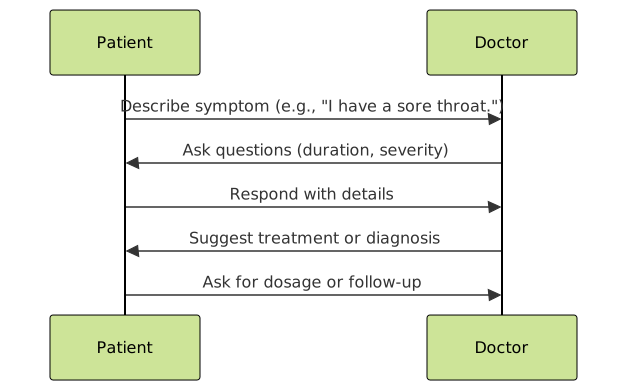
This structure helps learners understand the flow of interaction while practicing both speaking and listening skills.
Example 2: Visiting a Pharmacy
After seeing a doctor, the next common step is visiting a pharmacy.
Pharmacist: Hello! How can I help you?
Patient: I have a prescription from the doctor.
Pharmacist: Sure, please give it to me.
Patient: Here it is.
Pharmacist: These tablets should be taken after meals. Would you like me to explain the dosage?
Patient: Yes, please.
Pharmacist: Take one tablet twice a day — morning and night.
Grammar and Sentence Focus
- Use the present perfect tense to describe ongoing symptoms: “I have had a fever since Monday.”
- Use the past tense to talk about prior issues: “I took medicine yesterday, but I still feel dizzy.”
- Use polite modal verbs: “Could you check my blood pressure, please?”
Example 3: Appointment and Check-up Conversation
Receptionist: Good afternoon. Do you have an appointment?
Patient: No, I’d like to see a doctor today if possible.
Receptionist: Sure. What’s your name, please?
Patient: Anjali Kumar.
Receptionist: Please take a seat. The doctor will see you shortly.
Doctor: Hello, Ms. Kumar. What seems to be the problem?
Patient: I’ve been feeling tired and dizzy lately.
Doctor: Let’s do a quick blood test to check.
Diagram: Common Health Conversation Steps

Tips for Better Conversation Practice
- Listen to real dialogues: Audio samples or podcasts help you catch pronunciation and tone.
- Use mirror practice: Speak to yourself while facing a mirror to improve confidence.
- Role-play: Pair up with a friend to perform doctor-patient scenes.
- Record yourself: Listen to your recordings to notice hesitation or unclear words.
- Expand vocabulary: Add five new health terms every week.
Diagram: Practice Improvement Cycle

Common Phrases: Symptom Description
| English Phrase | Meaning | Example |
|---|---|---|
| I have a cold. | Feeling tired with a blocked nose. | I can’t stop sneezing today. |
| My throat hurts. | Soreness or pain in the throat. | It’s painful when I swallow. |
| I feel dizzy. | Feeling like spinning or losing balance. | I felt dizzy after skipping breakfast. |
Mini Quiz: Test Your Knowledge
- What tense do you use to describe ongoing health problems?
- How many times a day should the patient in Example 1 take medicine?
- What is the polite way to ask for a check-up?
Answers: (1) Present perfect, (2) Twice a day, (3) “Could you please check my blood pressure?”
Diagram: Common Doctor-Patient Flow
Conclusion
Practicing Doctor and Health Conversations is a key step toward mastering real-world English. It improves your confidence, vocabulary, and ability to communicate important information clearly. Keep practicing, role-playing, and applying these tips in real scenarios to achieve natural fluency in health-related discussions.
Next Lesson: Conversation Practice – At the Pharmacy, coming soon on CodeLucky.com.