Introduction to Database Tuning
Database tuning is a critical practice to ensure databases perform at their peak efficiency, especially as data volume and user demands scale. Proper tuning minimizes query response times, reduces server load, and enhances overall user experience. This article dives deep into methods and best practices for optimizing database performance, covering indexing, query optimization, resource management, and configuration tuning.
Why Database Tuning Matters
Databases are the backbone of modern applications; slow database operations can bottleneck entire systems. Tuning helps:
- Reduce query execution time
- Optimize resource utilization (CPU, memory, disk I/O)
- Enhance application scalability
- Improve concurrency and transaction throughput
Core Areas of Database Tuning
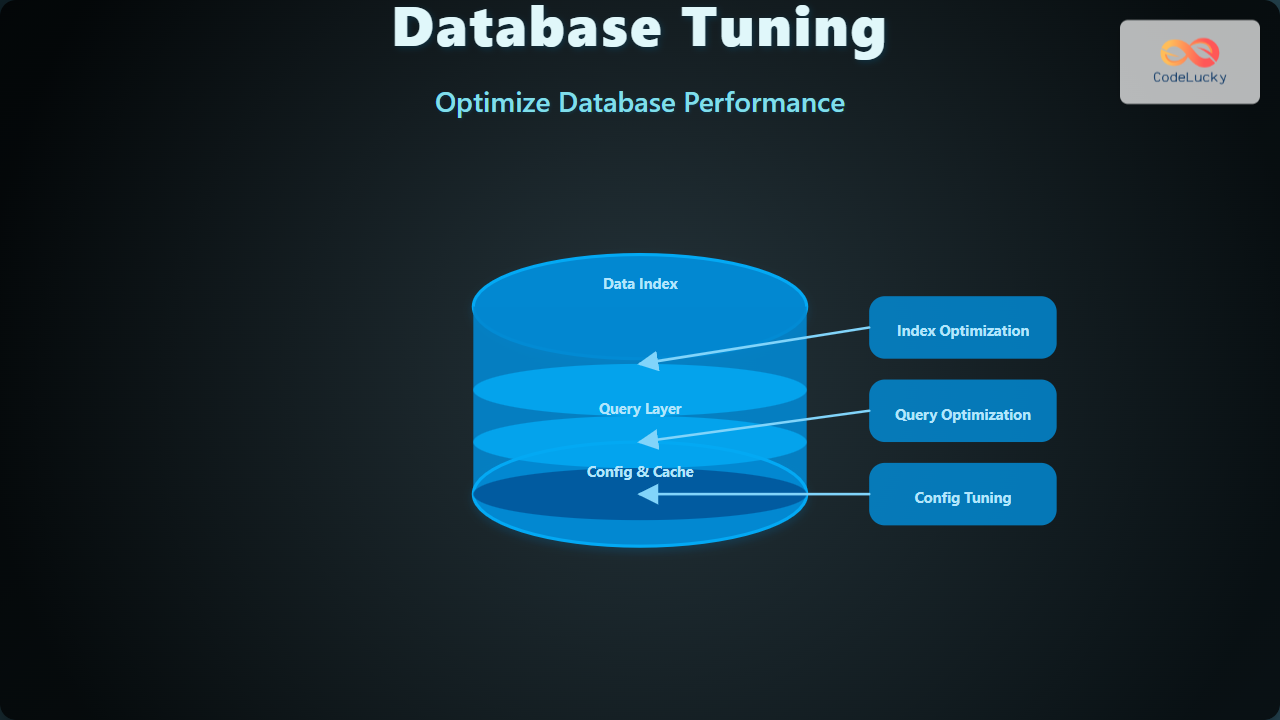
Database tuning can be broadly categorized into four main areas:
- Index Optimization
- Query Optimization
- Database Configuration Settings
- Hardware and Resource Management

Index Optimization
Indexes are special lookup tables that the database search engine can use to speed up data retrieval. However, indiscriminate indexing can degrade write performance and waste storage. Effective index tuning involves:
- Identifying slow-running queries via monitoring tools or slow query logs.
- Using EXPLAIN plans to analyze how queries access data.
- Creating composite or single-column indexes tailored to query predicates and join conditions.
- Removing redundant or rarely used indexes to save maintenance overhead.
Example: Create an index on the email column to speed up user lookups.
CREATE INDEX idx_users_email ON users(email);This index significantly improves query performance for:
SELECT * FROM users WHERE email = '[email protected]';Analyzing with EXPLAIN can confirm index usage and expected cost.
Query Optimization
Many performance gains come from writing efficient SQL queries. Tips include:
- Avoid SELECT *: Specify only needed columns to reduce data transfer.
- Use appropriate JOINs with ON clauses indexed properly.
- Filter early: Apply WHERE clauses to reduce dataset size quickly.
- Limit result sets with
LIMITwhen only a subset is required. - Rewrite complex queries: Break down large queries or use temporary tables if needed.
Example query optimization:
-- Inefficient
SELECT * FROM orders WHERE customer_id IN (SELECT id FROM customers WHERE status = 'active');

-- Optimized with JOIN
SELECT o.* FROM orders o JOIN customers c ON o.customer_id = c.id WHERE c.status = 'active';
Database Configuration Settings
Fine-tuning database engine parameters can yield substantial performance benefits. Examples include:
- Memory allocation: Buffer pool size, cache size to reduce disk I/O.
- Connection settings: Max connections, thread pool size for concurrency.
- Transaction log configuration: Impacting write speed and durability.
- Autovacuum and analyze settings: Essential for maintenance in databases like PostgreSQL.
Example tuning in MySQL configuration file my.cnf:
[mysqld]
innodb_buffer_pool_size = 2G
max_connections = 200
query_cache_size = 64M
Hardware and Resource Management
The underlying hardware and resources directly affect database speed. Considerations include:
- Disk speed: SSDs outperform traditional HDDs for I/O intensive workloads.
- CPU cores: Multithreading benefits from more cores.
- Memory: Larger RAM enables better caching and buffer pools.
- Network latency: Especially important for distributed or cloud databases.
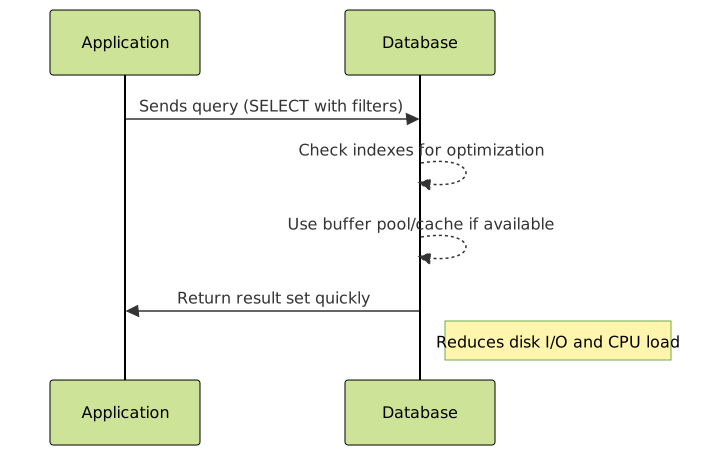
Monitoring system metrics alongside database metrics helps identify bottlenecks.
Monitoring and Continuous Improvement
No tuning is ever truly finished. Continuous monitoring with tools like pg_stat_statements for PostgreSQL or MySQL Performance Schema helps catch new bottlenecks. Automated alerting on slow queries or high resource usage propels proactive tuning.
Interactive Example: Visualizing Query Execution Plan
Below is a simplified interactive text-based visualization representing an EXPLAIN output showing index scan vs. sequential scan decisions.
By adding the index idx_users_email, the database chooses an index scan benefiting read performance significantly.
Summary
Effective database tuning involves a holistic approach balancing indexing, query writing, configuration, and hardware considerations. Leveraging monitoring tools and understanding query internals empowers developers and DBAs to keep databases performing optimally even under growing demands.
Incorporate these tips and examples into your workflow to ensure your database environment is both robust and high-performing.