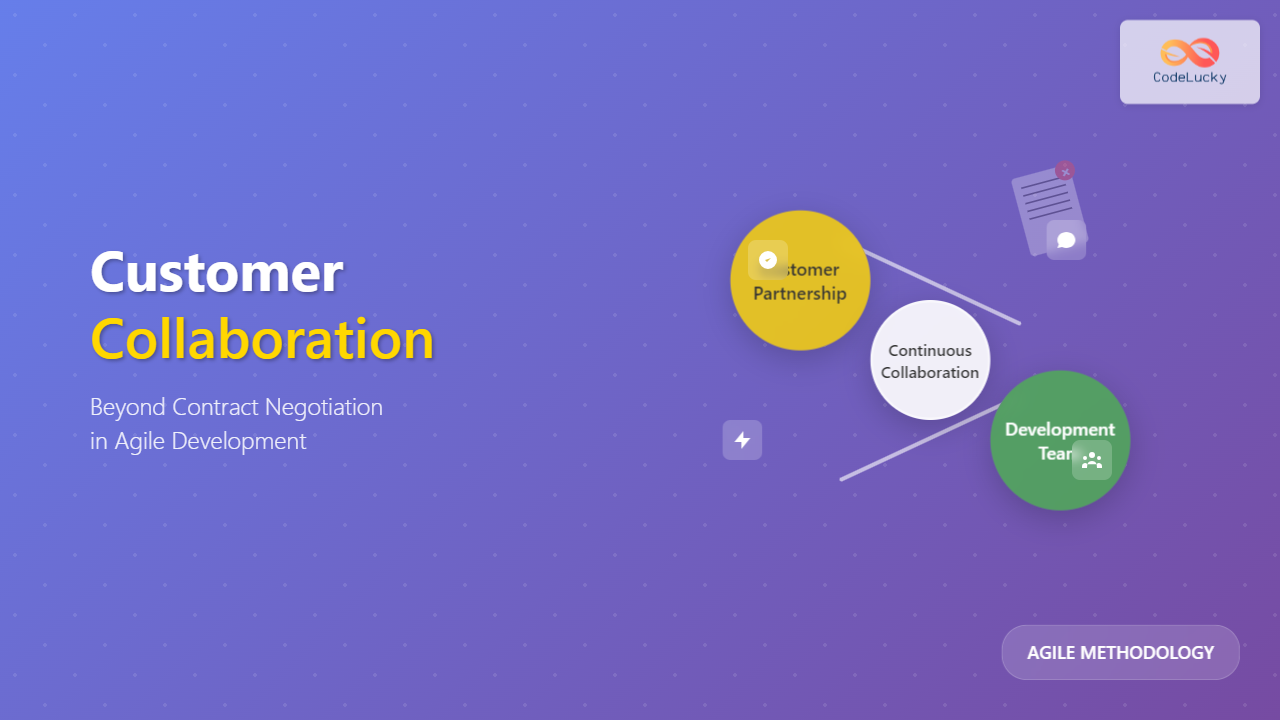
In the rapidly evolving landscape of software development, the Agile Manifesto’s emphasis on “Customer collaboration over contract negotiation” has fundamentally transformed how development teams interact with their clients. This principle represents more than just a philosophical shift—it’s a practical approach that drives successful project outcomes through meaningful partnership rather than rigid contractual boundaries.
Understanding Customer Collaboration in Agile Context
Customer collaboration in Agile methodology refers to the continuous, interactive relationship between development teams and their clients throughout the entire software development lifecycle. Unlike traditional waterfall approaches where customer interaction is limited to initial requirements gathering and final delivery, Agile promotes ongoing dialogue, feedback, and joint decision-making.
This collaborative approach recognizes that software development is inherently creative and adaptive. Requirements evolve, market conditions change, and new opportunities emerge during development. By maintaining close customer relationships, teams can respond to these changes effectively while ensuring the final product truly meets user needs.
The Limitations of Contract-Centric Development
Traditional contract negotiation approaches often create several challenges that hinder project success. Fixed-scope contracts assume that all requirements can be known upfront, leading to lengthy negotiation periods that delay actual development. These contracts typically establish adversarial relationships where changes are viewed as scope creep rather than natural evolution.
Contract-heavy approaches also tend to prioritize documentation over working software. Teams spend excessive time creating detailed specifications that may become obsolete before development begins. This documentation-first mindset can create communication barriers and reduce the flexibility needed for innovative solutions.
Furthermore, rigid contracts often discourage experimentation and learning. When every change requires formal approval and additional costs, teams become risk-averse, potentially missing opportunities for breakthrough innovations or critical improvements.
Building Effective Customer Collaboration Frameworks
Establishing Trust and Transparency
Successful customer collaboration begins with establishing trust and transparency between all parties. This involves creating open communication channels where both technical and business stakeholders can share concerns, ideas, and feedback without fear of judgment or blame. Regular demonstrations of working software help build confidence and provide tangible evidence of progress.
Transparency also means being honest about challenges, risks, and trade-offs. When development teams openly discuss technical constraints or potential delays, customers can make informed decisions about priorities and scope adjustments. This honest communication prevents surprises and maintains realistic expectations throughout the project.
Implementing Collaborative Planning Sessions
Collaborative planning sessions form the backbone of effective customer partnerships. These sessions should include product owners, development team members, and key stakeholders working together to define goals, prioritize features, and establish success criteria. Sprint planning meetings become collaborative workshops where business value and technical feasibility are discussed openly.
During these sessions, customers should be encouraged to share their vision, explain user personas, and describe business objectives. Development teams can then provide technical insights, suggest alternative approaches, and identify potential risks or opportunities. This two-way exchange ensures that everyone understands both the “what” and the “why” behind each feature.
Continuous Feedback Loops
Establishing regular feedback loops ensures that development stays aligned with customer expectations and market needs. Daily standups should include customer representatives when possible, allowing them to understand progress and provide immediate input on emerging issues or opportunities.
Sprint reviews become collaborative evaluation sessions where customers can interact with working software, provide feedback, and suggest improvements. These sessions should focus on value delivery rather than feature completion, encouraging discussions about user experience and business impact.
Practical Strategies for Enhanced Collaboration
Co-location and Virtual Collaboration
Physical or virtual co-location can significantly enhance customer collaboration. When customers work alongside development teams, communication becomes more natural and immediate. Questions can be answered quickly, assumptions can be clarified instantly, and relationships can develop more organically.
For distributed teams, virtual collaboration tools become essential. Video conferencing, shared workspaces, and collaborative planning tools help maintain the sense of partnership despite physical separation. Regular virtual coffee chats and informal check-ins can help maintain personal connections that strengthen professional relationships.
User Story Workshops
User story workshops provide structured opportunities for customers and development teams to collaborate on feature definition. These sessions focus on understanding user needs, defining acceptance criteria, and identifying edge cases or special requirements. By working together to create user stories, both parties develop a shared understanding of what needs to be built and why.
During these workshops, customers can share their domain expertise while developers contribute technical insights. This collaboration often leads to innovative solutions that neither party would have conceived independently. The resulting user stories become living documents that reflect this shared understanding.
Prototype and Mockup Reviews
Regular prototype and mockup reviews allow customers to visualize proposed solutions before significant development effort is invested. These sessions enable customers to provide feedback on user interface designs, workflow processes, and feature functionality while changes are still relatively inexpensive to implement.
Interactive prototypes can be particularly valuable, allowing customers to experience the proposed user journey firsthand. This hands-on experience often reveals usability issues or missing features that might not be apparent in static documentation or verbal descriptions.
Overcoming Common Collaboration Challenges
Managing Conflicting Priorities
Customer collaboration often involves multiple stakeholders with different priorities and perspectives. Product owners, end users, executives, and technical sponsors may have conflicting views about what features are most important or how the system should behave. Effective collaboration requires structured approaches to managing these conflicts.
Regular prioritization sessions using techniques like MoSCoW analysis or weighted scoring can help stakeholders work together to resolve conflicts. When disagreements persist, escalation paths should be clearly defined, and decision-making authority should be established upfront to prevent delays.
Balancing Flexibility with Predictability
While Agile emphasizes adaptability, customers often need some level of predictability for business planning and budgeting purposes. Successful collaboration involves finding the right balance between flexibility and predictability that works for both parties.
This balance can be achieved through techniques like release planning, where high-level roadmaps provide predictability while leaving room for detailed adjustments within each iteration. Regular velocity tracking and burn-down charts help customers understand team capacity and make informed decisions about scope and timeline trade-offs.
Ensuring Adequate Customer Availability
Effective collaboration requires significant time investment from customers, which can be challenging for busy stakeholders. Teams must work together to identify the minimum viable level of customer involvement while ensuring that collaboration remains meaningful and valuable.
This might involve designating specific customer representatives who can make decisions on behalf of larger stakeholder groups, or establishing clear protocols for when broader input is needed. Time-boxed collaboration sessions and well-prepared agendas can help maximize the value of limited customer time.
Measuring Collaboration Success
Qualitative Metrics
The quality of customer collaboration can be assessed through various qualitative measures. Customer satisfaction surveys can provide insights into how well the collaboration process is working from the client perspective. Regular retrospective sessions should include discussions about collaboration effectiveness and opportunities for improvement.
Team satisfaction with customer collaboration is equally important. Development teams should feel that customer input is valuable, timely, and actionable. When teams feel frustrated with customer collaboration, it often indicates process issues that need to be addressed.
Quantitative Indicators
Several quantitative metrics can indicate the health of customer collaboration. Reduced change request volumes may suggest that ongoing collaboration is preventing misunderstandings and scope creep. Shorter feedback cycles and faster decision-making times indicate efficient collaboration processes.
Customer engagement levels, measured through participation in planning sessions, reviews, and feedback activities, provide objective indicators of collaboration quality. High engagement typically correlates with better project outcomes and customer satisfaction.
Technology Tools Supporting Collaboration
Communication Platforms
Modern communication platforms provide the foundation for effective customer collaboration. Tools like Slack, Microsoft Teams, or Discord enable real-time communication while maintaining conversation history and context. These platforms should be configured to include relevant customer stakeholders in appropriate channels.
Video conferencing tools with screen sharing capabilities are essential for remote collaboration. Platforms like Zoom, Google Meet, or Microsoft Teams enable face-to-face interaction even when participants are geographically distributed. Recording capabilities allow stakeholders to review important discussions and decisions.
Project Management and Tracking Tools
Agile project management tools like Jira, Azure DevOps, or Trello provide transparency into development progress and enable customer participation in backlog management. These tools should be configured to provide appropriate visibility to customer stakeholders without overwhelming them with technical details.
Shared dashboards and reporting tools help customers understand project status, velocity trends, and upcoming deliverables. Visual management approaches using tools like Kanban boards make progress easily understandable for non-technical stakeholders.
Collaboration and Documentation Platforms
Collaborative documentation platforms like Confluence, Notion, or SharePoint enable customers and development teams to work together on requirements, specifications, and project documentation. These platforms should support real-time editing, commenting, and version control to facilitate effective collaboration.
Prototyping and wireframing tools like Figma, InVision, or Marvel enable customers to participate in design processes and provide feedback on user interface concepts. These tools bridge the gap between technical implementation and business requirements.
Cultural Transformation Required
Shifting from Vendor-Client to Partnership Mindset
Successful customer collaboration requires a fundamental shift from traditional vendor-client relationships to true partnerships. This transformation involves changing how both parties view their roles and responsibilities. Instead of the customer being a buyer of services and the development team being a service provider, both parties become collaborators working toward shared goals.
This partnership mindset requires mutual respect, shared accountability, and joint problem-solving. When issues arise, partners work together to find solutions rather than assigning blame or pointing to contractual obligations. Success becomes a shared responsibility rather than the sole responsibility of the development team.
Building Collaborative Skills
Effective collaboration requires specific skills that may not be naturally present in all team members or customer stakeholders. Communication skills, active listening, conflict resolution, and facilitation abilities all contribute to successful collaboration.
Organizations should invest in training and development programs that build these collaborative skills. Workshops on effective communication, facilitation techniques, and conflict resolution can significantly improve collaboration outcomes. Cross-functional training that helps developers understand business contexts and helps customers understand technical constraints also enhances collaboration quality.
Long-term Benefits of Effective Collaboration
Improved Product Quality and User Satisfaction
When customers are actively involved throughout the development process, the resulting products are more likely to meet actual user needs rather than assumed requirements. This ongoing collaboration helps identify usability issues early, ensures that features provide real value, and reduces the likelihood of major rework after delivery.
Continuous customer feedback also enables teams to refine and improve features based on real-world usage patterns. This iterative improvement process results in higher quality products that better serve their intended purpose.
Stronger Business Relationships
Effective collaboration builds stronger, more trusting relationships between customers and development teams. These relationships often extend beyond individual projects, leading to ongoing partnerships and repeat business opportunities. Customers who have positive collaboration experiences are more likely to recommend the development team to others and engage in future projects.
Strong relationships also make it easier to navigate challenges and conflicts when they arise. When trust and mutual respect exist, both parties are more willing to work together to find solutions rather than resorting to formal dispute resolution processes.
Enhanced Innovation and Creativity
Collaborative environments foster innovation by bringing together diverse perspectives and expertise. When customers and development teams work closely together, they can identify creative solutions that neither party would have discovered independently. This collaborative innovation often leads to breakthrough features or approaches that provide significant competitive advantages.
The trust and openness that characterize effective collaboration also encourage experimentation and risk-taking. Teams are more willing to try innovative approaches when they know customers will support them through the learning process.
Future Trends in Customer Collaboration
Artificial Intelligence and Automation Support
Emerging technologies are beginning to enhance customer collaboration capabilities. AI-powered tools can analyze customer feedback, identify patterns in requirements, and suggest areas where additional collaboration might be beneficial. Automated reporting and dashboard tools can provide real-time visibility into project progress without requiring manual updates.
Natural language processing tools may soon be able to analyze customer communications and identify potential misunderstandings or areas of concern before they become major issues. These technologies can augment human collaboration rather than replace it.
Virtual and Augmented Reality Collaboration
Virtual and augmented reality technologies are beginning to enable new forms of collaborative interaction. Virtual meeting spaces can provide more immersive collaboration experiences, while augmented reality can help customers visualize proposed solutions in their actual operating environments.
These technologies are particularly valuable for distributed teams where physical co-location is not possible. They can help maintain the personal connections and natural communication patterns that characterize effective collaboration.
Conclusion
Customer collaboration that goes beyond contract negotiation represents a fundamental shift toward partnership-based software development. This approach recognizes that the most successful projects emerge from ongoing dialogue, shared understanding, and mutual commitment to delivering value.
While implementing effective customer collaboration requires significant investment in processes, tools, and cultural change, the benefits—including improved product quality, stronger relationships, and enhanced innovation—make this investment worthwhile. Organizations that master customer collaboration will be better positioned to deliver software solutions that truly meet user needs and drive business success.
The key to success lies in viewing collaboration not as an overhead activity, but as an essential component of the development process that directly contributes to project outcomes. When customers and development teams work together as true partners, they can achieve results that exceed what either party could accomplish independently.
Related Posts

Agile Contracts: Complete Guide to Flexible Vendor Agreements for Modern Software Development
Understanding Agile Contracts in Modern Software Development Agile contracts represent a fundamental shift from traditional fixed-scope agreements to flexible, collaborative...
Benefits of Agile Methodology: Why Teams Choose Agile for Project Success
Agile methodology has revolutionized how teams approach project management and software development. Since its introduction through the Agile Manifesto in...
Agile Procurement: Complete Guide to Vendor Selection and Management in 2025
Agile procurement represents a fundamental shift from traditional procurement practices, emphasizing flexibility, collaboration, and continuous improvement in vendor relationships. As...

Agile Outsourcing: Complete Guide to Managing External Development Teams
Agile outsourcing has become a critical strategy for modern software development, enabling organizations to leverage global talent while maintaining the...
Agile Product Management: Complete Guide to Customer-Centric Development Success
What is Agile Product Management? Agile Product Management is a strategic approach that combines traditional product management principles with agile...
Agile vs DevOps: Understanding the Relationship Between Two Powerful Software Development Methodologies
In today's fast-paced software development landscape, organizations are constantly seeking methodologies that can accelerate delivery while maintaining quality. Two prominent...
DevOps and Agile: Extending Agility to Operations – Complete Guide for Modern Software Delivery
The evolution of software development has witnessed remarkable transformations, from traditional waterfall methodologies to Agile practices, and now to the...

The 12 Principles of Agile Development: A Complete Guide to Agile Software Development Success
Agile development has revolutionized the software industry by prioritizing flexibility, collaboration, and customer satisfaction over rigid processes. At the heart...
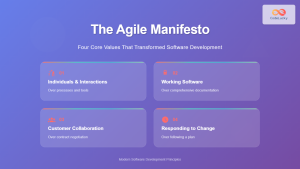
The Agile Manifesto: Four Core Values Explained for Modern Software Development
The Agile Manifesto, published in 2001 by seventeen software development thought leaders, fundamentally transformed how we approach software development. This...
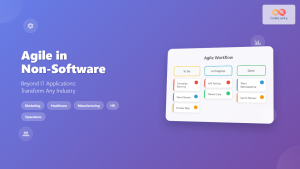
Agile in Non-Software: Complete Guide to Implementation Beyond IT Applications
Introduction to Agile Beyond Software Development While Agile methodologies originated in software development, their core principles of flexibility, collaboration, and...
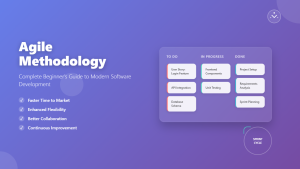
What is Agile Methodology: Complete Beginner’s Guide to Modern Software Development
Agile methodology has revolutionized how software development teams work, moving away from rigid traditional approaches to embrace flexibility, collaboration, and...

Agile Marketing: Complete Guide to Transform Your Marketing Strategy with Agile Methodology
What is Agile Marketing? Agile marketing is a strategic approach that applies the principles and practices of Agile software development...