Introduction to Currency and Payment Processing in International E-commerce
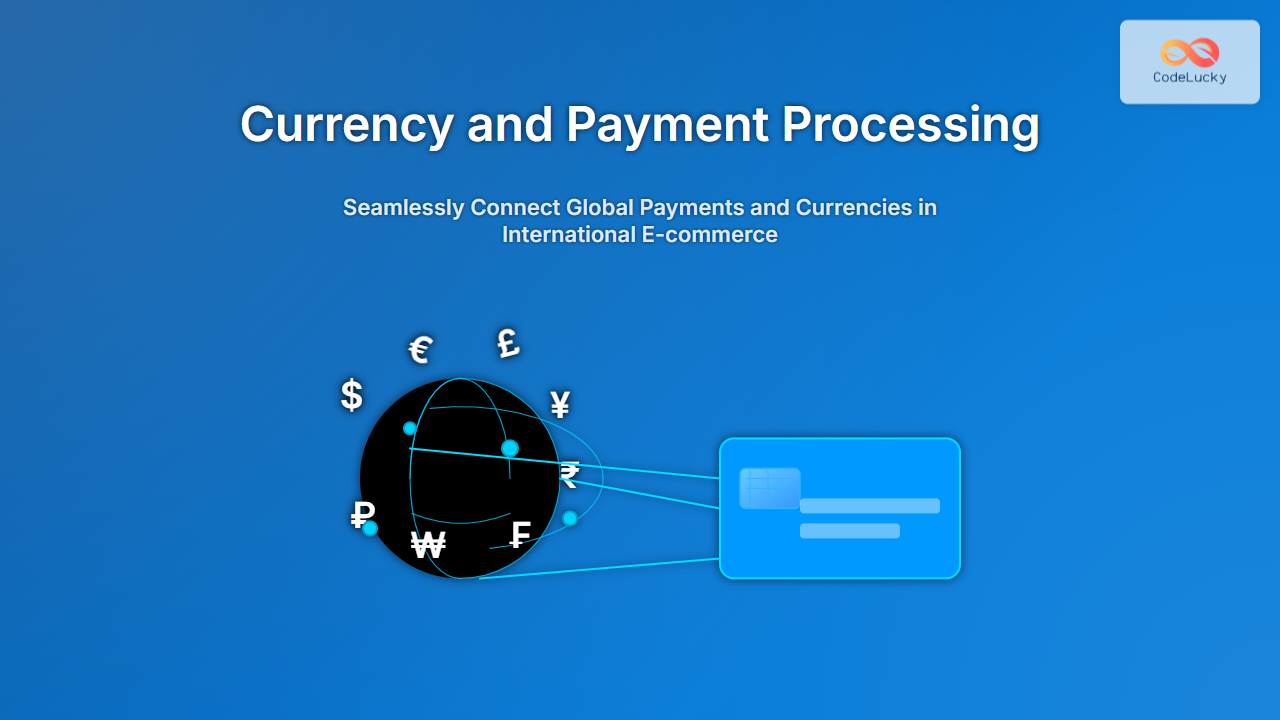
Global e-commerce is rapidly expanding, allowing businesses to reach customers worldwide. However, processing payments across borders involves complex challenges, including currency conversion, compliance with local regulations, and ensuring secure and seamless transactions. This article explores the core concepts of currency and payment processing in international e-commerce, explains key technical details, and offers practical examples to guide developers and businesses in building robust payment solutions.
The Challenges of International Payment Processing
Handling payments in multiple currencies introduces a variety of challenges:
- Currency Conversion: Transactions must convert customer payments from their local currency to the merchant’s settlement currency, often in real-time at fluctuating rates.
- Regulatory Compliance: Different countries impose diverse financial regulations, anti-money laundering (AML) rules, and tax requirements.
- Payment Method Diversity: Consumers prefer localized payment methods such as credit cards, digital wallets, bank transfers, or cash-based payment vouchers.
- Fraud Prevention: Cross-border transactions increase the risk of fraud, requiring sophisticated security checks and verification processes.
Core Components of International Payment Processing
The payment ecosystem for international e-commerce typically involves:
- Merchant Platform: The e-commerce site where customers initiate transactions.
- Payment Gateway: A service that securely transmits payment data between the merchant and payment processor.
- Payment Processor: The financial institution or service that executes the transaction with acquiring banks and card networks.
- Currency Conversion Service: Specialized service or API to convert funds at competitive exchange rates.
- Acquiring Bank & Issuing Bank: Banks on the merchant and consumer side respectively, handling fund authorization and settlement.

How Currency Conversion Works in E-commerce
Currency conversion is typically handled in one of three ways:
- At Checkout: The customer sees prices and pays in their local currency using real-time exchange rates fetched from currency providers.
- At Settlement: The payment processor charges the customer in their currency, but the merchant receives funds converted into their preferred currency.
- Multi-Currency Accounts: Merchants maintain accounts in multiple currencies, avoiding frequent conversions and mitigating exchange rate risk.
For example, a US-based merchant selling to Europe might display prices in EUR to the customer at checkout but settle in USD after conversion.
Code Example: Simple Currency Conversion API Integration
Below is a simplified JavaScript example illustrating how an e-commerce site can fetch exchange rates to display product prices in a customer’s local currency:
async function getConvertedPrice(productPriceUSD, targetCurrency) {
  const apiKey = 'YOUR_API_KEY';
  const response = await fetch(`https://api.exchangeratesapi.io/latest?base=USD&symbols=${targetCurrency}`);
  const data = await response.json();
  const rate = data.rates[targetCurrency];
  if (!rate) throw new Error('Currency rate not found');
  return (productPriceUSD * rate).toFixed(2);
}

// Usage: Display price in EUR
getConvertedPrice(100, 'EUR').then(priceInEUR => {
  console.log(`Price in EUR: €${priceInEUR}`);
});
Processing Payment: The Transaction Flow
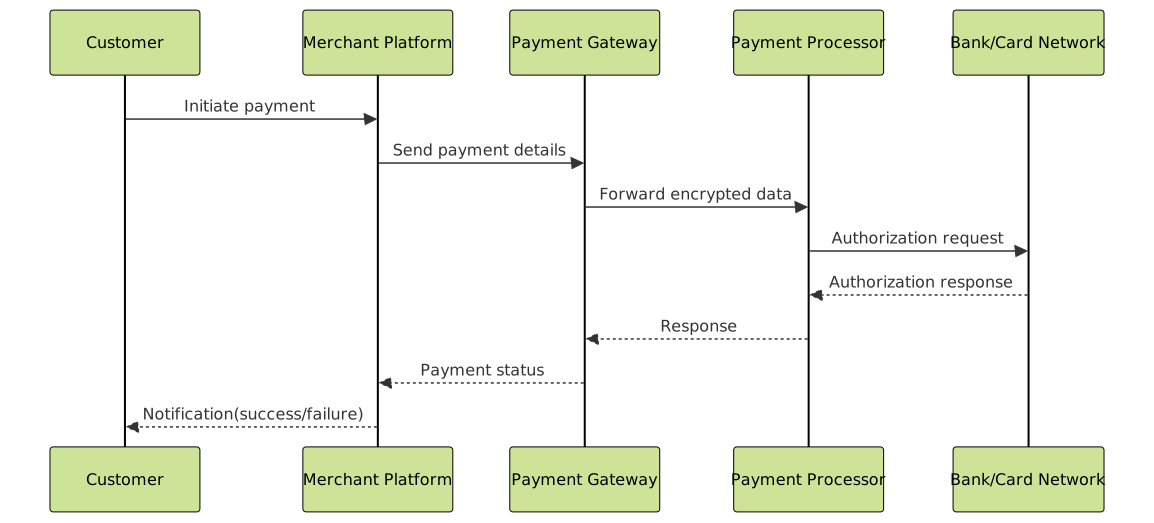
When a customer makes a payment, the process typically follows these steps:
- The merchant platform sends payment and order details to the payment gateway.
- The gateway encrypts and forwards the data to the payment processor.
- The processor communicates with the acquiring bank and card network to authenticate and authorize the payment.
- Payment authorization is relayed back through the chain, informing the merchant of success or failure.
- Currency conversion occurs if necessary before final settlement to the merchant.
Popular International Payment Methods
To cater to a global audience, supporting diverse payment methods is essential:
- Credit & Debit Cards: Visa, Mastercard, and local card schemes.
- Digital Wallets: PayPal, Apple Pay, Google Pay, Alipay, WeChat Pay.
- Bank Transfers: SEPA in Europe, ACH in the US, and other real-time payment systems.
- Buy Now Pay Later: Services like Klarna or Afterpay favored in some regions.
Security & Compliance Considerations
International payment handling must comply with standards such as PCI DSS (Payment Card Industry Data Security Standard) to protect cardholder data. Additionally, measures like fraud detection, 3D Secure authentication, and address verification systems (AVS) are critical to reduce risk.

Interactive Example: Simulated Multi-Currency Checkout
Below is an embedded snippet that simulates currency conversion and price display dynamically. (Note: In a real environment, this would connect to live APIs.)
<!DOCTYPE html>
<html lang="en">
<head>
  <meta charset="UTF-8">
  <title>Currency Converter Example</title>
</head>
<body>
  <h3>Product Price Converter</h3>
  <label for="currency">Choose currency:</label>
  <select id="currency">
    <option value="USD">USD</option>
    <option value="EUR">EUR</option>
    <option value="GBP">GBP</option>
    <option value="JPY">JPY</option>
  </select>
  <p>Price: <span id="price">$100.00</span></p>

  <script>
    const prices = { USD: 100, EUR: 90, GBP: 80, JPY: 11000 };
    const priceEl = document.getElementById('price');
    const select = document.getElementById('currency');

    function updatePrice() {
      const c = select.value;
      let symbol = '$';
      switch(c) {
        case 'EUR': symbol = '€'; break;
        case 'GBP': symbol = '£'; break;
        case 'JPY': symbol = '¥'; break;
      }
      priceEl.textContent = symbol + prices[c].toFixed(2);
    }

    select.addEventListener('change', updatePrice);
    updatePrice();
  </script>
</body>
</html>
Best Practices for Integration
- Use Reputable Payment Gateways: Choose gateways specialized in international payments to handle complexities transparently.
- Display Prices Clearly: Show prices in the customer’s local currency including all fees to build trust and reduce cart abandonment.
- Test Payment Flows Globally: Simulate transactions from multiple countries to verify currency, localization, and security.
- Include Multi-Currency Accounting: Maintain records in transaction currency as well as base currency to simplify accounting and tax compliance.
Conclusion
International e-commerce requires a strategic approach to currency and payment processing to ensure smooth customer experiences and efficient merchant operations. By understanding the mechanisms of multi-currency conversion, integrating secure payment gateways, and supporting diverse payment methods, businesses can confidently expand their reach beyond borders. Implementing clear checkout flows, compliance standards, and real-time transaction monitoring further strengthens global e-commerce success.