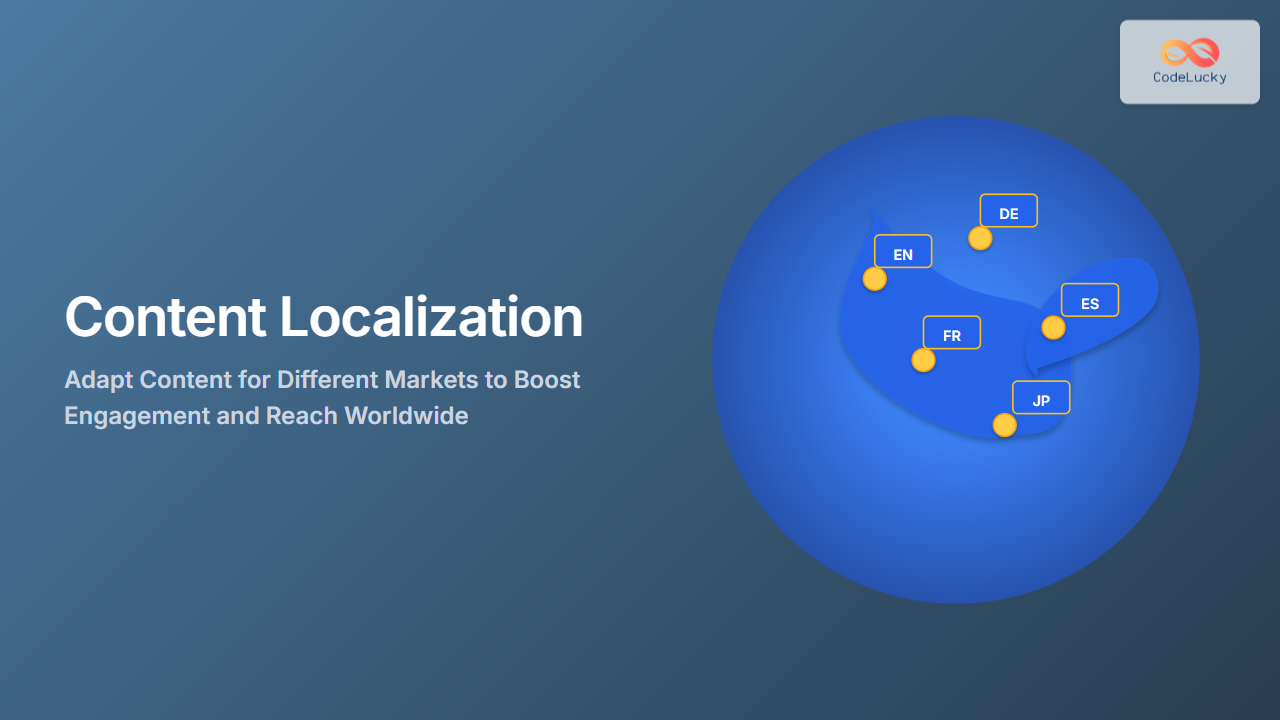
In today’s globally connected world, content localization is a critical strategy for businesses and creators aiming to reach diverse audiences effectively. More than just translation, localization adapts your content to the cultural, linguistic, and regional nuances of specific markets. This practice not only improves user experience but also enhances SEO performance and fosters deeper engagement.
What is Content Localization?
Content localization involves tailoring your website, app, marketing collateral, or digital content to meet the language, cultural preferences, and regional expectations of different markets. While translation is about converting words from one language to another, localization dives deeper by adapting idioms, visuals, formats (dates, currency), and even UX design elements to resonate authentically with local audiences.

Why Localization Matters More Than Mere Translation
Merely translating content can result in messages that feel out of place or culturally insensitive. Localization helps avoid such pitfalls by incorporating market-specific customs, tone, and context. This leads to:
- Higher user engagement: Content feels relatable and trustworthy.
- Better conversions: Tailored calls-to-action and offers perform better.
- Improved search engine rankings: Local keywords and culturally relevant content boost SEO.
- Brand loyalty: Respecting cultural values builds long-term relationships.
Key Elements of Content Localization
For effective localization, focus on the following critical areas:
- Language nuances: Adapt idioms and colloquial expressions.
- Cultural references: Replace or modify references, examples, or imagery that might confuse or offend.
- Visual & UX design: Adjust images, colors, and layouts that hold different meanings in various cultures.
- Date, time, currency formats: Use local formats — e.g., “dd/mm/yyyy” vs “mm/dd/yyyy”.
- Legal and compliance requirements: Adapt disclaimers, policies, or content to meet regional laws.
Example: Localizing a Marketing Landing Page
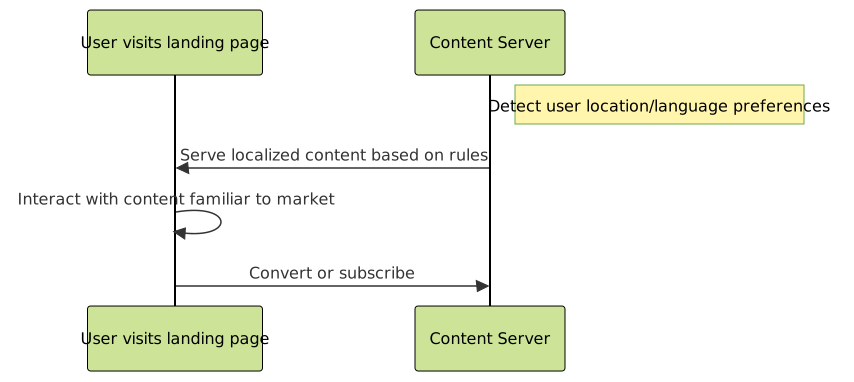
Consider a landing page promoting a subscription service. Here is an English original snippet:
<h2>Join our service and enjoy exclusive benefits!</h2>
<p>Subscribe now and get 20% off your first month. Offer ends September 30, 2025.</p>
<p>Payment accepted in USD only.</p>
For localization into the German market, adaptations include:
<h2>Abonnieren Sie unseren Service und genießen Sie exklusive Vorteile!</h2>
<p>Jetzt abonnieren und 20 % Rabatt auf den ersten Monat erhalten. Angebot gilt bis zum 30. September 2025.</p>
<p>Zahlungen werden nur in Euro akzeptiert.</p>
Note the translation, date format adjustment, and currency change, making it fully relevant and clear to the local audience.
Interactive Snippet: Language Switcher Example
Offering visitors the ability to switch languages on your site empowers them. Here’s a basic example using HTML and JavaScript for an interactive language switcher:
<div>
  <label for="language-select">Choose Language:</label>
  <select id="language-select" onchange="changeLanguage()">
    <option value="en">English</option>
    <option value="de">Deutsch</option>
    <option value="es">Español</option>
  </select>
</div>

<div id="content-area"></div>

<script>
const content = {
  en: "<h2>Welcome!</h2><p>Subscribe to get exclusive benefits.</p>",
  de: "<h2>Willkommen!</h2><p>Abonnieren Sie, um exklusive Vorteile zu erhalten.</p>",
  es: "<h2>¡Bienvenido!</h2><p>Suscríbete para obtener beneficios exclusivos.</p>"
};

function changeLanguage() {
  const lang = document.getElementById('language-select').value;
  document.getElementById('content-area').innerHTML = content[lang] || content['en'];
}

// Initialize default content
changeLanguage();
</script>
Localization Best Practices for SEO
- Use hreflang tags: Signal to search engines which language/region version of content is served.
- Research localized keywords: Tailor your SEO strategy per market using local search behavior data.
- Optimize URL structure: Use subdirectories or country code top-level domains (ccTLDs) like example.com/de/ or example.de.
- Ensure fast loading: Locally host content or use CDNs to reduce latency.
- Maintain consistent brand voice: Adapt tone without losing brand identity.

Tools and Technologies to Assist in Localization
Several tools help streamline content localization:
- Localization Platforms: Smartling, Lokalise, Crowdin for managing multi-language content collaboratively.
- Translation APIs: Google Translate API, Microsoft Translator for dynamic translations (usually post-editing needed).
- SEO Tools: SEMrush, Ahrefs for localized keyword research and tracking.
- CDNs: Cloudflare, Akamai for fast global content delivery.
Conclusion
Incorporating content localization empowers brands to authentically connect with global audiences by respecting language and cultural contexts. This practice not only enhances user satisfaction and conversion rates but also elevates SEO reach across diverse markets. By blending translation, cultural adaptation, UX optimization, and technical SEO, businesses can thrive internationally with an inclusive and engaging digital presence.