When writing algorithms, even seasoned programmers often encounter pitfalls that cause inefficiency, incorrect results, or unnecessary complexity. Small oversights such as incorrect loop boundaries or ignoring algorithmic complexity may lead to massive performance issues in production systems. This article explores the most common algorithm mistakes and shows how to avoid them to write precise and optimized code.
1. Ignoring Time Complexity
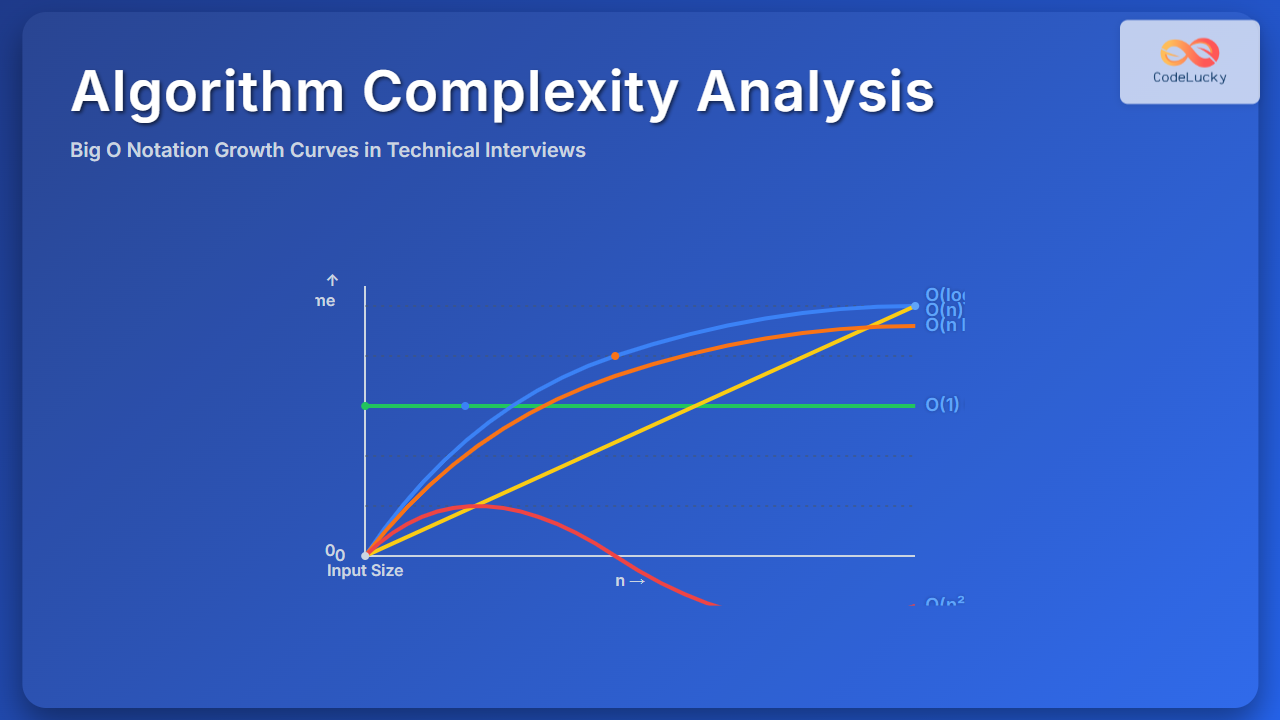
A frequent mistake is writing code that works correctly but performs poorly on larger datasets due to poor time complexity. For example, using a nested loop where a more optimal approach exists.
# Inefficient: O(n^2)
def has_duplicates(arr):
    for i in range(len(arr)):
        for j in range(i+1, len(arr)):
            if arr[i] == arr[j]:
                return True
    return False

print(has_duplicates([1,2,3,4,1]))
Optimized solution:
# Efficient: O(n)
def has_duplicates(arr):
    seen = set()
    for num in arr:
        if num in seen:
            return True
        seen.add(num)
    return False

print(has_duplicates([1,2,3,4,1]))

Tip: Always evaluate the Big-O complexity and consider data structures that improve efficiency.
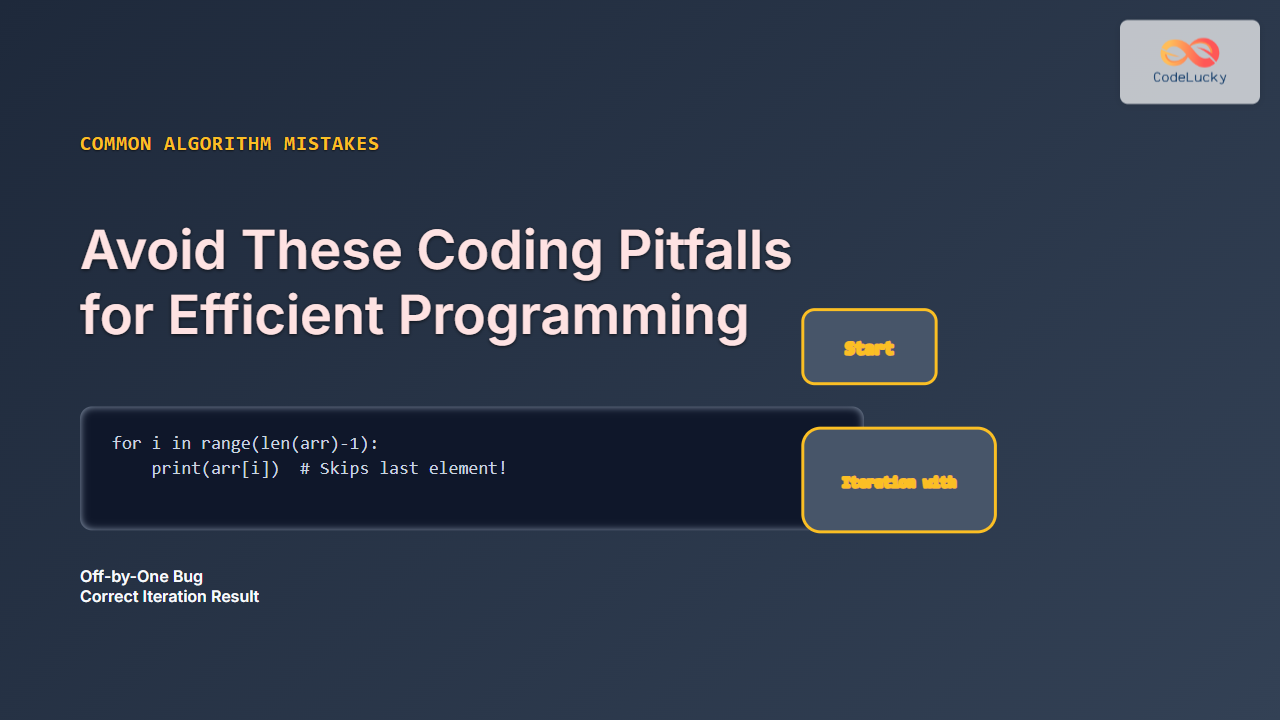
2. Off-by-One Errors
This is one of the most common bugs in algorithms. It typically happens in iteration bounds or array indexing.
# Incorrect: misses the last index element
for i in range(len(arr)-1):
    print(arr[i])
# Corrected
for i in range(len(arr)):
    print(arr[i])
Such small mistakes can cause skipped computations or incorrect results in searching and sorting algorithms.
3. Forgetting Base Cases in Recursion
Recursive algorithms often fail when a base case is missing or incorrectly defined, leading to infinite recursion.
# Incorrect: missing base case
def factorial(n):
    return n * factorial(n-1)  # infinite recursion
# Corrected with base case
def factorial(n):
    if n == 0 or n == 1:
        return 1
    return n * factorial(n-1)

print(factorial(5)) # Output: 120
4. Overusing Brute Force
Programmers often stick to brute force solutions when more optimized strategies (like divide-and-conquer, dynamic programming, or greedy algorithms) exist.
Example: Maximum Subarray Problem
# Brute Force: O(n^2)
def max_subarray(arr):
    max_sum = float('-inf')
    for i in range(len(arr)):
        curr_sum = 0
        for j in range(i, len(arr)):
            curr_sum += arr[j]
            max_sum = max(max_sum, curr_sum)
    return max_sum
# Optimized using Kadane's Algorithm: O(n)
def kadane(arr):
    max_curr = max_global = arr[0]
    for num in arr[1:]:
        max_curr = max(num, max_curr + num)
        max_global = max(max_global, max_curr)
    return max_global

print(kadane([-2,1,-3,4,-1,2,1,-5,4])) # Output: 6

5. Incorrect Handling of Edge Cases
Algorithms often fail when inputs are empty, negative, extremely large, or unexpected in nature.
# Incorrect: division without handling zero
def divide(a, b):
    return a / b

print(divide(10, 0))  # Causes error
# Correct: handle edge case
def divide(a, b):
    if b == 0:
        return "Division by zero not allowed"
    return a / b

print(divide(10, 0))
Always test with boundary data sets such as empty arrays, single elements, and maximum limits.
6. Misusing Data Structures
Choosing the wrong data structure may lead to inefficient performance. For example, using a list for frequent lookups instead of a set or dictionary.
# Wrong: O(n) lookup in list
def find_value(arr, target):
    return target in arr
# Optimized: O(1) lookup using set
def find_value(arr, target):
    arr_set = set(arr)
    return target in arr_set
7. Ignoring Space Complexity
Sometimes algorithms focus too much on speed without considering memory overhead. For instance, creating unnecessary copies of arrays or lists when you can operate in-place.
# Inefficient: extra memory
def square_elements(arr):
    squared = [x*x for x in arr]
    return squared
# In-place modification
def square_elements(arr):
    for i in range(len(arr)):
        arr[i] = arr[i] * arr[i]
    return arr
Balance both time and space complexity when designing algorithms.
Conclusion
Algorithms are the backbone of efficient programming. From off-by-one errors to poor choice of data structures, these common algorithm mistakes can drastically affect correctness and performance. By being mindful of complexity, testing edge cases, and choosing the right approach, developers can write clean, optimized, and reliable algorithms.
On CodeLucky.com, we emphasize not just learning algorithms but also mastering the art of avoiding mistakes that many programmers repeatedly fall into. By refining problem-solving skills and practicing with real-world cases, you can elevate your coding efficiency and build scalable software solutions.