Learning the vocabulary of colors and shapes is fundamental for every English learner. Colors and shapes are part of everyday life — from describing clothes and objects to expressing emotions and creativity. This article by CodeLucky.com provides a complete guide with examples, meanings, and interactive visuals to help you master this essential English vocabulary.
Why Learn Colors and Shapes?
Colors and shapes appear in daily communication, design, and education. Knowing how to describe them correctly helps English learners:
- Enhance visual descriptions and storytelling.
- Improve spoken and written communication.
- Strengthen vocabulary for art, fashion, and real-life contexts.
Basic Color Vocabulary
Below is a list of the most common colors in English with simple meanings and usage examples.
| Color | Meaning or Association | Example Sentence |
|---|---|---|
| Red | Energy, love, and passion. | The apple is red. |
| Blue | Peace, calmness, and reliability. | The sky looks very blue today. |
| Green | Nature, safety, and growth. | I like the green trees in the park. |
| Yellow | Happiness and brightness. | The sunflower is yellow. |
| Purple | Luxury, creativity, and magic. | She wore a purple dress. |
| Pink | Love, sweetness, and kindness. | The baby’s room is painted pink. |
| Orange | Energy and fun. | The fruit is called an orange. |
| Black | Power, mystery, and formality. | He drives a black car. |
| White | Purity and simplicity. | The snow is white. |
Combining Colors
Colors can be mixed to create new ones. These are called secondary colors.
The above diagram shows how mixing primary colors creates secondary colors — useful for art students and design learners.
Meaning of Colors in Daily Context
- Red light means “Stop.”
- Green signal means “Go.”
- Blue mood means “feeling sad.”
- White lie means “a harmless lie.”
Basic Shapes in English
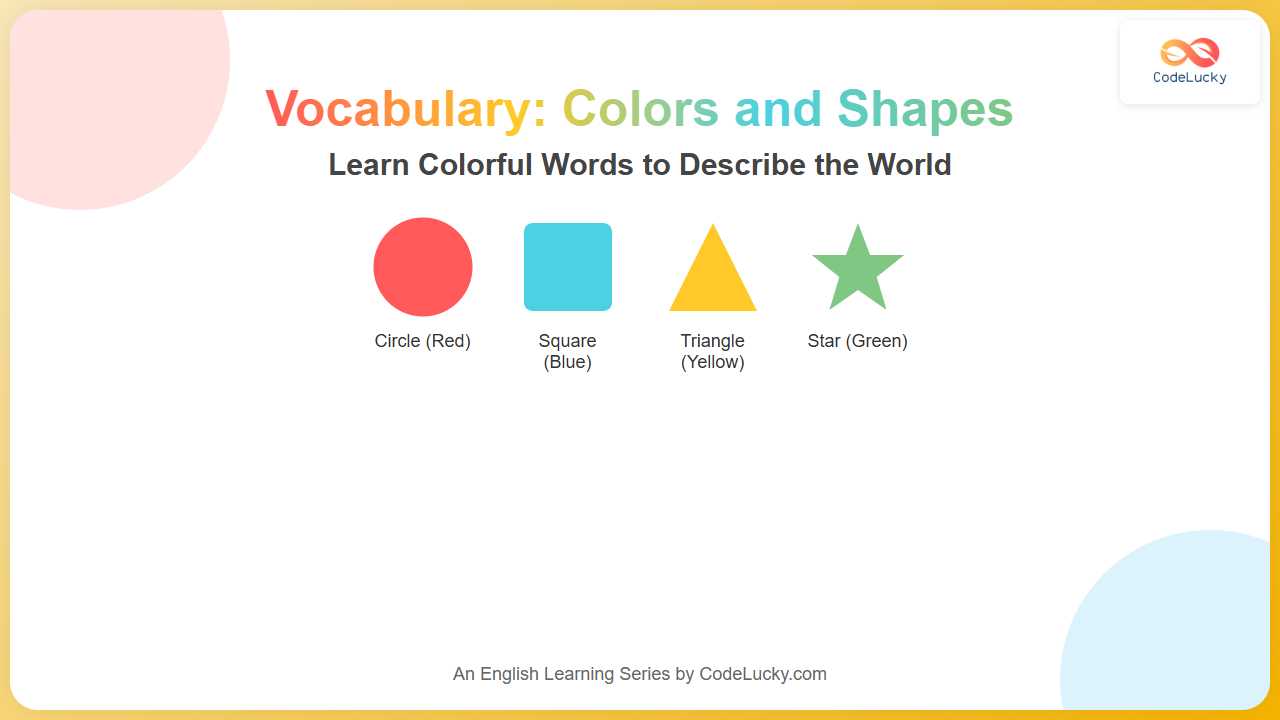
Shapes help you describe how objects look. Here are the most common English shape words with examples:
| Shape | Visual Example (Text-based) | Example Sentence |
|---|---|---|
| Circle | ◯ | The clock is in the shape of a circle. |
| Square | □ | The window is a square. |
| Triangle | △ | The roof has a triangle at the top. |
| Rectangle | ▭ | The table is rectangular. |
| Oval | ⬭ | The mirror is oval. |
| Star | ★ | The flag has a star. |
Shape Family Diagram

This diagram organizes shapes into 2D (flat) and 3D (solid) categories for easy understanding.
Interactive Practice Ideas
Try these simple exercises to improve retention:
- Color Hunt: Look around your room and name five objects with their colors. Example: “The cup is blue. The chair is brown.”
- Shape Sort: Draw or cut out paper shapes and label them in English.
- Mixing Game: Imagine mixing two colors. Ask, “What color do we get?”
Mermaid Diagram – Color and Shape Relationship

Adjectives for Shapes and Colors
Combine color adjectives with shapes to create descriptive phrases:
- A red circle button.
- A green triangle flag.
- A blue square tile.
Tips for Learners
- Use color and shape flashcards for daily review.
- Watch cartoons with color-based vocabulary for better memory.
- Practice pronunciation aloud: for example, “triangle” /ˈtraɪ.æŋ.ɡəl/.
Conclusion
Colors and shapes are the building blocks of visual and descriptive English vocabulary. The more you use them, the easier it becomes to describe the world around you. Keep practicing, play language games, and soon this vocabulary will become a natural part of your English communication.
Written for CodeLucky.com – helping English learners master vocabulary through interactive and visual learning.