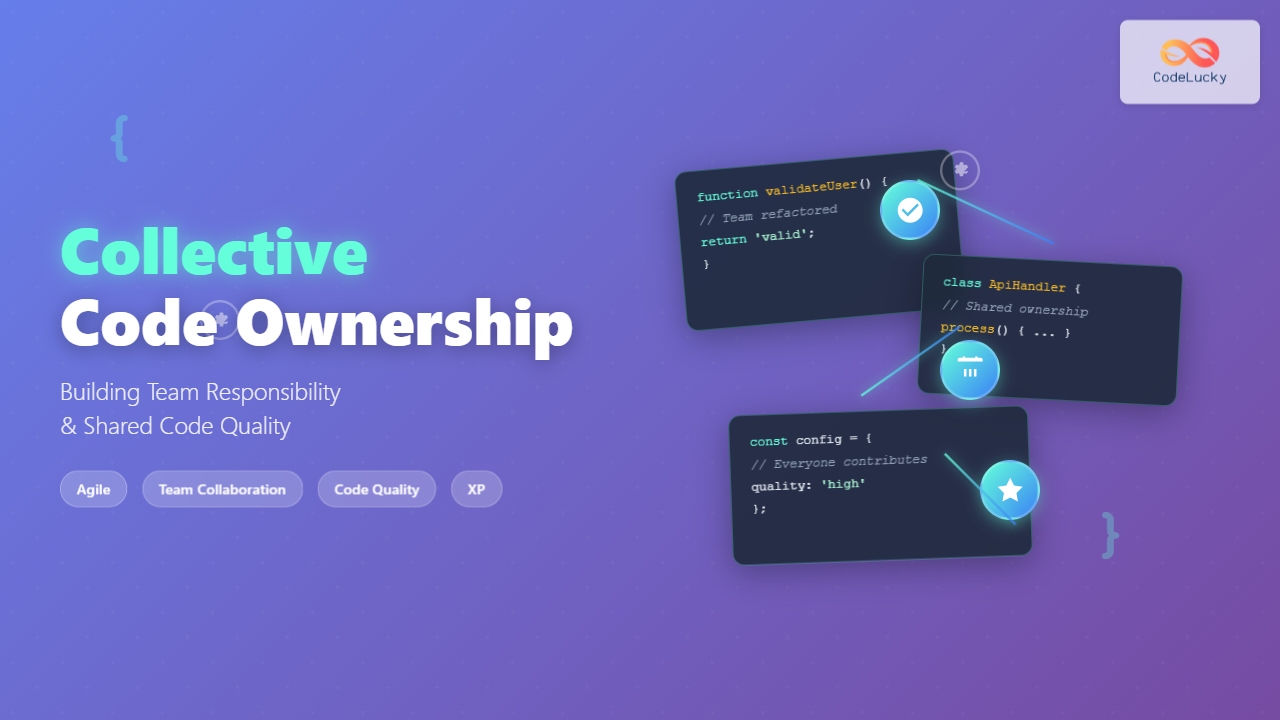
In the fast-paced world of software development, the traditional approach of individual code ownership often creates bottlenecks, knowledge silos, and single points of failure. Collective code ownership, a core practice in Agile methodologies like Extreme Programming (XP), revolutionizes how development teams approach code stewardship by making every team member responsible for the entire codebase.
This transformative practice shifts the paradigm from “my code” and “your code” to “our code,” fostering a culture of shared responsibility that leads to higher code quality, reduced technical debt, and more resilient development teams.
Understanding Collective Code Ownership
Collective code ownership is an Agile software development practice where every team member has the right and responsibility to modify any part of the codebase. Unlike traditional individual ownership models where specific developers are assigned to particular modules or components, collective ownership treats the entire codebase as a shared asset that belongs to the team as a whole.
This practice emerged from the Extreme Programming methodology, where it serves as one of the twelve core practices designed to improve software quality and team productivity. The fundamental principle is simple yet powerful: when everyone owns the code, everyone cares about its quality and maintainability.
Key Characteristics of Collective Code Ownership
Collective code ownership is characterized by several distinctive features that set it apart from traditional ownership models:
Shared Responsibility: Every team member is accountable for the quality and functionality of the entire codebase, not just their individual contributions. This creates a collective sense of ownership and pride in the work.
Universal Access Rights: All developers have the authority to modify any part of the code when necessary, eliminating the need to wait for specific “owners” to make changes or fix bugs.
Collaborative Problem-Solving: Issues and improvements are addressed by whoever is best positioned to handle them, regardless of who originally wrote the code.
Knowledge Distribution: Team members actively share knowledge about different parts of the system, ensuring that expertise is distributed rather than concentrated in individual specialists.
Benefits of Collective Code Ownership
Implementing collective code ownership brings numerous advantages that directly impact team productivity, code quality, and project success. These benefits compound over time, creating a positive feedback loop that strengthens the development process.
Enhanced Code Quality
When multiple developers review and work on the same code, quality naturally improves through diverse perspectives and continuous refinement. Different team members bring unique insights, coding styles, and problem-solving approaches that collectively enhance the codebase.
The practice encourages developers to write cleaner, more readable code because they know their colleagues will be working with it. This peer pressure effect, combined with regular code reviews, results in higher coding standards across the entire project.
Reduced Knowledge Silos
Traditional individual ownership often creates dangerous knowledge silos where only one person understands specific parts of the system. Collective ownership distributes knowledge across the team, ensuring that critical information isn’t trapped with individual developers.
This knowledge distribution creates redundancy that protects projects from delays when team members are unavailable due to vacation, illness, or departure from the company.
Faster Issue Resolution
With collective ownership, bugs and issues can be addressed by any team member who encounters them, rather than waiting for the original author to become available. This dramatically reduces response times and prevents small issues from becoming major problems.
The practice also enables immediate fixes during code reviews, pair programming sessions, or when developers notice issues while working on related features.
Improved Team Collaboration
Collective ownership naturally fosters stronger collaboration as team members must communicate effectively about code changes, share knowledge, and coordinate their efforts. This collaborative environment strengthens team bonds and improves overall communication.
The practice encourages developers to think beyond their individual tasks and consider the broader impact of their work on the entire system and team.
Implementing Collective Code Ownership
Successfully implementing collective code ownership requires careful planning, strong technical practices, and cultural changes within the development team. The transition from individual to collective ownership should be gradual and well-supported.
Essential Prerequisites
Before implementing collective ownership, teams must establish several foundational practices that ensure the approach succeeds:
Comprehensive Testing: A robust test suite with high code coverage is crucial because it provides confidence when making changes to unfamiliar code. Automated tests serve as a safety net that catches regressions and validates that changes don’t break existing functionality.
Version Control Excellence: Effective use of version control systems with clear branching strategies, meaningful commit messages, and proper merge practices enables safe collaboration and easy rollback of problematic changes.
Code Standards and Guidelines: Established coding standards ensure consistency across the codebase, making it easier for team members to understand and modify code written by others.
Continuous Integration: Automated build and deployment processes help catch integration issues early and ensure that code changes don’t break the overall system.
Gradual Transition Strategy
Teams should transition to collective ownership gradually rather than making an abrupt change. Start by identifying less critical components where team members can practice collective ownership with lower risk.
Encourage pair programming and code reviews as stepping stones toward full collective ownership. These practices help team members become familiar with different parts of the codebase while still maintaining some individual accountability.
As confidence grows and practices mature, gradually expand collective ownership to more critical components until it encompasses the entire codebase.
Knowledge Sharing Mechanisms
Implement systematic knowledge sharing through regular code walkthroughs, documentation updates, and informal knowledge transfer sessions. Create opportunities for team members to explain their work and learn from others.
Consider implementing code tours, where developers give presentations about specific modules or features, helping teammates understand the architecture and design decisions behind different parts of the system.
Challenges and Solutions
While collective code ownership offers significant benefits, teams often encounter challenges during implementation. Understanding these challenges and their solutions helps ensure successful adoption.
Resistance to Change
Some developers may resist collective ownership due to pride in their individual work or fear of others modifying their code. Address this resistance through education about the benefits and gradual introduction of the practice.
Emphasize that collective ownership doesn’t diminish individual contributions but rather amplifies their impact through team collaboration. Recognize and celebrate improvements made through collective efforts.
Coordination Overhead
Collective ownership can initially increase coordination overhead as team members need to communicate more about their changes and ensure they don’t conflict with others’ work.
Mitigate this challenge through effective communication tools, regular stand-up meetings, and clear protocols for making significant changes. Implement notification systems that alert team members about changes to code they’re actively working on.
Quality Concerns
Some managers worry that allowing everyone to modify any code might decrease quality or introduce inconsistencies. Address these concerns by strengthening code review processes and maintaining high testing standards.
Implement automated quality checks, linting tools, and style checkers that enforce consistency regardless of who writes the code. Make code reviews mandatory for all changes, ensuring that multiple eyes examine every modification.
Accountability Questions
Traditional management approaches often rely on individual accountability, making some leaders uncomfortable with collective ownership. Shift the focus from individual blame to team responsibility and collective problem-solving.
Implement metrics that measure team performance rather than individual output, and celebrate collective achievements while addressing issues as team challenges rather than individual failures.
Best Practices for Success
To maximize the benefits of collective code ownership, teams should follow proven best practices that support effective collaboration and maintain code quality.
Establish Clear Communication Protocols
Create clear protocols for communicating about code changes, especially significant modifications that might affect multiple team members. Use tools like Slack, Microsoft Teams, or dedicated code review platforms to keep everyone informed about ongoing work.
Implement standardized commit message formats that clearly describe what changes were made and why, helping team members understand the evolution of the codebase.
Maintain Comprehensive Documentation
While collective ownership reduces reliance on individual knowledge, good documentation remains crucial for helping team members understand complex systems and architectural decisions.
Keep documentation up-to-date and easily accessible, focusing on architectural overviews, design decisions, and complex business logic rather than duplicating what the code already expresses clearly.
Implement Strong Code Review Practices
Make code reviews a cornerstone of your collective ownership approach. Every change should be reviewed by at least one other team member, with emphasis on constructive feedback and knowledge sharing rather than fault-finding.
Use code reviews as learning opportunities where reviewers can ask questions, suggest improvements, and share knowledge about different parts of the system.
Foster a Blameless Culture
Create an environment where mistakes are treated as learning opportunities rather than occasions for blame. When issues arise, focus on understanding how processes can be improved rather than identifying who made the error.
This blameless culture encourages team members to take ownership of problems and contribute solutions without fear of negative consequences.
Tools and Technologies
Several tools and technologies can support effective collective code ownership by improving collaboration, maintaining code quality, and facilitating knowledge sharing.
Version Control and Collaboration
Git-based platforms like GitHub, GitLab, or Bitbucket provide excellent support for collective ownership through features like pull requests, code reviews, and collaborative editing.
These platforms enable teams to review changes, discuss improvements, and maintain a clear history of who made what changes and why.
Automated Quality Assurance
Continuous integration tools like Jenkins, CircleCI, or GitHub Actions help maintain code quality by automatically running tests, style checks, and other quality assurance measures whenever code is modified.
Static analysis tools can identify potential issues, enforce coding standards, and provide feedback that helps maintain consistency across the codebase regardless of who makes changes.
Communication and Documentation
Team communication tools integrated with development workflows help keep everyone informed about code changes and ongoing work. Slack or Microsoft Teams integrations can notify team members about pull requests, build failures, and other relevant events.
Documentation platforms like Confluence, Notion, or wiki systems provide centralized locations for maintaining architectural documentation, coding guidelines, and other knowledge that supports collective ownership.
Measuring Success
To ensure that collective code ownership is providing value, teams should establish metrics that measure its effectiveness and impact on overall development productivity.
Code Quality Metrics
Track metrics like code coverage, cyclomatic complexity, and technical debt to ensure that collective ownership is maintaining or improving code quality over time. Monitor trends rather than absolute values to understand whether the practice is having a positive impact.
Measure defect rates and the time required to fix bugs to determine whether collective ownership is improving code quality and reducing maintenance overhead.
Team Collaboration Indicators
Monitor indicators of team collaboration such as the distribution of code contributions across team members, participation in code reviews, and knowledge sharing activities.
Track how many different developers contribute to various parts of the codebase to ensure that knowledge and ownership are truly distributed across the team.
Delivery Performance
Measure delivery performance through metrics like lead time, deployment frequency, and mean time to recovery to determine whether collective ownership is improving the team’s ability to deliver value quickly and reliably.
Compare these metrics before and after implementing collective ownership to quantify the practice’s impact on overall team productivity.
Common Misconceptions
Several misconceptions about collective code ownership can prevent teams from successfully implementing this valuable practice. Understanding and addressing these misconceptions is crucial for success.
“Anyone Can Change Anything Anytime”
While collective ownership gives everyone the right to modify any code, this doesn’t mean changes should be made without consideration or communication. Collective ownership still requires discipline, coordination, and respect for teammates’ work.
Teams should establish guidelines for when and how to make changes, especially significant modifications that might affect others’ work in progress.
“No Individual Accountability”
Collective ownership doesn’t eliminate individual accountability but rather transforms it into shared accountability. Team members remain responsible for the quality of their contributions while also sharing responsibility for the overall codebase health.
Individual contributions are still visible through version control history, and developers can still be recognized for their specific achievements within the context of team success.
“Only for Small Teams”
While collective ownership is easier to implement in smaller teams, it can scale to larger organizations through proper structure and tooling. Large teams can use component-based collective ownership where different sub-teams practice collective ownership within their domains while coordinating at higher levels.
The key is adapting the practice to the organization’s structure rather than abandoning it due to size constraints.
Future of Collective Code Ownership
As software development continues to evolve, collective code ownership is likely to become even more important for teams seeking to deliver high-quality software efficiently.
Integration with DevOps
The growing adoption of DevOps practices aligns naturally with collective code ownership, as both emphasize collaboration, shared responsibility, and breaking down silos. Teams practicing collective ownership are better positioned to embrace DevOps because they already have the cultural foundation for shared responsibility.
As development and operations teams continue to merge, collective ownership principles can extend beyond code to include infrastructure, deployment pipelines, and operational responsibilities.
AI-Assisted Development
Emerging AI-powered development tools can support collective ownership by helping team members understand unfamiliar code, suggesting improvements, and maintaining consistency across contributions from different developers.
These tools can lower the barriers to working with code written by others, making collective ownership more accessible and effective for teams of all skill levels.
Conclusion
Collective code ownership represents a fundamental shift from individual code territories to shared team assets, creating stronger, more resilient development teams that deliver higher-quality software. By embracing this practice, teams can eliminate knowledge silos, improve code quality, and accelerate their ability to respond to changing requirements.
Success with collective ownership requires commitment to supporting practices like comprehensive testing, effective communication, and strong code review processes. While challenges exist, teams that successfully implement collective ownership often find that the benefits far outweigh the initial investment in changing their development culture.
As software development continues to emphasize collaboration, quality, and rapid delivery, collective code ownership will remain a valuable practice for teams seeking to maximize their effectiveness and create sustainable, maintainable codebases that serve their organizations well into the future.
The journey to collective ownership may require patience and persistence, but the destination—a truly collaborative development environment where the whole team shares responsibility for their collective success—is well worth the effort.
Related Posts

Scrum Development Team: Complete Guide to Roles, Responsibilities and Best Practices
What is a Scrum Development Team? The Scrum Development Team is the heart of any successful Agile project, consisting of...
Extreme Programming (XP): Technical Excellence Framework for Agile Development Success
Extreme Programming (XP) stands as one of the most disciplined and technically rigorous agile methodologies, prioritizing software quality through proven...
XP Practices: Pair Programming, TDD, and Refactoring – Complete Guide to Extreme Programming Core Techniques
Extreme Programming (XP) has transformed how development teams approach software creation through its emphasis on technical excellence and collaborative practices....
Hero Culture: Individual Over Team – Breaking the Agile Anti-Pattern
Understanding Hero Culture in Agile Development Hero culture represents one of the most pervasive anti-patterns in Agile software development, where...

Agile Philosophy: Understanding Core Principles and Values for Modern Software Development
Introduction to Agile Philosophy Agile philosophy represents a fundamental shift in how software development teams approach project management, collaboration, and...
Agile vs DevOps: Understanding the Relationship Between Two Powerful Software Development Methodologies
In today's fast-paced software development landscape, organizations are constantly seeking methodologies that can accelerate delivery while maintaining quality. Two prominent...
DevOps and Agile: Extending Agility to Operations – Complete Guide for Modern Software Delivery
The evolution of software development has witnessed remarkable transformations, from traditional waterfall methodologies to Agile practices, and now to the...

Systems Thinking: Complete Guide to Holistic Agile Development
Systems thinking revolutionizes how Agile teams approach software development by viewing projects as interconnected ecosystems rather than isolated components. This...
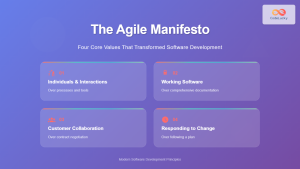
The Agile Manifesto: Four Core Values Explained for Modern Software Development
The Agile Manifesto, published in 2001 by seventeen software development thought leaders, fundamentally transformed how we approach software development. This...

Stakeholder Management: Complete Guide to Engaging All Parties in Agile Projects
Effective stakeholder management is the cornerstone of successful Agile projects. In today's complex business environment, projects involve multiple parties with...

The 12 Principles of Agile Development: A Complete Guide to Agile Software Development Success
Agile development has revolutionized the software industry by prioritizing flexibility, collaboration, and customer satisfaction over rigid processes. At the heart...
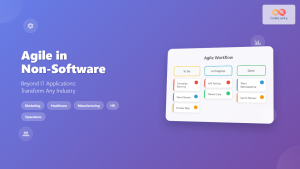
Agile in Non-Software: Complete Guide to Implementation Beyond IT Applications
Introduction to Agile Beyond Software Development While Agile methodologies originated in software development, their core principles of flexibility, collaboration, and...