Preparing for coding interviews is not just about knowing algorithms—it is about presenting them in a clear, structured, and professional manner. Interviewers look for correctness, efficiency, and readability in your solutions. Writing messy code can cost you an offer even if your logic is right. This article explores practical tips to write clean algorithm code during interviews with visual examples, interactive snippets, and structured explanations.
Why Clean Algorithm Code Matters
In coding interviews, your ability to solve problems matters, but so does how you convey your thought process. Clean code demonstrates:
- Clarity: Interviewers can easily follow your reasoning.
- Professionalism: Shows you will write maintainable code in real projects.
- Error Reduction: Cleaner structure means fewer bugs and logical mistakes.
- Efficiency: Well-structured solutions make complexity analysis straightforward.
Step-by-Step Framework for Writing Clean Algorithm Code
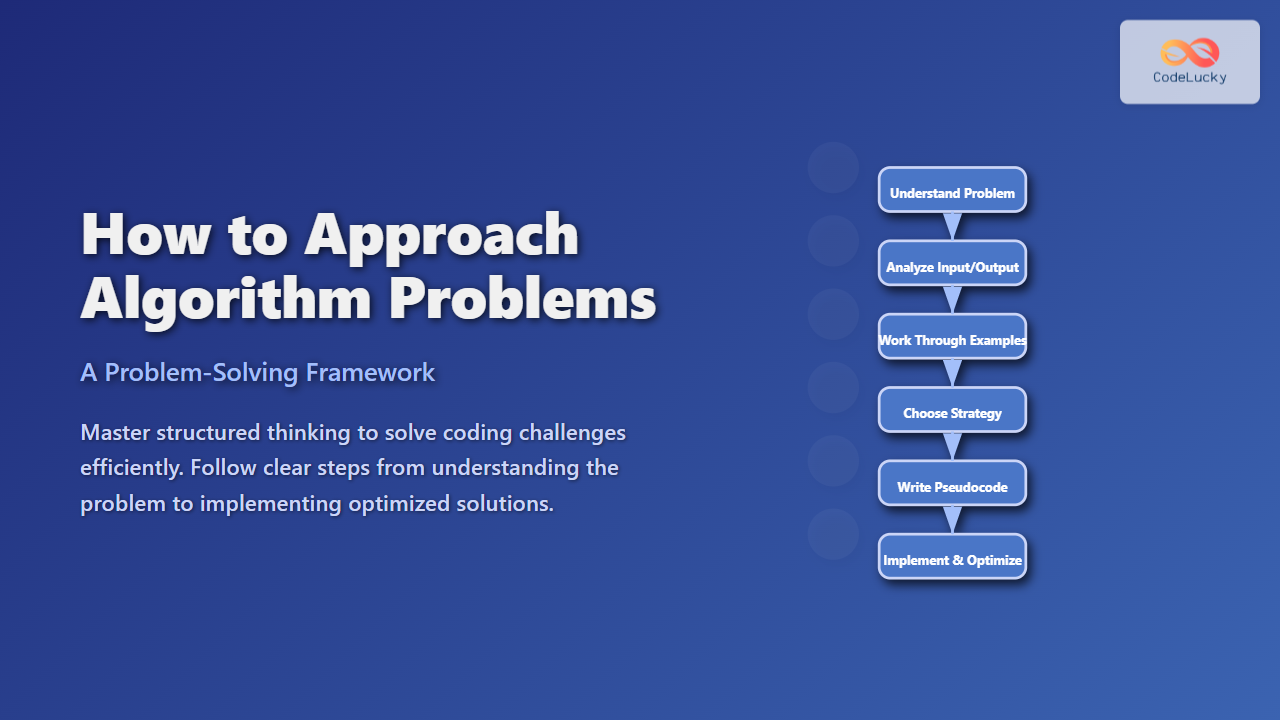
Follow this framework in your coding interviews:

1. Understand and Restate the Problem
Always restate the problem in your own words to ensure clarity. This prevents misinterpretation and demonstrates communication skills.
2. Write Pseudocode First
Outlining pseudocode helps organize your solution logically before implementation. This reduces the chance of messy or incomplete code.
# Example Pseudocode for Finding Maximum in Array
initialize max_value as first element
for each element:
    if element > max_value:
        update max_value
return max_value
3. Implement with Meaningful Variables
Use variable names that describe their roles, avoid abbreviations that obscure meaning, and keep functions focused on single responsibilities.
def find_maximum(arr):
    """Return the maximum element in the array."""
    if not arr:
        return None
    max_value = arr[0]
    for number in arr:
        if number > max_value:
            max_value = number
    return max_value

# Example usage
print(find_maximum([3, 7, 2, 9, 5]))  # Output: 9
4. Format and Indent Code Properly
Consistent indentation and spacing is crucial. A neatly indented solution is easier to review and less prone to hidden syntactic errors.
5. Add Comments Wisely
Include comments where necessary to explain non-trivial logic. Avoid excessive commenting for obvious operations.
// Function to check if a string is a palindrome
boolean isPalindrome(String s) {
    int left = 0, right = s.length() - 1;
    while (left < right) {
        if (s.charAt(left) != s.charAt(right)) return false;
        left++;
        right--;
    }
    return true;
}
Complexity Analysis and Clarity
Your interviewer will expect you to analyze complexity. Write it down clearly alongside your solution. Clean solutions make it easier to derive time and space complexity.
Interactive Example: Clean Recursion
Recursive solutions get messy quickly. Use a clean structure, clear base cases, and proper naming. Try this interactive Python snippet (runnable in most code sandboxes):
def factorial(n):
    """Return n! using recursion."""
    if n == 0 or n == 1:
        return 1
    return n * factorial(n - 1)

# Test cases
print(factorial(5))  # Output: 120
print(factorial(0))  # Output: 1
Here, the base case and recursive case are clearly separated, making it easy to trace execution.
Visualizing an Algorithm: Binary Search
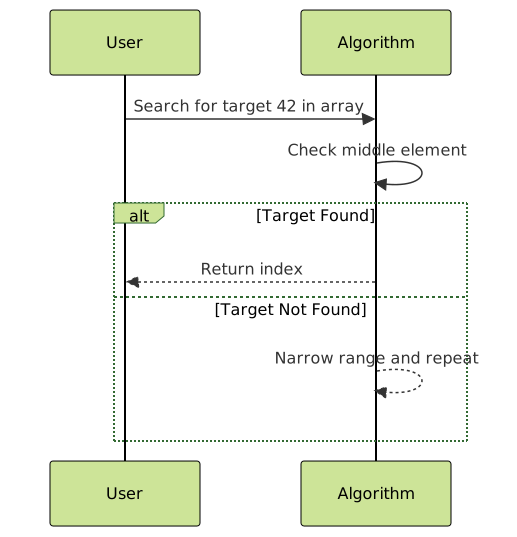
Binary Search is a classic interview algorithm. Writing it cleanly leaves a strong impression. The visualization below shows the step-by-step narrowing of search space.
def binary_search(arr, target):
    """Return index of target if found, else -1."""
    left, right = 0, len(arr) - 1
    while left <= right:
        mid = (left + right) // 2
        if arr[mid] == target:
            return mid
        elif arr[mid] < target:
            left = mid + 1
        else:
            right = mid - 1
    return -1

# Example usage
print(binary_search([1, 3, 5, 7, 9, 11], 7))  # Output: 3
Checklist for Writing Clean Algorithm Code
Keep this checklist in mind while solving interview problems:
- ✔ Restate the problem before jumping into code
- ✔ Write pseudocode to plan your solution
- ✔ Use descriptive variable and function names
- ✔ Follow consistent indentation and formatting
- ✔ Add comments selectively for clarity
- ✔ Include basic test cases for demonstration
- ✔ Analyze both time and space complexity
- ✔ Present optimized solutions when possible
Conclusion
Writing clean algorithm code is a skill that sets great developers apart in interviews. Your goal is not only to solve problems correctly but also to communicate solutions in an elegant and maintainable way. By using clear variable names, structured pseudocode, proper indentation, and a systematic problem-solving approach, you will maximize your chances of impressing interviewers and securing the job you want.