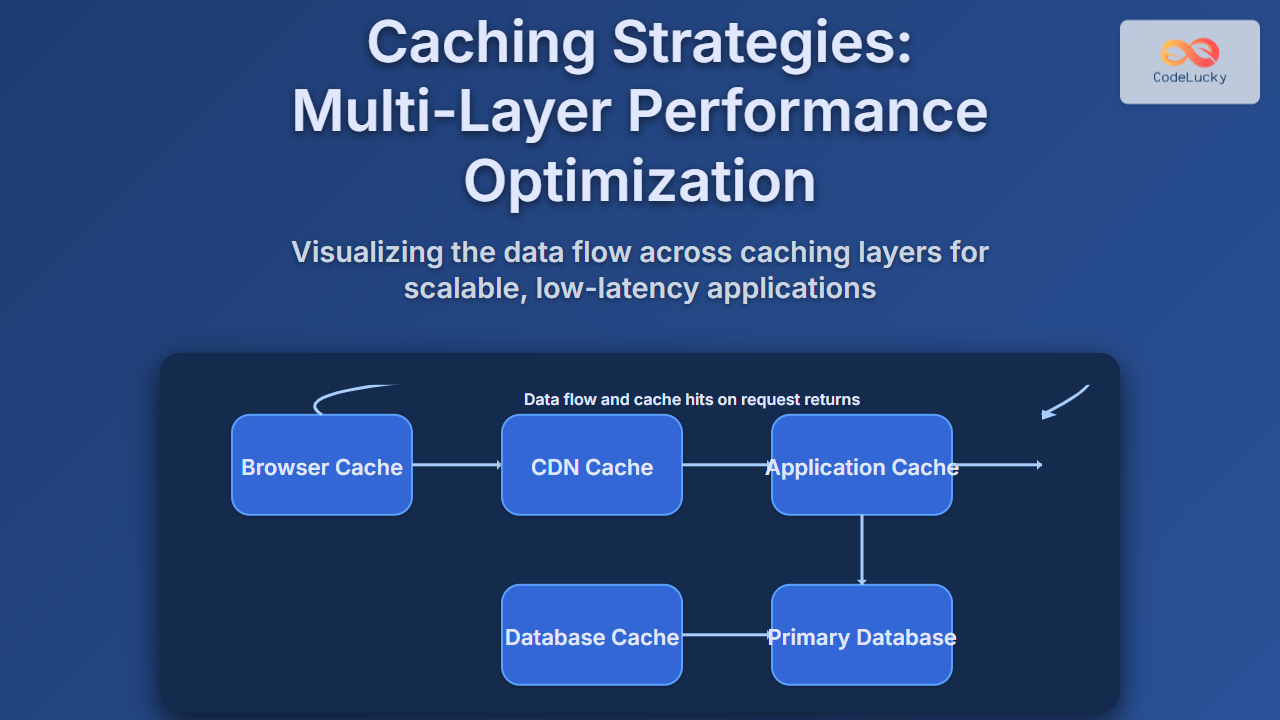
Efficient caching strategies are essential for building high-performance, scalable applications that serve users with minimal latency. Multi-layer caching combines several caching mechanisms at different architectural levels to optimize data retrieval speed, reduce server load, and provide a seamless user experience. This article dives deep into multi-layer performance optimization using caching, including concrete examples, diagrams, and best practices to implement robust caching strategies.
Understanding Multi-Layer Caching
Multi-layer caching involves storing copies of frequently accessed data in multiple cache layers positioned at different points in the data retrieval path. These layers can include:
- Browser Cache: Caches static content on the client side for faster repeat access.
- CDN (Content Delivery Network): Distributes cached content geographically closer to users.
- Application Cache (In-Memory): Tools like Redis or Memcached store computed or frequently accessed data in memory for fast retrieval.
- Database Cache: Materialized views or query results cached to reduce expensive DB calls.
Each layer serves as a checkpoint to accelerate data access and reduce the amount of work needed downstream.

Why Use Multi-Layer Caching?
Multi-layer caching improves performance by:
- Reducing Latency: Serving data closer to the user or from faster access points.
- Decreasing Load: Offloading database and backend systems to prevent bottlenecks.
- Improving Scalability: Enables handling more traffic without proportional increase in backend processing.
- Increasing Fault Tolerance: Cache layers can still serve stale data even when the primary source is temporarily unavailable.
Implementing Multi-Layer Caching: Step-by-Step Example
Consider an e-commerce website with product data that is requested frequently. Implementing a multi-layer caching system might look like this:
- Browser Cache: Configure static resources like images, CSS, and JavaScript with proper cache headers (e.g., Cache-Control, ETag) so browsers store them locally.
- CDN Cache: Serve static assets and even some API responses (e.g., new products list) via a CDN to provide geographic proximity caching.
- Application Cache: Use Redis to cache expensive product data queries or computations (e.g., discounted price calculations) with specific time-to-live (TTL).
- Database Cache: Create materialized views or use database-level caching extensions to cache complex joins or aggregations.
Example: Redis Caching in Node.js
// Setting up Redis client
const redis = require("redis");
const client = redis.createClient();

// Middleware to check cache
async function cacheMiddleware(req, res, next) {
  const productId = req.params.id;
  try {
    const cachedProduct = await client.get(`product:${productId}`);
    if (cachedProduct) {
      return res.json(JSON.parse(cachedProduct)); // Return cache hit
    }
    next(); // Proceed if cache miss
  } catch (err) {
    console.error("Redis error", err);
    next();
  }
}

// Route handler
app.get("/product/:id", cacheMiddleware, async (req, res) => {
  const productId = req.params.id;
  // Simulate DB query
  const product = await db.query("SELECT * FROM products WHERE id = ?", [productId]);
  // Cache the product data with TTL 10 minutes
  await client.setEx(`product:${productId}`, 600, JSON.stringify(product));
  res.json(product);
});
Cache Invalidation Strategies
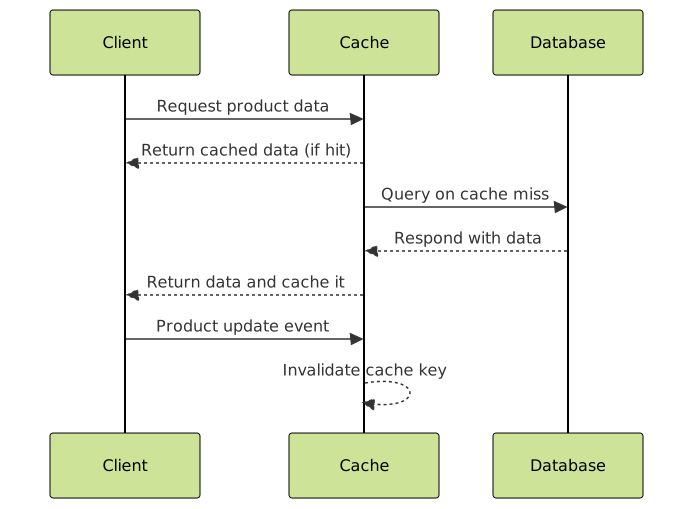
Caching is beneficial only if data freshness is maintained. Common invalidation techniques include:
- Time-Based Expiry: Setting TTLs for cached keys to expire automatically.
- Event-Based Invalidation: For example, when product data updates, invalidate or update the corresponding cache keys.
- Cache-Aside Pattern: Application checks cache first and populates it on misses, proactively invalidating when updates occur.
Best Practices for Multi-Layer Caching
- Optimize what to cache: Cache read-heavy data that does not change frequently.
- Choose appropriate TTL values balancing freshness and cache effectiveness.
- Use consistent key naming conventions for cache entries.
- Monitor cache hit/miss ratios and cache performance metrics continuously.
- Implement fallback mechanisms if cache layers fail.
Advanced Example: Multi-Layer Cache Flow for API Response
This flow illustrates how an API response benefits from multiple caching layers checking progressively before reaching the backend database:

Conclusion
Employing multi-layer caching strategies is key for optimizing performance and scalability in modern applications. Properly designed cache layers can drastically reduce latency and backend load, leading to better user experiences and efficient resource utilization. By combining browser, CDN, application, and database cache layers effectively, developers gain fine-grained control over the caching lifecycle and data freshness balances.
Start small by adding caching at the application or CDN layer and then progressively add more layers as needed. Continuous monitoring and tuning are essential to maintain optimal cache effectiveness over time.