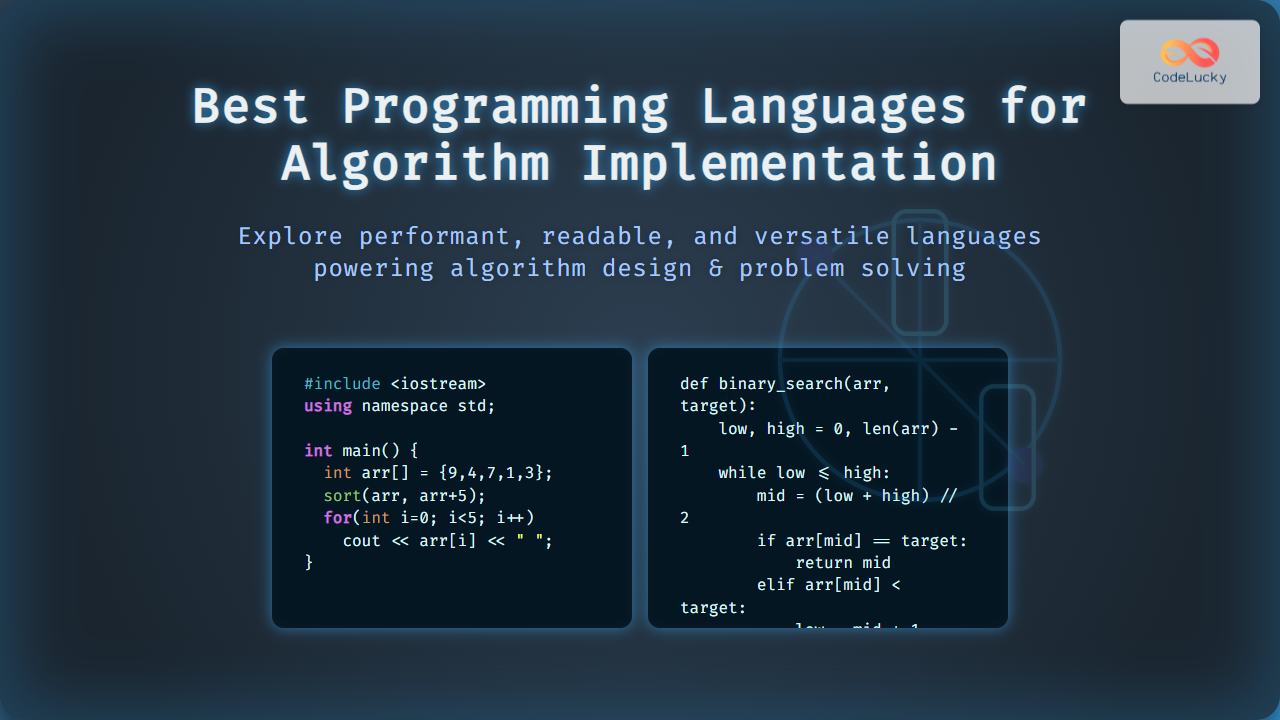
Algorithms are the backbone of computer science and problem-solving in programming. Choosing the right programming language for algorithm implementation is crucial to ensure performance, readability, and scalability. While almost all programming languages can implement algorithms, some languages are more suited based on execution speed, library support, or learning curve.
In this article, we will explore the best programming languages for algorithms, supported with examples, visualizations, and comparisons to help you make an informed decision.
Why Choosing the Right Language for Algorithms Matters
The choice of language influences several factors, including:
- Execution Speed: Some languages compile to machine code for maximum performance.
- Ease of Writing: High-level syntax makes experimenting with algorithms easier.
- Library Ecosystem: Languages with strong libraries can shorten implementation time.
- Portability: Some languages are better suited for educational purposes, while others for production-level efficiency.
Top Programming Languages for Algorithm Implementation
1. C++: The Powerhouse for Performance
C++ is considered the gold standard for algorithm implementation in competitive programming and systems development. It provides direct memory management, Standard Template Library (STL), and high execution speed.
Example: Sorting using C++ STL
#include <iostream>
#include <algorithm>
#include <vector>
using namespace std;

int main() {
    vector<int> nums = {9, 4, 7, 1, 3};
    sort(nums.begin(), nums.end());
    for(int n : nums) cout << n << " ";
}
Output:
1 3 4 7 9

2. Python: Best for Learning and Rapid Prototyping
Python is widely used in teaching algorithms due to its readable syntax. It may not be the fastest, but with libraries such as NumPy and NetworkX, Python empowers quick experimentation.
Example: Binary Search in Python
def binary_search(arr, target):
    low, high = 0, len(arr) - 1
    while low <= high:
        mid = (low + high) // 2
        if arr[mid] == target:
            return mid
        elif arr[mid] < target:
            low = mid + 1
        else:
            high = mid - 1
    return -1

nums = [1, 3, 5, 7, 9, 11]
print(binary_search(nums, 7))
Output:
3

3. Java: Balance Between Performance and Portability
Java is popular for algorithm practice and real-world applications. With garbage collection and strong type safety, Java offers a reliable environment for large-scale algorithmic solutions.
Example: Implementing Depth First Search (DFS)
import java.util.*;

class DFS {
    private Map<Integer, List<Integer>> graph = new HashMap<>();

    public void addEdge(int u, int v) {
        graph.computeIfAbsent(u, k -> new ArrayList<>()).add(v);
    }

    public void dfs(int node, Set<Integer> visited) {
        if(visited.contains(node)) return;
        visited.add(node);
        System.out.print(node + " ");
        for(int neighbor : graph.getOrDefault(node, new ArrayList<>())) {
            dfs(neighbor, visited);
        }
    }

    public static void main(String[] args) {
        DFS g = new DFS();
        g.addEdge(0, 1);
        g.addEdge(0, 2);
        g.addEdge(1, 3);
        g.addEdge(2, 4);

        g.dfs(0, new HashSet<>());
    }
}
Output:
0 1 3 2 4

4. JavaScript: For Web-based Algorithm Visualization
Though not as common in competitive programming, JavaScript shines in creating interactive algorithm visualizations on the web. Its integration with HTML and Canvas makes it ideal for teaching algorithms visually.
Example: Simple Factorial Function
function factorial(n) {
    if(n === 0) return 1;
    return n * factorial(n - 1);
}

console.log(factorial(5));
Output:
120
5. Go (Golang): Concurrency and Modern Efficiency
Go is increasingly adopted for algorithm implementation in distributed systems. Its concurrency model makes it useful beyond traditional algorithm teaching.
Example: Fibonacci using Recursion in Go
package main
import "fmt"

func fib(n int) int {
    if n <= 1 {
        return n
    }
    return fib(n-1) + fib(n-2)
}

func main() {
    fmt.Println(fib(6))
}
Output:
8
Comparison of Languages for Algorithms
| Language | Strengths | Weaknesses | Best Use Case |
|---|---|---|---|
| C++ | Fast, STL, low-level control | Steep learning curve | Competitive programming |
| Python | Readable, strong libraries | Slower execution | Learning & rapid prototyping |
| Java | Platform-independent, reliable | Verbose syntax | Production systems |
| JavaScript | Web integration, visualization | Not ideal for speed | Algorithm visualization |
| Go | Concurrency, simplicity | Smaller library ecosystem | Modern distributed systems |
Conclusion
The best programming language for algorithms depends on your objective. If you want speed and optimization, go with C++. For learning, Python is the most beginner-friendly. For production-grade systems, Java works well. For visualization, JavaScript is unmatched, while Go offers concurrency advantages for modern applications.
No matter which language you choose, mastering algorithmic thinking is more important than the syntax itself. Experiment, practice, and visualize to truly understand how algorithms power the digital world.