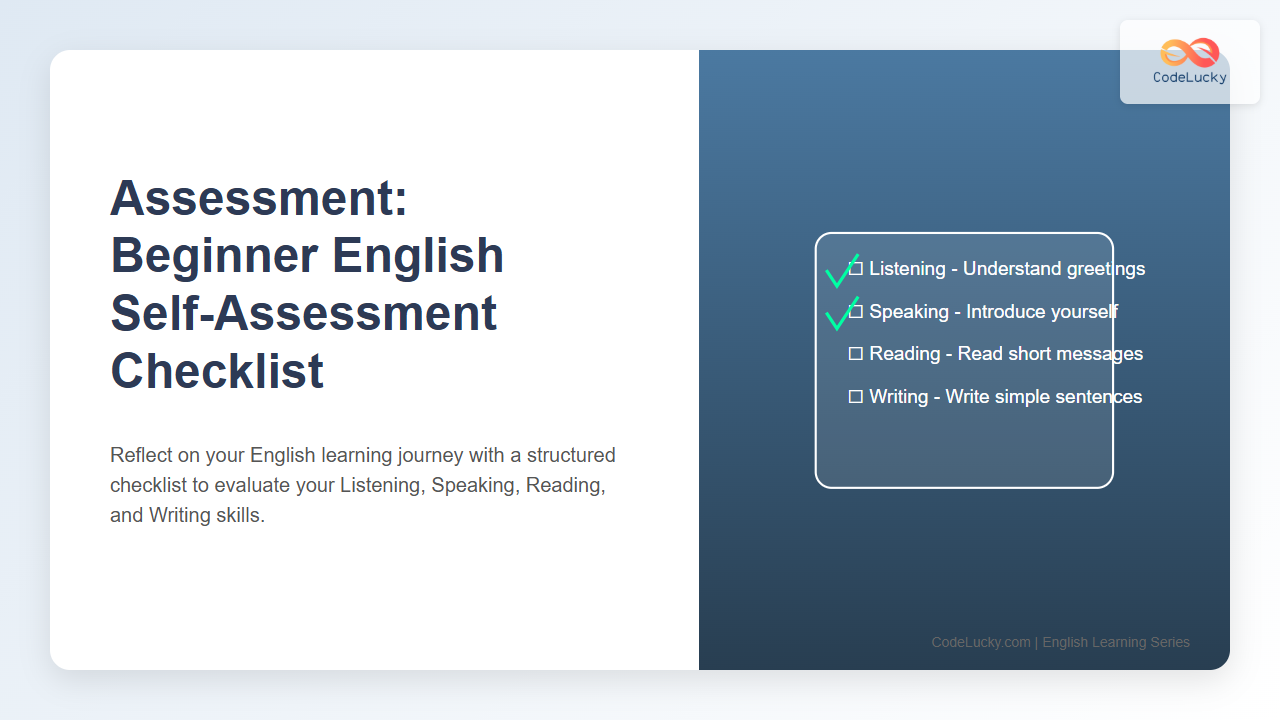
Are you just starting to learn English and wondering how well you’re progressing? This detailed self-assessment checklist helps beginners evaluate their English proficiency across listening, speaking, reading, and writing skills. Whether you’re studying alone or with a teacher, this guide will help you reflect on what you’ve mastered and what needs improvement.
The goal of this article is to give you a structured way to measure your current English ability and keep improving every week.
Why a Self-Assessment Checklist Matters
When learning a new language, self-assessment gives you three big advantages:
- Clarity – You know what you can do and where you need help.
- Motivation – Tracking small achievements boosts confidence.
- Personalization – You focus study time on your weakest areas.
Beginner English Skill Areas
English skills are usually divided into four areas. Each requires practice and reflection:
- Listening – Understanding spoken English in conversations and media.
- Speaking – Expressing yourself clearly in daily situations.
- Reading – Comprehending short texts, signs, and instructions.
- Writing – Constructing basic sentences and short paragraphs.

Beginner English Self-Assessment Checklist
Use this checklist to mark what you can already do. Rate each skill from 1 (Not confident) to 5 (Very confident).
| Category | Skill Example | Rating (1-5) |
|---|---|---|
| Listening | I can understand when someone says “What is your name?” or “Where are you from?” | __ |
| Speaking | I can introduce myself and talk about my family. | __ |
| Reading | I can read a short menu or basic email message. | __ |
| Writing | I can write simple sentences about my day. | __ |
Example: Completing the Checklist
Here’s an example of how a learner might complete part of the list:
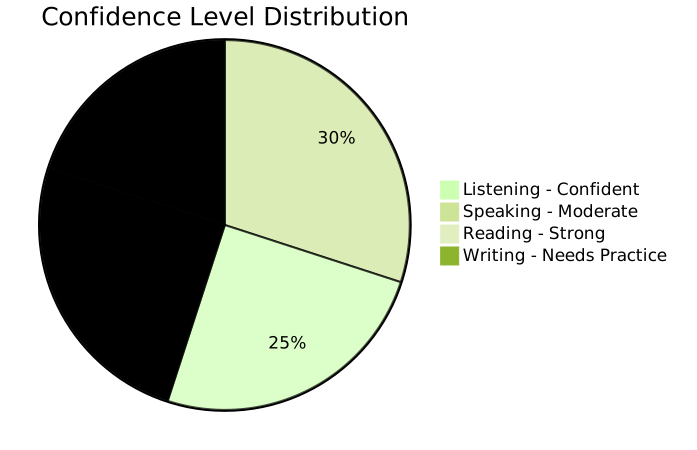
Listening: 4 – I understand slow conversations.
Speaking: 3 – I can introduce myself but pause often.
Reading: 5 – I can read basic instructions and emails.
Writing: 2 – I can write short notes, but with spelling mistakes.
This shows where the learner should now focus — in this case, writing practice!
Interactive Self-Evaluation Activity
Try this short self-evaluation in your notebook or an app:
- Record yourself saying, “Hello, my name is [your name]. I’m learning English.”
- Play it back and assess clarity of pronunciation (rate 1-5).
- Write three sentences describing your favorite food. Check for grammar mistakes.
- Listen to a short English podcast clip. Write five words you recognized.
How to Use Results for Improvement
After completing the checklist, group your ratings to decide your next steps.
| Score Range | Meaning | Next Step |
|---|---|---|
| 1–2 | Needs more attention | Focus on daily practice and repetition. |
| 3–4 | Developing skill | Engage in conversation or write short notes. |
| 5 | Strong area | Use it regularly in real contexts. |
Tips to Improve Each Area
Listening Tips
- Watch English cartoons or YouTube channels with subtitles.
- Use easy podcasts like “Voice of America Learning English.”
Speaking Tips
- Practice speaking English with friends or voice assistants.
- Read aloud from short articles or stories daily.
Reading Tips
- Start with short stories, news headlines, or graded readers.
- Highlight new words and learn them using flashcards.
Writing Tips
- Write a short journal entry every evening.
- Check your grammar using online tools or apps.
Setting Realistic Learning Goals
To stay motivated, set SMART goals (Specific, Measurable, Achievable, Relevant, Time-bound). For example:
- Specific: “I will learn 10 new English words this week.”
- Measurable: Keep a notebook to track progress.
- Achievable: Choose goals that fit your time and level.
- Relevant: Focus on vocabulary used in your daily life.
- Time-bound: Finish the task by Sunday evening.

Final Thoughts
A self-assessment checklist is not just a scorecard — it’s your personal English growth roadmap. Return to this checklist monthly and update your ratings as you improve. Seeing progress in numbers and confidence is one of the best rewards you can give yourself on your English learning journey.
Keep practicing, stay consistent, and remember — improvement in language comes step by step, not all at once.