Backtracking is one of the most powerful algorithmic techniques in computer science. Inspired by how humans solve puzzles, it systematically explores all possible states of a problem while abandoning paths that prove unsuitable. This strategy is used to solve constraint satisfaction problems like N-Queens, Sudoku, crossword solving, and more.
In this article, we will explore backtracking algorithms, how they work, their advantages, and implement them in Python with clear examples and visual outputs.
What is Backtracking?
Backtracking is an algorithmic approach that incrementally builds candidates for solutions, and abandons a candidate as soon as it determines that it cannot possibly lead to a valid solution. It is a type of depth-first search (DFS) of a solution space.
Think of it as trying every possible path in a maze but retreating (backtracking) whenever you encounter a dead end, until you find the exit.

How Backtracking Works
- Start from an empty solution.
- At each step, add a candidate choice.
- If the candidate is valid, move ahead; else backtrack.
- Repeat until either a full solution is found or all options have been tested.
Key Characteristics of Backtracking
- Recursive Structure: Naturally represented using recursion.
- Pruning: Early elimination of choices that cannot yield valid solutions.
- Solution Space Exploration: Exhaustive search until all possibilities are considered.
Classic Example: N-Queens Problem
The famous N-Queens problem asks us to place N queens on an N×N chessboard such that no two queens attack each other.
Algorithm Idea
- Place a queen in a row.
- Move to the next row and attempt to place another queen.
- If no safe position is available, backtrack to previous row and reposition.

Python Implementation
def is_safe(board, row, col, n):
    for i in range(row):
        if board[i] == col or \
           abs(board[i] - col) == abs(i - row):
            return False
    return True

def solve_n_queens(n, row=0, board=[], solutions=[]):
    if row == n:
        solutions.append(board[:])
        return
    for col in range(n):
        if is_safe(board, row, col, n):
            board.append(col)
            solve_n_queens(n, row+1, board, solutions)
            board.pop()
    return solutions

solutions = solve_n_queens(4)
for s in solutions:
    print(s)
Output for 4-Queens
[1, 3, 0, 2]
[2, 0, 3, 1]
This represents queen placements by column index for each row. For example, [1, 3, 0, 2] means:
- Row 0 → Column 1
- Row 1 → Column 3
- Row 2 → Column 0
- Row 3 → Column 2
Visualizing Backtracking Tree
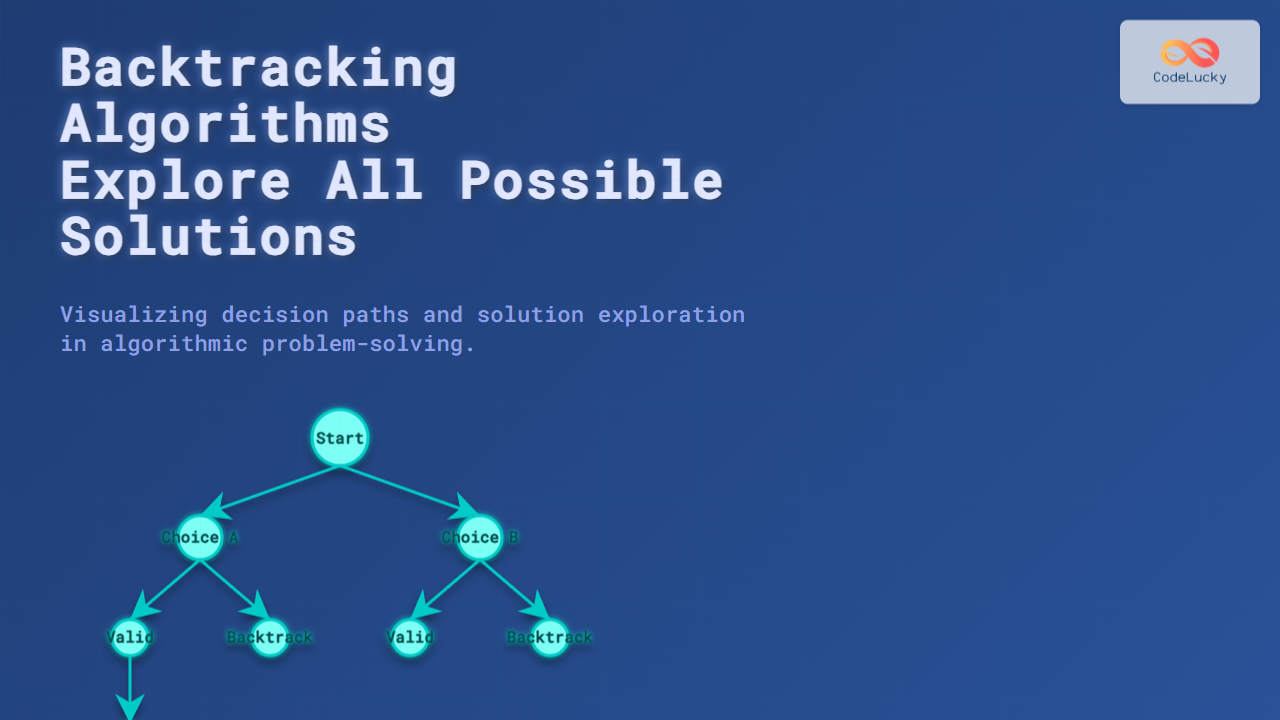
When solving such problems, backtracking generates a recursion tree of possibilities:
Another Example: Subset Generation
Backtracking can also be used to generate all subsets of a set (also known as the power set).
def generate_subsets(nums, index=0, current=[], result=[]):
    if index == len(nums):
        result.append(current[:])
        return
    # Include current element
    current.append(nums[index])
    generate_subsets(nums, index+1, current, result)
    current.pop()
    # Exclude current element
    generate_subsets(nums, index+1, current, result)
    return result

print(generate_subsets([1,2,3]))
Output
[[1, 2, 3], [1, 2], [1, 3], [1], [2, 3], [2], [3], []]
Applications of Backtracking
- Solving puzzles (Sudoku, Crossword, N-Queens).
- Generating permutations and combinations.
- Constraint satisfaction in AI.
- Path-finding problems in mazes and graphs.
Complexity Analysis
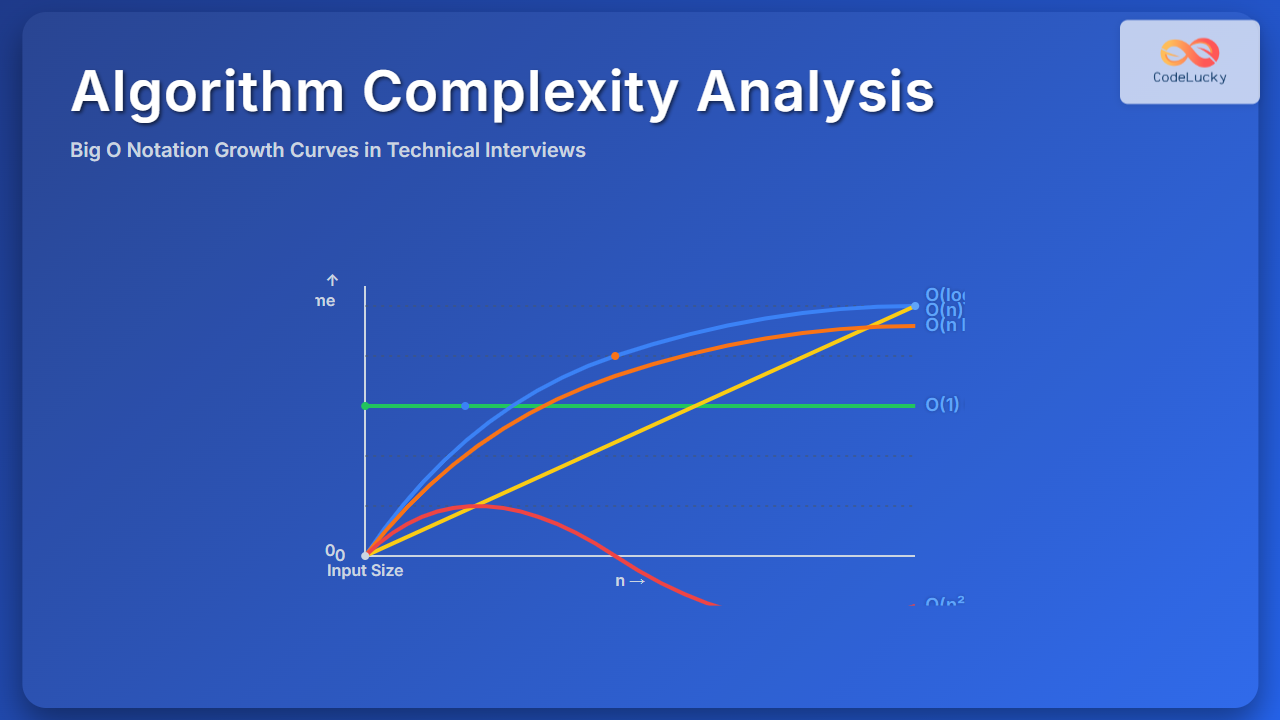
The time complexity of backtracking is highly problem-dependent. In the worst case, backtracking explores O(k^n) states where n is the depth of recursion and k is the number of choices at each step. However, pruning invalid states reduces the practical run time drastically.
Key Takeaways
- Backtracking is an exhaustive search strategy using recursion.
- It is most effective when combined with pruning techniques.
- It underlies popular algorithms for puzzles, graph traversal, and combinatorial optimization.
Mastering backtracking equips you to solve a wide variety of computational problems efficiently. By practicing with problems like N-Queens, Subset Generation, and Sudoku Solvers, you can deepen your algorithmic thinking.