B-Trees are dynamic, balanced tree data structures widely used in databases and file systems to maintain sorted data and allow efficient insertions, deletions, and searches. This article provides a comprehensive and SEO-friendly guide on B-Tree operations, explaining their structure, balanced nature, and usage in databases with clear examples, interactive insights, and visual diagrams for better understanding.
Understanding B-Tree: The Balanced Tree Structure
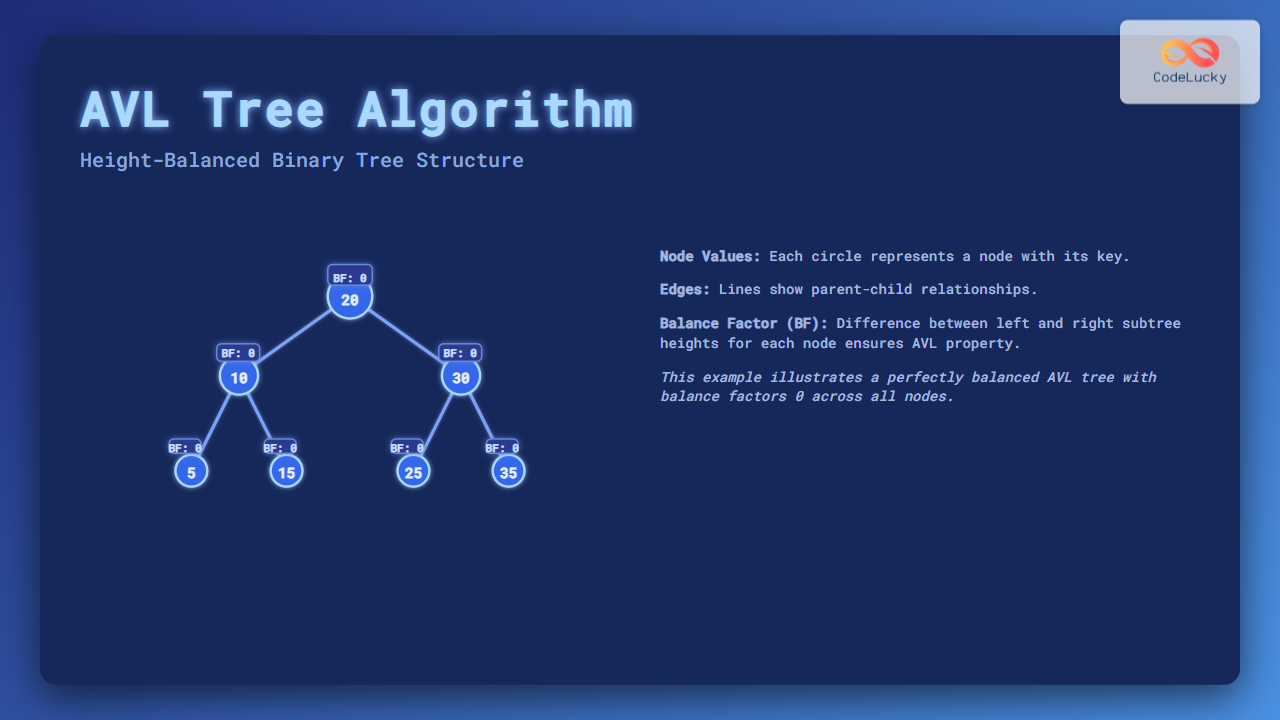
A B-Tree is a self-balancing tree data structure that maintains sorted data and allows searches, sequential access, insertions, and deletions in logarithmic time. It extends the concept of a binary search tree by allowing nodes to have more than two children, which reduces tree height and boosts efficiency in databases.
Key properties of a B-Tree of order m are:
- Each node can have a maximum of m children.
- Each internal node (except root) has at least ⌈m/2⌉ children.
- Leaf nodes are at the same depth, ensuring balanced height.
- A node with k children contains k-1 keys, all sorted.

The balanced nature comes from nodes splitting or merging when they exceed or fall below a threshold count of keys, keeping the height minimal and operations optimal.
B-Tree Operations Explained
Search Operation
Searching in a B-Tree works like a multi-way search tree:
- Start at the root node.
- Perform a binary search within the node’s sorted keys.
- If the key is found, return the node and position.
- If not found, recursively proceed to the appropriate child node based on key comparison.
- If a leaf is reached without a match, the key is not present.
Search complexity is O(log n), where n is the number of keys.
Insertion Operation
Inserting a key into a B-Tree involves:
- Searching for the correct leaf node where the key should reside.
- Inserting the key in sorted order within the leaf.
- If the node exceeds its allowed maximum keys, it splits into two nodes and pushes the middle key up to the parent.
- This split can propagate upwards, potentially increasing the tree height.

Example: Insert 15 into a node with keys [10, 20]. After insertion, splitting happens because max keys are exceeded (assuming max is 2), and 15 moves up, balancing the tree.
Deletion Operation
Deleting a key requires these steps:
- Locate the key to delete.
- If it’s in a leaf, remove it directly.
- If it’s in an internal node, replace it with its predecessor or successor key from child nodes and then delete that key recursively.
- After deletion, if a node has less than the minimum number of keys, it borrows keys from siblings or merges with siblings, pushing keys down or up to maintain balance.

This rebalancing guarantees B-Tree properties remain intact after deletion.
Why B-Trees Are Ideal for Database Indexing
B-Trees extensively serve as the backbone for database indexing because they provide:
- Balanced structure: Guarantees logarithmic access times.
- High fan-out: More keys per node reduce tree height, minimizing disk I/O, which is costly in databases.
- Efficient range queries: Sequential leaf nodes allow easy traversal for range searches.
- Dynamic updates: Efficient insertion and deletion maintain indexing performance as data evolves.
Interactive Example: Insert Keys into a B-Tree
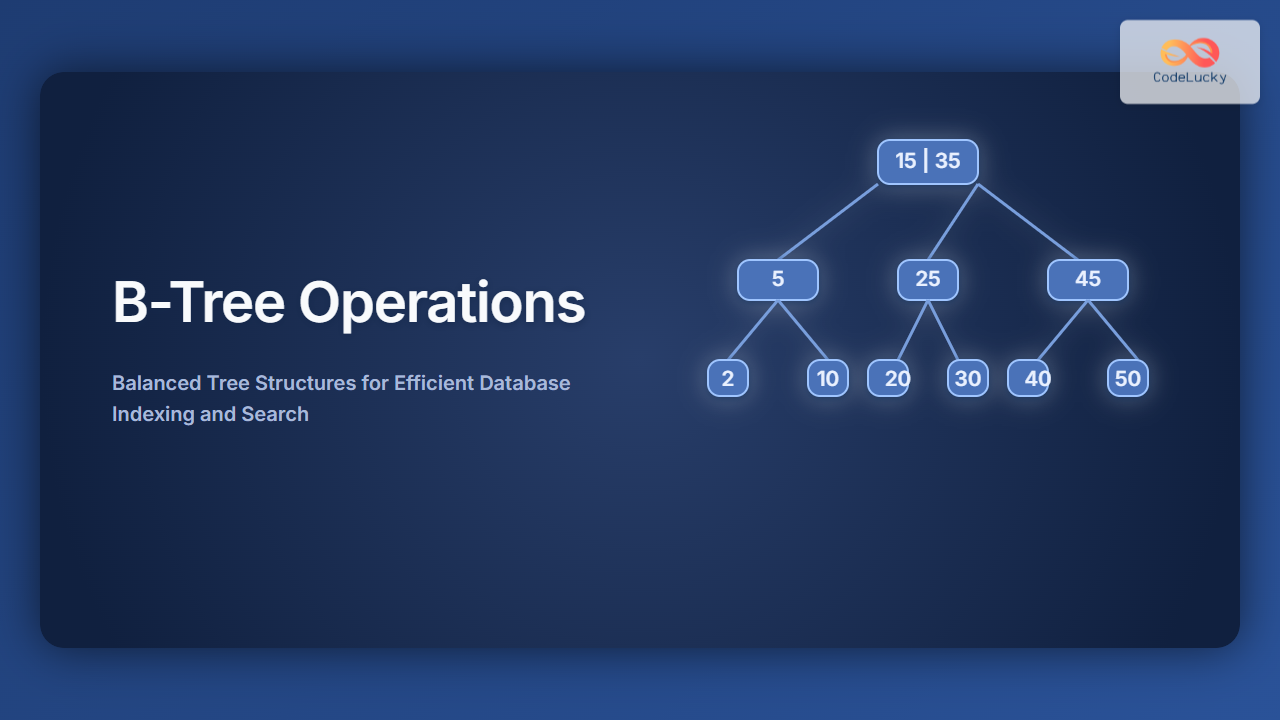
Insert the sequence of keys into an initially empty B-Tree of order 3 (max 2 keys per node): 5, 15, 25, 35, 45
Left node: [5] Middle key: 15 (promoted)
Right node: [25] New root: [15] Step 4: Insert 35 → Goes to right node [25, 35] Step 5: Insert 45 → Right node full, split:
Left node: [25] Middle key: 35 (promoted)
Right node: [45] New root: [15, 35]
Summary
The B-Tree is a balanced multi-way search tree optimized for systems that read and write large blocks of data, such as databases and filesystems. Its operations—search, insertion, and deletion—ensure logarithmic time complexity and balanced height, minimizing costly access times. Understanding its mechanics through detailed examples and visualizations simplifies its intricate balancing behaviors.