In today’s digital ecosystem, API integration has become indispensable for developers looking to enhance their applications by connecting with third-party services. Whether it’s payment gateways, social media platforms, or data providers, APIs allow seamless interaction across diverse systems. This guide dives deep into how to perform API integration, best practices, and real-world examples with clear visual and interactive elements to help developers build powerful, connected applications.
What is API Integration?
API Integration is the process of connecting your application with external third-party APIs to enable data exchange and service utilization. It allows developers to extend the functionality of their software without reinventing common features like authentication, payment processing, or analytics.

Key Benefits of API Integration
- Speed up development: Leverage existing services instead of building from scratch.
- Access advanced functionalities: Use specialized third-party tools for analytics, communication, payments, etc.
- Improve scalability: APIs allow applications to evolve by incorporating more services seamlessly.
- Enhance user experience: Integrate popular services like social logins or map functionalities directly.
Types of APIs Used in Integration
- RESTful APIs: Most common, using HTTP protocols with JSON or XML data formats.
- SOAP APIs: Older, uses XML and defined messaging patterns for enterprise-grade integration.
- GraphQL APIs: Flexible queries allowing clients to ask for specific data requirements.
- Webhooks: Server-to-server notifications triggered by events, for near real-time updates.
Steps to Connect Third-Party APIs
- Select the API: Choose the third-party service with suitable functionality and documentation.
- Register and Obtain Credentials: Sign up and get API keys or OAuth tokens required for authentication.
- Read the API Documentation: Understand available endpoints, request methods, required headers, and data formats.
- Set Up HTTP Requests: Use libraries like
fetch,axios(JavaScript), or tools relevant to your tech stack. - Handle Responses: Parse JSON or XML responses and integrate returned data into your application.
- Error Handling and Rate Limits: Implement retry mechanisms and respect API usage policies.
Example: Integrating a Weather API with JavaScript
This example demonstrates fetching weather data from a third-party API and displaying it dynamically on a webpage.
// Replace 'your_api_key' with your actual API key from OpenWeatherMap or equivalent
const apiKey = 'your_api_key';
const city = 'San Francisco';
const apiUrl = `https://api.openweathermap.org/data/2.5/weather?q=${city}&appid=${apiKey}&units=metric`;

async function getWeather() {
  try {
    const response = await fetch(apiUrl);
    if (!response.ok) {
      throw new Error('Network response was not ok');
    }
    const weatherData = await response.json();
    displayWeather(weatherData);
  } catch (error) {
    console.error('Fetch error:', error);
  }
}

function displayWeather(data) {
  const output = `
    Weather in ${data.name}
    Temperature: ${data.main.temp} °C
    Condition: ${data.weather[0].description}
  `;
  document.getElementById('weather').innerHTML = output;
}

getWeather();
Security Considerations in API Integration
- Use HTTPS: Always secure API requests with encryption.
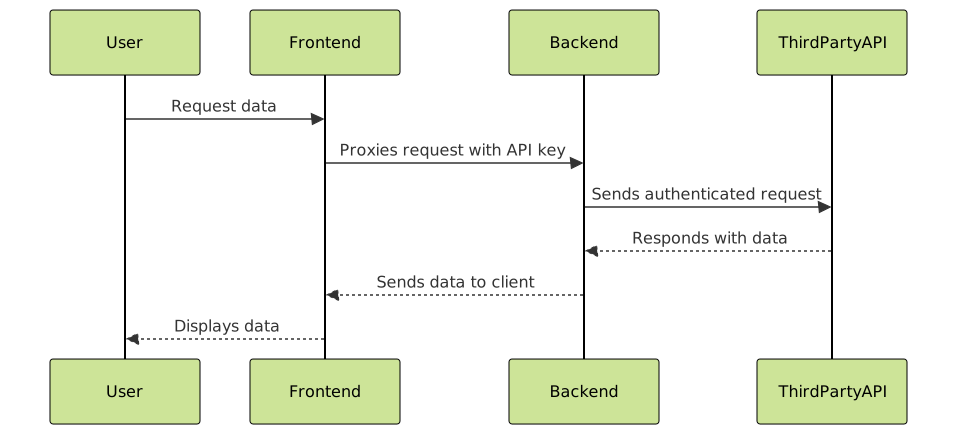
- Protect API keys: Avoid exposing sensitive credentials in client-side code by using server-side proxies.
- Implement Authentication: Use OAuth, API tokens, or JWTs as per the API provider’s requirements.
- Validate Inputs and Outputs: Prevent injection attacks by sanitizing data exchanged with APIs.
Interactive API Integration Example: Calculator Using Math API
Try this sample interactive snippet that uses a public math API to perform calculations dynamically.
Best Practices for Robust API Integration
- Documentation Review: Always study the provider’s docs thoroughly before implementation.
- Versioning Awareness: Ensure your client supports the API version used to avoid future breakage.
- Rate Limiting: Use caching and queueing to stay within request caps.
- Monitoring: Track API usage logs and errors to maintain reliability.

Conclusion
API integration is a fundamental skill for modern developers, enabling powerful, flexible, and scalable applications by connecting to third-party services. Understanding the types of APIs, following security best practices, and learning through practical examples like weather data fetching and interactive calculations build confidence in crafting robust integrations.
This guide serves as a comprehensive resource for mastering API integration from start to finish, with code samples and visuals to enhance learning.
- What is API Integration?
- Key Benefits of API Integration
- Types of APIs Used in Integration
- Steps to Connect Third-Party APIs
- Example: Integrating a Weather API with JavaScript
- Security Considerations in API Integration
- Interactive API Integration Example: Calculator Using Math API
- Best Practices for Robust API Integration
- Conclusion