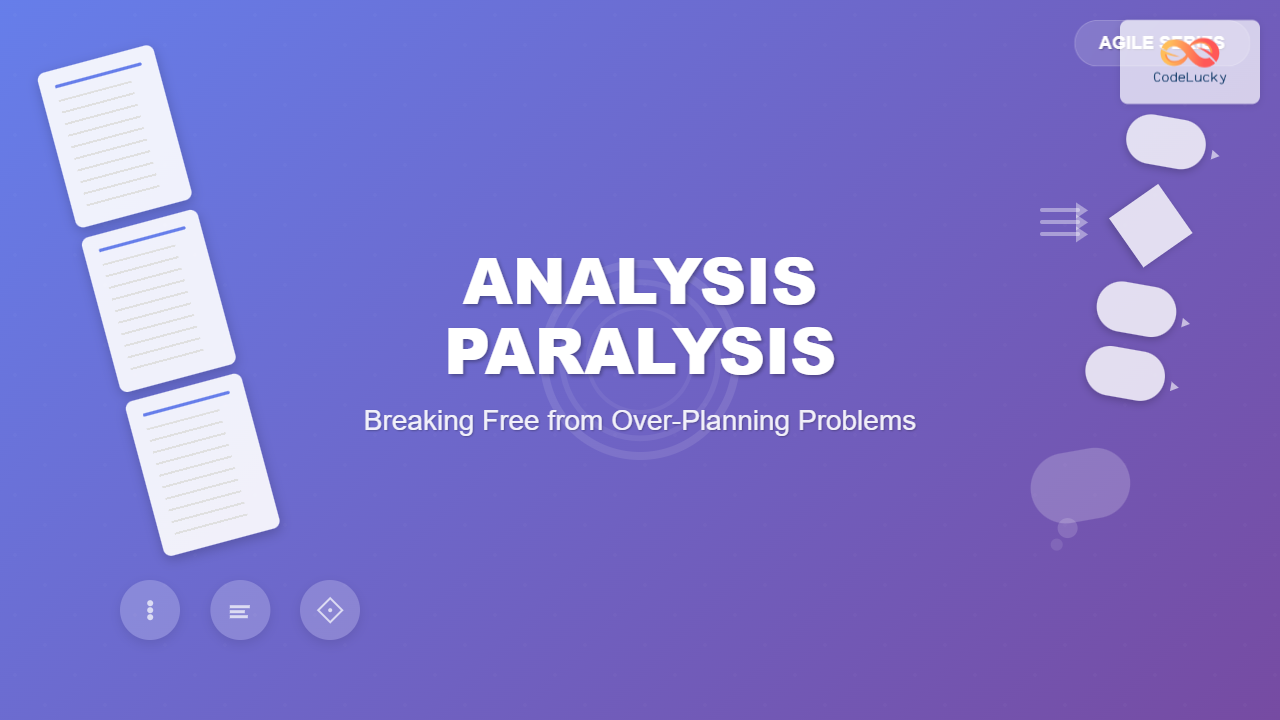
Analysis paralysis is one of the most insidious enemies of Agile development teams. While thorough planning seems like a virtue, excessive analysis can trap teams in endless cycles of deliberation, preventing them from delivering actual value to customers. This comprehensive guide explores the root causes of over-planning, its devastating impact on Agile projects, and proven strategies to overcome this productivity killer.
What is Analysis Paralysis in Agile Development?
Analysis paralysis occurs when teams become so focused on perfecting their plans, analyzing every possible scenario, and gathering exhaustive requirements that they never actually begin execution. In the context of Agile development, this manifests as teams spending weeks or months in planning phases without shipping any working software.
The irony is stark: Agile methodologies were specifically designed to combat the waterfall approach’s over-reliance on upfront planning. Yet many teams fall into the same trap, disguising waterfall practices with Agile terminology.
Common Symptoms of Over-Planning
Recognizing analysis paralysis early is crucial for intervention. Watch for these warning signs:
- Extended Sprint Planning Sessions: Sprint planning meetings that consistently run over their allocated time, sometimes lasting entire days
- Requirement Refinement Hell: Stories that undergo endless refinement without ever being marked as “ready” for development
- Perfect Documentation Obsession: Teams spending more time documenting requirements than building features
- Decision Postponement: Consistently pushing architectural or design decisions to “next sprint” without valid technical reasons
- Risk Analysis Overload: Creating elaborate risk matrices and mitigation plans for every conceivable scenario
The Psychology Behind Over-Planning
Understanding why teams fall into analysis paralysis is essential for addressing it effectively. Several psychological factors contribute to this phenomenon:
Fear of Making Wrong Decisions
Many teams suffer from decision anxiety, believing that more analysis will guarantee better outcomes. This perfectionist mindset ignores a fundamental Agile principle: it’s often better to make a reversible decision quickly than to make the perfect decision slowly.
Illusion of Control
Extensive planning creates a false sense of control over uncertain outcomes. Teams feel safer when they have detailed plans, even when those plans are based on assumptions that will likely prove incorrect.
Organizational Pressure
Traditional organizations often reward planning over execution, creating environments where teams feel they must demonstrate thorough analysis before beginning work. This institutional bias can override Agile principles.
The Real Cost of Analysis Paralysis
Over-planning doesn’t just slow teams down—it actively damages project outcomes and team morale. The costs are both immediate and long-term:
Delayed Value Delivery
Every day spent in analysis is a day not spent delivering value to customers. In competitive markets, this delay can mean the difference between success and failure. Features that could have been gathering user feedback and generating revenue remain theoretical.
Increased Technical Debt
Paradoxically, over-planning often leads to higher technical debt. When teams finally begin implementation, they’re under pressure to make up for lost time, leading to shortcuts and compromised code quality.
Team Demoralization
Developers joined Agile teams to build software, not to attend endless planning meetings. Prolonged analysis phases drain enthusiasm and can lead to team turnover.
Wasted Effort on Wrong Solutions
Detailed plans based on assumptions often prove incorrect once implementation begins or user feedback is received. The more detailed the initial planning, the more wasted effort when pivoting becomes necessary.
Breaking Free: Strategies to Combat Over-Planning
Overcoming analysis paralysis requires both mindset shifts and practical techniques. Here are proven strategies that successful Agile teams use:
Embrace “Good Enough” Planning
Perfect is the enemy of good in Agile development. Establish clear criteria for when planning is “good enough” to begin implementation:
- User stories have clear acceptance criteria
- Technical approach is identified (not necessarily optimal)
- Dependencies are understood
- Definition of Done is clear
Once these criteria are met, resist the urge to continue refining. Remember: you can always adjust course during implementation.
Time-Box Planning Activities
Set strict time limits for planning activities and stick to them religiously:
- Sprint Planning: Maximum 2 hours per week of sprint duration
- Story Refinement: No more than 10% of team capacity
- Architecture Discussions: 1-hour maximum per decision
When time expires, make decisions with available information rather than extending discussions.
Implement Just-In-Time Planning
Plan only what you need for the immediate sprint, plus a rough outline for the next 2-3 sprints. Detailed planning beyond this horizon often proves wasteful as requirements and priorities change.
Use Spike Solutions for Uncertainty
When facing significant technical uncertainty, create time-boxed spike stories to investigate and prototype solutions. This provides concrete data for decision-making rather than theoretical analysis.
The Power of Incremental Decision Making
One of the most effective weapons against analysis paralysis is embracing incremental decision-making. Instead of trying to make perfect decisions upfront, make the smallest viable decision that allows progress to continue.
Reversible vs. Irreversible Decisions
Amazon’s Jeff Bezos categorized decisions into two types:
- Type 1 (Irreversible): Decisions that are difficult or impossible to reverse
- Type 2 (Reversible): Decisions that can be easily changed
Most technical decisions in Agile development are Type 2. They deserve quick decision-making with less analysis, allowing teams to learn from implementation rather than speculation.
Decision Documentation
When making incremental decisions, document the context and reasoning briefly. This enables future reversals when needed and prevents re-analyzing the same issues repeatedly.
Building a Culture of Experimentation
Transform your team’s relationship with uncertainty by fostering an experimental mindset:
Hypothesis-Driven Development
Frame features and technical decisions as hypotheses to be tested rather than requirements to be perfectly implemented. This shifts focus from planning perfection to learning quickly.
Fail Fast, Learn Faster
Create safe environments where small failures are celebrated as learning opportunities. This reduces the perceived risk of making decisions with incomplete information.
Metrics-Driven Validation
Establish clear metrics for success before implementation begins. This provides objective criteria for evaluating decisions and reduces subjective debates during planning.
Tools and Techniques for Efficient Planning
Leverage these practical tools to streamline your planning process:
Planning Poker with Time Limits
Use planning poker for estimation, but set strict time limits. If the team can’t reach consensus within 10 minutes, either split the story or make an executive decision.
Pre-Planning Preparation
Product Owners should prepare stories thoroughly before planning sessions. Well-prepared stories reduce planning time and prevent analysis paralysis during team meetings.
Decision Logs
Maintain simple decision logs that capture what was decided, when, and why. This prevents re-litigating previous decisions and provides context for future changes.
Leading Change: From Analysis to Action
If your team is trapped in analysis paralysis, someone needs to lead the change. Here’s how to drive transformation:
Start Small
Don’t try to eliminate all over-planning at once. Pick one planning activity and apply time-boxing or “good enough” criteria. Build success momentum before tackling larger changes.
Measure and Communicate Progress
Track metrics like time-to-market, planning-to-development ratio, and team satisfaction. Share these metrics to demonstrate the benefits of reduced planning overhead.
Address Organizational Resistance
Be prepared to educate stakeholders about Agile principles. Many managers equate thorough planning with professionalism and may resist changes without proper context.
Case Study: Escaping the Planning Trap
Consider the experience of TechCorp’s development team, which spent six weeks planning a new feature integration. Despite exhaustive analysis, the implementation revealed that their core assumption—customer preference for a specific workflow—was incorrect.
After adopting time-boxed planning and hypothesis-driven development, the same team was able to test three different workflow approaches within four weeks, identifying the optimal solution through actual user feedback rather than theoretical analysis.
The key change wasn’t abandoning planning entirely, but rather planning just enough to enable rapid experimentation and learning.
Measuring Success: KPIs for Planning Efficiency
Track these metrics to ensure your anti-analysis paralysis efforts are working:
- Planning-to-Development Ratio: Time spent planning vs. time spent developing
- Decision Velocity: Average time from issue identification to decision
- Feature Time-to-Market: Time from concept to customer delivery
- Planning Accuracy: Percentage of plans that survive first contact with implementation
- Team Satisfaction: Regular surveys about planning process effectiveness
Future-Proofing: Preventing Analysis Paralysis Relapse
Once you’ve broken free from over-planning, maintain your progress with these practices:
Regular Retrospectives
Dedicate retrospective time specifically to planning efficiency. Ask teams: “Are we planning just enough, too much, or too little?”
Cross-Team Learning
Share success stories and techniques across teams. What works for one team may benefit others facing similar challenges.
Continuous Process Refinement
Treat your planning process as a product itself—continuously improve it based on feedback and outcomes.
Conclusion: Embracing Agile’s True Spirit
Analysis paralysis represents a fundamental misunderstanding of Agile principles. The methodology’s power lies not in perfect upfront planning, but in the ability to adapt quickly based on real-world feedback and changing circumstances.
By embracing “good enough” planning, time-boxing analysis activities, and fostering a culture of experimentation, teams can break free from the paralysis that prevents them from delivering real value to customers.
Remember: the goal isn’t to eliminate planning entirely, but to plan appropriately for the level of uncertainty you face. In today’s rapidly changing technological landscape, the ability to act on incomplete information is often more valuable than the ability to create perfect plans.
Start tomorrow: identify one area where your team is over-planning and experiment with a more action-oriented approach. Your customers—and your team—will thank you for choosing progress over perfection.
Related Posts
Sprint Planning Mistakes: 12 Critical Anti-Patterns That Sabotage Agile Teams
Sprint planning serves as the foundation of successful Agile development, yet many teams fall into predictable traps that undermine their...
Benefits of Agile Methodology: Why Teams Choose Agile for Project Success
Agile methodology has revolutionized how teams approach project management and software development. Since its introduction through the Agile Manifesto in...
What is Agile Methodology: Complete Beginner’s Guide to Modern Software Development
Agile methodology has revolutionized how software development teams work, moving away from rigid traditional approaches to embrace flexibility, collaboration, and...

Agile Failure Modes: Common Reasons Why Agile Transformations Fail and How to Avoid Them
Agile methodologies promise faster delivery, better quality, and improved team collaboration. Yet despite widespread adoption, many organizations struggle with failed...
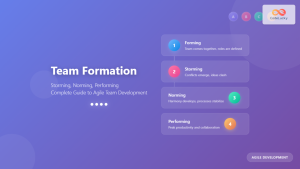
Team Formation: Storming, Norming, Performing – Complete Guide to Agile Team Development Stages
Team formation in Agile environments follows a predictable pattern that every project manager and team leader must understand. Bruce Tuckman's...
Scope Creep in Agile: Managing Change Without Compromising Quality
Scope creep remains one of the most challenging aspects of project management, even in Agile environments designed for flexibility. While...

Water-Scrum-Fall: Understanding the Dangerous Hybrid Anti-Pattern in Agile Development
Water-Scrum-Fall represents one of the most dangerous anti-patterns in modern software development, combining the rigid constraints of traditional Waterfall methodology...

Fake Agile: Superficial Adoption – How to Identify and Overcome Agile Theater
Fake agile, also known as "agile theater" or superficial agile adoption, represents one of the most significant obstacles to successful...

Agile Innovation: Complete Guide to Fostering Creative Solutions in Modern Development
In today's rapidly evolving technological landscape, the ability to innovate quickly and effectively has become the cornerstone of successful software...

Systems Thinking: Complete Guide to Holistic Agile Development
Systems thinking revolutionizes how Agile teams approach software development by viewing projects as interconnected ecosystems rather than isolated components. This...

Hero Culture: Individual Over Team – Breaking the Agile Anti-Pattern
Understanding Hero Culture in Agile Development Hero culture represents one of the most pervasive anti-patterns in Agile software development, where...

Agile Mindset: Developing the Right Mental Framework for Software Success
The agile mindset represents far more than following a set of practices or ceremonies—it's a fundamental shift in how we...
- What is Analysis Paralysis in Agile Development?
- The Psychology Behind Over-Planning
- The Real Cost of Analysis Paralysis
- Breaking Free: Strategies to Combat Over-Planning
- The Power of Incremental Decision Making
- Building a Culture of Experimentation
- Tools and Techniques for Efficient Planning
- Leading Change: From Analysis to Action
- Case Study: Escaping the Planning Trap
- Measuring Success: KPIs for Planning Efficiency
- Future-Proofing: Preventing Analysis Paralysis Relapse
- Conclusion: Embracing Agile’s True Spirit