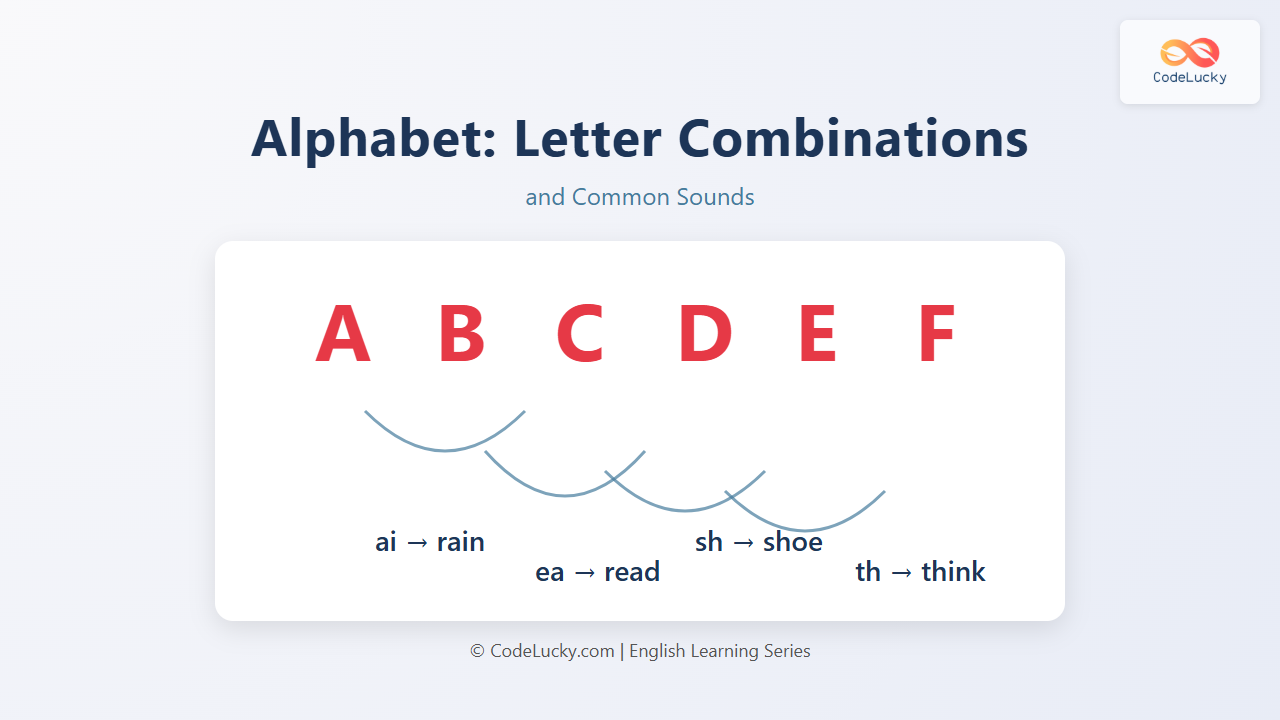
Alphabet: Letter Combinations and Common Sounds form the backbone of English pronunciation. Understanding how different letters work together to produce unique sounds is essential for reading, writing, and speaking fluently. This guide explores letter combinations, phonetic patterns, and key examples so learners can recognize and pronounce words confidently.
Understanding the English Alphabet and Sound System
The English alphabet contains 26 letters—21 consonants and 5 vowels—but it produces around 44 distinct sounds known as phonemes. These sounds include consonant blends, digraphs, and vowel combinations that don’t always match their spelling patterns. Recognizing common combinations helps bridge the gap between letters and their sounds.
English Sound Overview

Common Vowel Combinations
Vowels create rich sound variations, and their combinations—called vowel teams—often follow specific pronunciation patterns. Let’s look at the main ones:
- ai, ay – Makes the long a sound as in rain, play.
- ea – Can sound like meet or bread depending on the word.
- ee, ie – Usually make the long e sound: tree, piece.
- oa, ow – Commonly sound like long o: boat, snow.
- oo – Can be short (book) or long (moon).
Tip: When two vowels go walking, the first one often does the talking — it says its name, and the second stays silent. Example: boat, rain.
Interactive Pronunciation Practice
Try saying each word aloud while focusing on mouth shape and airflow. Here’s a quick self-check table you can use:
| Combination | Example | Sound | Phonetic Hint |
|---|---|---|---|
| ai | Rain | /eɪ/ | Long A sound |
| ea | Read | /iː/ or /ɛ/ | Varies by word |
| oa | Boat | /oʊ/ | Long O sound |
| oo | Book | /ʊ/ | Short sound |
| oo | Moon | /uː/ | Long sound |
Consonant Blends and Digraphs
Blends are two (sometimes three) consonants where each sound is heard. For example:
- bl – blue
- str – street
- cr – cry
Digraphs combine two letters to create a single, new sound. Example sets include:
- ch – chair
- ph – phone
- sh – shoe
- th – think or this

Silent Letters and Their Role
English often includes silent letters that affect pronunciation rules but remain unspoken. These letters appear in many common words:
- k in know
- w in write
- b in thumb
- g in sign
Silent letters often show the word’s etymology and must be remembered by sight. Recognizing patterns (like kn for “n” sound) makes reading smoother.

Tricky Sound Patterns to Master
Some combinations change sound based on placement or following letters:
- c – Soft (cell) before e, i, y; hard (cat) otherwise.
- g – Soft (giant) before e, i, y; hard (goat) elsewhere.
- y – Acts as vowel at end of words (happy → /iː/).

Practical Learning Tips
- Group words by pattern (e.g., rain, train, pain) to reinforce combinations.
- Use phonetic transcription tools to visualize pronunciation.
- Record yourself reading aloud to detect silent or shifted sounds.
- Play with tongue twisters to strengthen articulation of tricky digraphs.
Quick Recap
English sounds come from combinations of letters rather than direct one-to-one mapping. Learning how vowel teams, blends, and digraphs behave builds accurate pronunciation and reading fluency.

Mastering letter combinations makes English less confusing and more musical. Each pattern adds rhythm and predictability to how we read, speak, and listen.