Welcome to CodeLucky.com’s complete guide to the English Alphabet! If you’re a beginner learning English, this article will help you understand the 26 English letters step-by-step — their names, shapes, pronunciation, and how to use them with examples. Let’s make learning the alphabet fun and interactive!
What Is the English Alphabet?
The English alphabet is a set of 26 letters that form the foundation of reading, writing, and communication in English. These letters are divided into two types:
- Uppercase Letters → Also called capital letters (A, B, C…)
- Lowercase Letters → Also called small letters (a, b, c…)
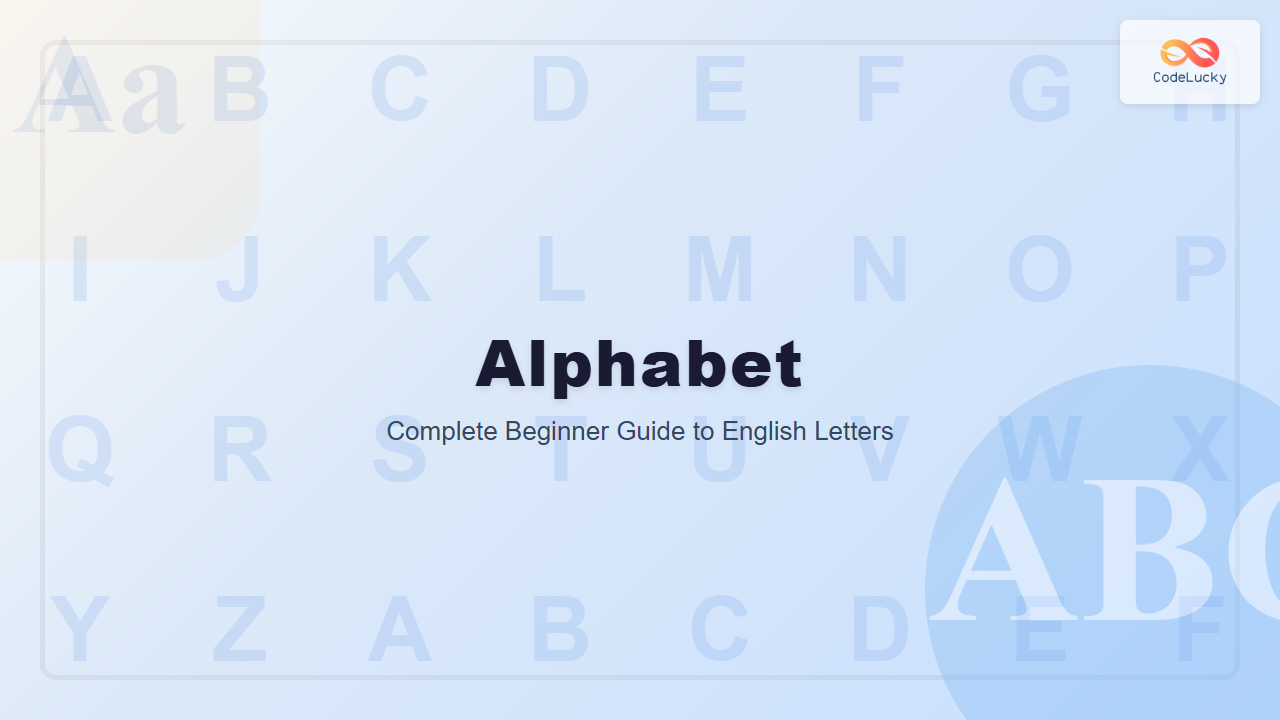
Every English word is made up of these letters combined in various ways. Let’s visualize this simple but powerful system.
List of All 26 English Letters
Here is the full English alphabet in both uppercase and lowercase forms:
| Uppercase | Lowercase | Example Word |
|---|---|---|
| A | a | Apple |
| B | b | Ball |
| C | c | Cat |
| D | d | Dog |
| E | e | Elephant |
| F | f | Fish |
| G | g | Goat |
| H | h | Hat |
| I | i | Ice |
| J | j | Jug |
| K | k | Kite |
| L | l | Lion |
| M | m | Monkey |
| N | n | Nest |
| O | o | Orange |
| P | p | Pen |
| Q | q | Queen |
| R | r | Rabbit |
| S | s | Sun |
| T | t | Table |
| U | u | Umbrella |
| V | v | Van |
| W | w | Watch |
| X | x | X-ray |
| Y | y | Yellow |
| Z | z | Zebra |
Vowels and Consonants
The alphabet is divided into two groups — vowels and consonants:
- Vowels: A, E, I, O, U
- Consonants: The remaining 21 letters
Vowels are used in almost every English word because they help produce the sound between consonants.

Pronunciation Basics
English pronunciation varies slightly across accents, but each letter has a sound name. Beginners should start by speaking each letter slowly while reading aloud words that begin with it:
A - /eɪ/ as in Apple
B - /biː/ as in Ball
C - /siː/ as in Cat
D - /diː/ as in Dog
...
Listening to native pronunciations helps reinforce correct sounds. Many free tools online let you click on a letter to hear how it’s said.
Uppercase and Lowercase Usage
Knowing when to use uppercase and lowercase letters is essential. Here’s how they are typically used:
- Uppercase letters – At the beginning of sentences or for names (e.g., David, London).
- Lowercase letters – Everywhere else in normal text (e.g., This is a cat.).

Interactive Activity: Build a Word
Try this quick learning challenge! Take three random letters from the alphabet below and make an English word:
Choose any 3 letters: A, B, C, D, E, F, G, H, I, J
Example: Pick C + A + T → CAT 🐱
This helps you connect letters into real words visually and mentally.
Alphabet Order and Learning Tips
- Memorize the alphabet in order using the popular “A to Z” rhythm.
- Write every letter five times for better retention.
- Use flashcards with an image and a letter (A for Apple, B for Ball).
- Practice recognizing letters in books, signs, and websites.

Common Confusing Letters
Certain letters often look similar, especially in lowercase. Here’s what to watch for:
- b vs. d – Mirror shapes
- p vs. q – Rotated versions
- m vs. n – Similar curves
Visualizing helps. Try writing them side-by-side and speaking their names aloud:
b  d
p  q
m  n
Fun Exercises to Practice
- Alphabet Song: Sing A–Z daily for auditory learning.
- Letter Hunt: Find items starting with each letter around you.
- Flashcard Game: Match uppercase with lowercase cards.
Conclusion
Mastering the English alphabet is your first step toward fluency. Once you know your letters well, forming words and reading sentences becomes second nature. Keep practicing every day with reading, writing, and simple games. Soon, English letters will feel completely natural to you!
Next Step: Learn how these letters create English words and syllables in our next guide on CodeLucky.com!