When solving computational problems, clear planning of an algorithm is critical. One of the best ways to design and explain algorithms without language-specific clutter is using pseudocode. Pseudocode is a structured, human-readable, language-neutral way of writing algorithm steps. It helps programmers, students, and professionals convert abstract thinking into structured instructions before writing real code. In this guide, we will explore what pseudocode is, its rules, examples, best practices, and how to write clear algorithm logic using it.
What is Algorithm Pseudocode?
Pseudocode is an informal, high-level description of an algorithm that mimics programming structure without requiring strict syntax. It acts as a bridge between plain English and actual code. Programmers use it to quickly illustrate how a process flows and to ensure everyone understands the flow before implementation.
Key Benefits:
- Readable by both programmers and non-programmers.
- Avoids syntax errors since it’s not tied to any language.
- Helps plan algorithms before coding.
- Great for teaching and documentation.
How to Write Algorithm Pseudocode
While there is no universal strict format, good pseudocode follows common rules:
- Use simple English to describe steps.
- Format with indentation to reflect structure.
- Use keywords like IF, ELSE, WHILE, REPEAT, FOR, etc.
- Avoid syntax of a specific language – keep it abstract.
- Be clear and concise for easy understanding.
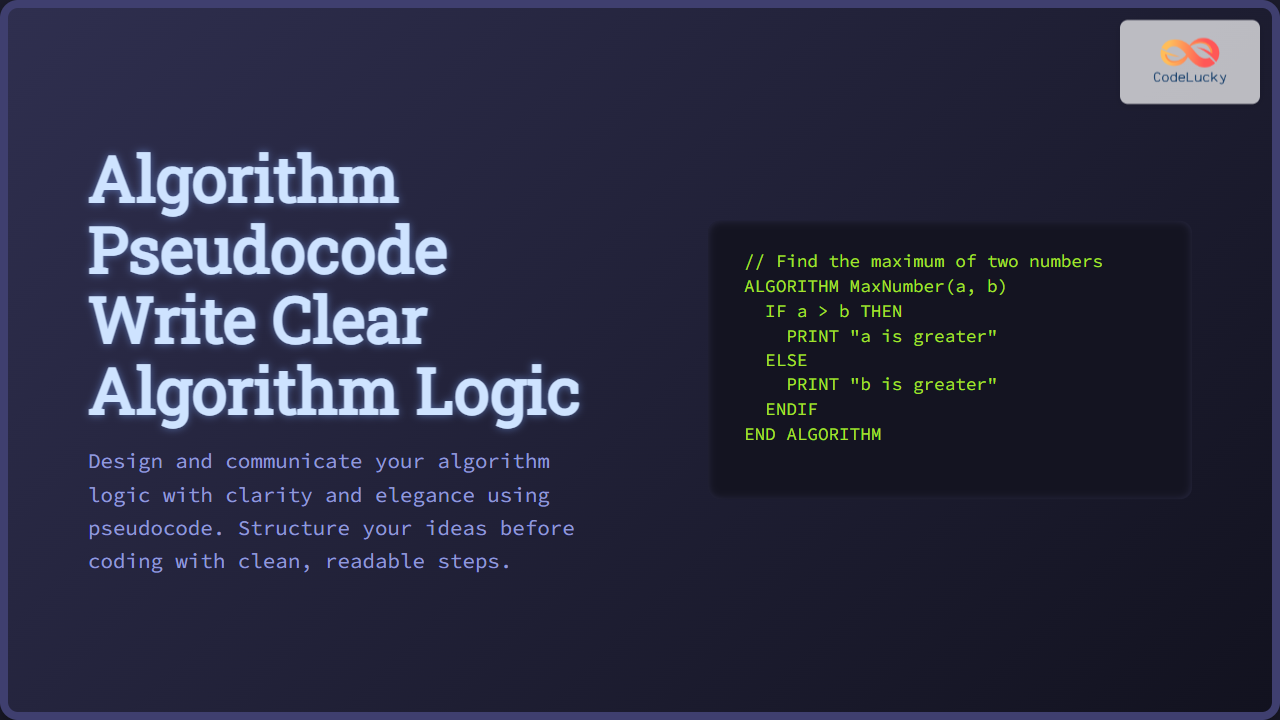
Pseudocode Example 1: Find Maximum of Two Numbers
A simple pseudocode for finding the maximum of two numbers:
Algorithm MaxNumber(a, b)
    IF a > b THEN
        PRINT "a is greater"
    ELSE
        PRINT "b is greater"
    ENDIF
EndAlgorithm
This example clearly highlights decision-making logic. A structured visualization helps even more:
Pseudocode Example 2: Sum of First N Natural Numbers
Another common example demonstrates loops:
Algorithm SumOfN(N)
    SET sum = 0
    FOR i = 1 TO N DO
        sum = sum + i
    ENDFOR
    PRINT sum
EndAlgorithm
This algorithm is useful to demonstrate iteration clearly.

Best Practices for Writing Pseudocode
- Clarity over complexity: Write readable statements.
- Indents matter: Indentation should reflect loops and conditions.
- Consistency: Stick to a common keyword convention (UPPERCASE is recommended).
- Step-by-step approach: Each action should represent one step.
- Don’t include implementation details: Keep it abstract, not code-specific.
Pseudocode Example 3: Linear Search Algorithm
Algorithm LinearSearch(arr, key)
    FOR i = 0 TO length(arr)-1 DO
        IF arr[i] = key THEN
            PRINT "Found at index", i
            EXIT
        ENDIF
    ENDFOR
    PRINT "Not Found"
EndAlgorithm
Interactive Example: Pseudocode to Real Code
Let’s see how pseudocode can easily translate into Python code.
# Pseudocode:
# Algorithm Factorial(N)
#     SET fact = 1
#     FOR i = 1 TO N DO
#         fact = fact * i
#     ENDFOR
#     PRINT fact
# EndAlgorithm

# Python Implementation:
def factorial(n):
    fact = 1
    for i in range(1, n+1):
        fact *= i
    print(fact)

factorial(5)
Output: If N = 5, then the output is 120.
Conclusion
Pseudocode is one of the most effective ways to communicate algorithm logic. By avoiding strict syntax, it opens doors for collaboration, problem-solving, and teaching in a clear manner. Whether describing a simple maximum number check or a complex search algorithm, pseudocode remains a crucial tool for developers and students alike. Once clear pseudocode is ready, implementation in any programming language becomes straightforward and less error-prone.
Next time you design an algorithm, start with pseudocode—it helps you think clearly, explain better, and code efficiently.