In the world of computer science and software development, the efficiency of algorithms is paramount. However, an often overlooked dimension of algorithm performance is how the programming language itself influences the runtime characteristics. This article dives into the algorithm performance comparison by benchmarking common algorithms across popular programming languages such as C++, Rust, Go, Java, Python, and JavaScript.
Understanding these differences helps developers choose the right language for performance-critical applications, optimize code, and better predict real-world behavior beyond theoretical time complexity.
Why Language Choice Matters for Algorithm Performance
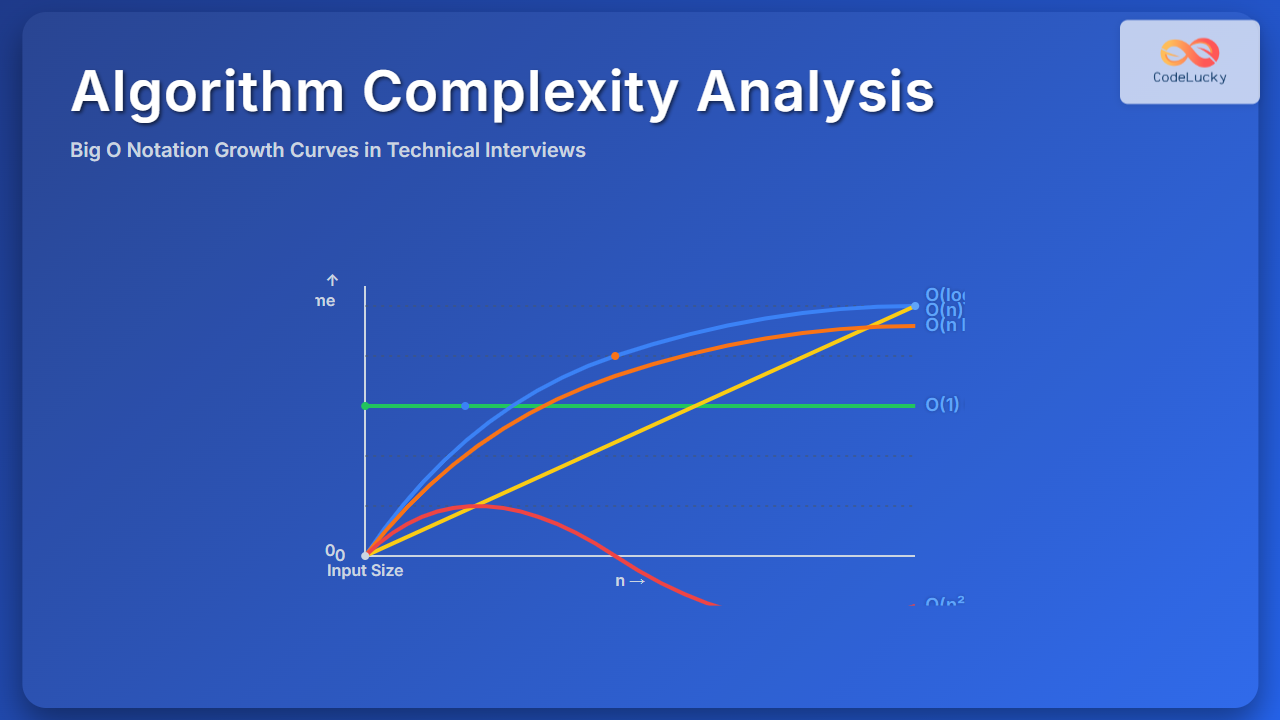
Algorithm complexity describes how the resource usage grows with input size, but the programming language controls the actual speed and efficiency through:
- Compiler optimizations and machine code generation.
- Runtime environment overhead.
- Memory management strategies.
- Standard library and intrinsic function performance.
- Concurrency and parallelism capabilities.
Therefore, even for the same algorithm with identical logic, execution times can vary widely across languages.
Benchmark Setup: Algorithms and Languages
This comparison uses three fundamental algorithms:
- Linear Search: O(n) complexity; simple sequential search.
- Quick Sort: O(n log n) average complexity; representative sorting algorithm.
- Dijkstra’s Shortest Path: O(V log V + E) complexity; graph traversal example.
The languages benchmarked are:
- C++: Compiled, low-level language with manual memory management.
- Rust: Compiled, memory-safe with zero-cost abstractions.
- Go: Compiled, built-in concurrency features.
- Java: JVM-based, JIT compilation.
- Python: Interpreted, dynamically typed.
- JavaScript (Node.js): Interpreted Just-In-Time (JIT) environment.
Example: Linear Search Benchmark
Below is a visual depiction of the linear search algorithm illustrating its step-by-step check through the array elements:

Performance typically scales linearly with input size, but runtime differences reveal the language impact. For instance, C++ and Rust tend to be fastest due to compiled code with minimal overhead, while Python and JavaScript run significantly slower.
Quick Sort: Visualization and Execution Insights
Quick Sort’s recursive partitioning behavior is visualized below to enhance understanding of why it’s efficient on average:

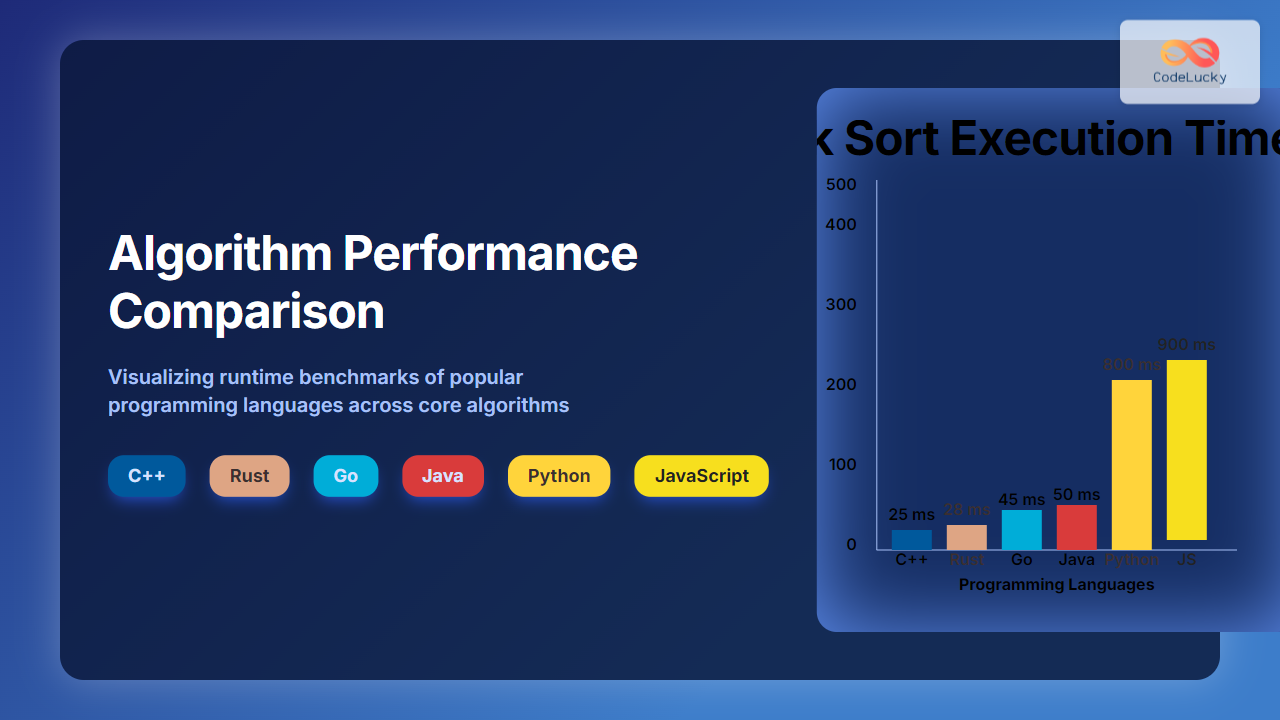
For the benchmarks, C++ and Rust again lead in raw speed. Go and Java perform moderately. Python’s recursive model and JavaScript’s dynamic environment introduce overhead making them slower in tight loops like sorting.
Dijkstra’s Algorithm: Complexity Meets Language Overhead
Dijkstra’s shortest path algorithm relies heavily on priority queues and adjacency lists. Its flow is demonstrated below:

Here, raw CPU performance and efficient memory management drastically affect results. Rust and C++ usually outperform Java and Go, while Python and JavaScript lag due to interpreted runtimes.
Sample Benchmark Data (Hypothetical Execution Times in ms for Input Size N=100,000)
| Algorithm | C++ | Rust | Go | Java | Python | JavaScript |
|---|---|---|---|---|---|---|
| Linear Search | 15 | 17 | 30 | 35 | 250 | 300 |
| Quick Sort | 25 | 28 | 45 | 50 | 800 | 900 |
| Dijkstra’s Algorithm | 40 | 45 | 70 | 80 | 1200 | 1500 |
Interactive Example: Linear Search in JavaScript
Try this sample linear search on a random integer array to observe the search process and output:
<script>
const array = [5, 3, 8, 4, 2, 7];
function linearSearch(arr, target) {
  for (let i = 0; i < arr.length; i++) {
    if (arr[i] === target) {
      return i;
    }
  }
  return -1;
}

const target = 4;
const index = linearSearch(array, target);
console.log('Target found at index:', index);
</script>
This example demonstrates the straightforward logic behind the simplest search algorithm, but also hints at why compiled languages perform faster even on such trivial operations.
Summary and Best Practices
- Compiled languages with system-level memory control (C++, Rust) provide the best raw performance for algorithmic tasks.
- Managed runtime languages like Java and Go strike a balance with good performance and productivity.
- Interpreted languages such as Python and JavaScript offer flexibility and quick prototyping but lag notably on heavy computational tasks.
- Always profile critical algorithms in the target language environment before deployment.
- Consider algorithmic improvements alongside language optimization for overall best results.
Performance measurement requires both theoretical understanding and practical testing. This article presented a strong basis for comparing algorithm performance across languages, helping developers make informed choices tailored to their project needs.