Introduction to Agile Security and DevSecOps
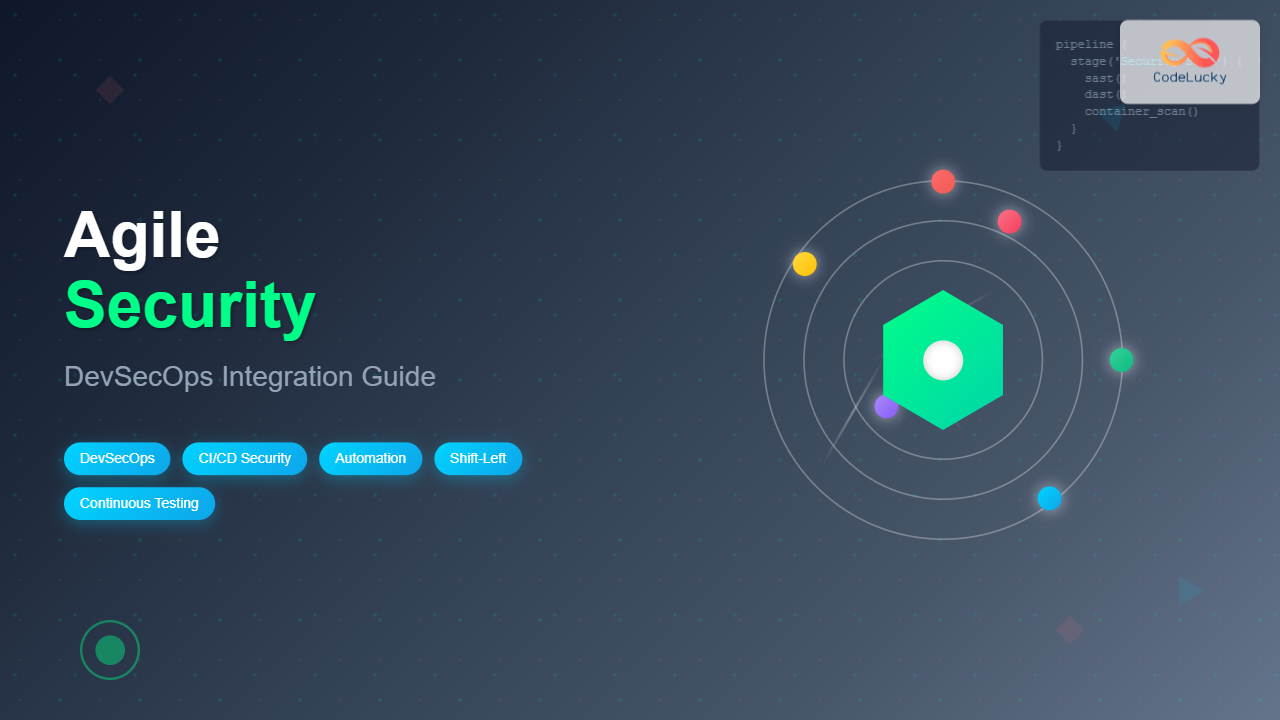
In today’s rapidly evolving digital landscape, traditional security approaches often clash with the speed and flexibility demands of Agile development. Agile Security represents a paradigm shift that integrates security practices seamlessly into Agile methodologies, while DevSecOps extends this concept by embedding security throughout the entire development and operations pipeline.
This comprehensive integration ensures that security becomes a shared responsibility rather than a bottleneck, enabling teams to deliver secure software at the speed of business without compromising quality or protection.
Understanding DevSecOps in Agile Environments
DevSecOps, short for Development, Security, and Operations, represents the evolution of DevOps by incorporating security as a fundamental component rather than an afterthought. In Agile environments, this integration becomes even more critical as teams work in short iterations with frequent releases.
Core Principles of Agile Security
The foundation of successful Agile Security rests on several key principles that align security practices with Agile values:
Security as Code: Security policies, configurations, and tests are written, versioned, and managed as code, enabling automation and consistency across environments. This approach ensures that security measures evolve alongside the application code.
Shift-Left Security: Security considerations are introduced early in the development lifecycle, starting from the planning and design phases. This proactive approach reduces the cost and complexity of addressing security issues later in the development process.
Continuous Security: Security testing and monitoring occur continuously throughout the development pipeline, not just at specific checkpoints. This approach enables rapid feedback and immediate remediation of security vulnerabilities.
Collaborative Security Culture: Security becomes everyone’s responsibility, with developers, operations teams, and security professionals working together throughout the development lifecycle.
Building the DevSecOps Pipeline
Creating an effective DevSecOps pipeline requires careful integration of security tools and practices at every stage of the development lifecycle. The pipeline should be designed to provide continuous feedback while maintaining development velocity.
Planning and Design Phase Security
Security integration begins during the planning phase with threat modeling and security requirements gathering. Teams should conduct regular security reviews during sprint planning sessions, identifying potential security risks and incorporating security user stories into the product backlog.
During this phase, architects and security professionals collaborate to establish security patterns, define secure coding standards, and create security acceptance criteria for user stories. This early involvement ensures that security considerations are built into the application’s foundation rather than bolted on later.
Development Phase Integration
The development phase incorporates multiple layers of security through automated tools and practices. Static Application Security Testing (SAST) tools analyze source code for security vulnerabilities as developers write code, providing immediate feedback through IDE plugins and pre-commit hooks.
Code review processes are enhanced with security-focused checklists and automated security scanning. Dependency scanning tools continuously monitor third-party libraries and frameworks for known vulnerabilities, ensuring that security risks are identified and addressed promptly.
Secure coding practices are reinforced through pair programming sessions, security-focused code reviews, and regular security training for development teams. This approach ensures that security knowledge is distributed across the team rather than concentrated in a few specialists.
Continuous Integration and Security Testing
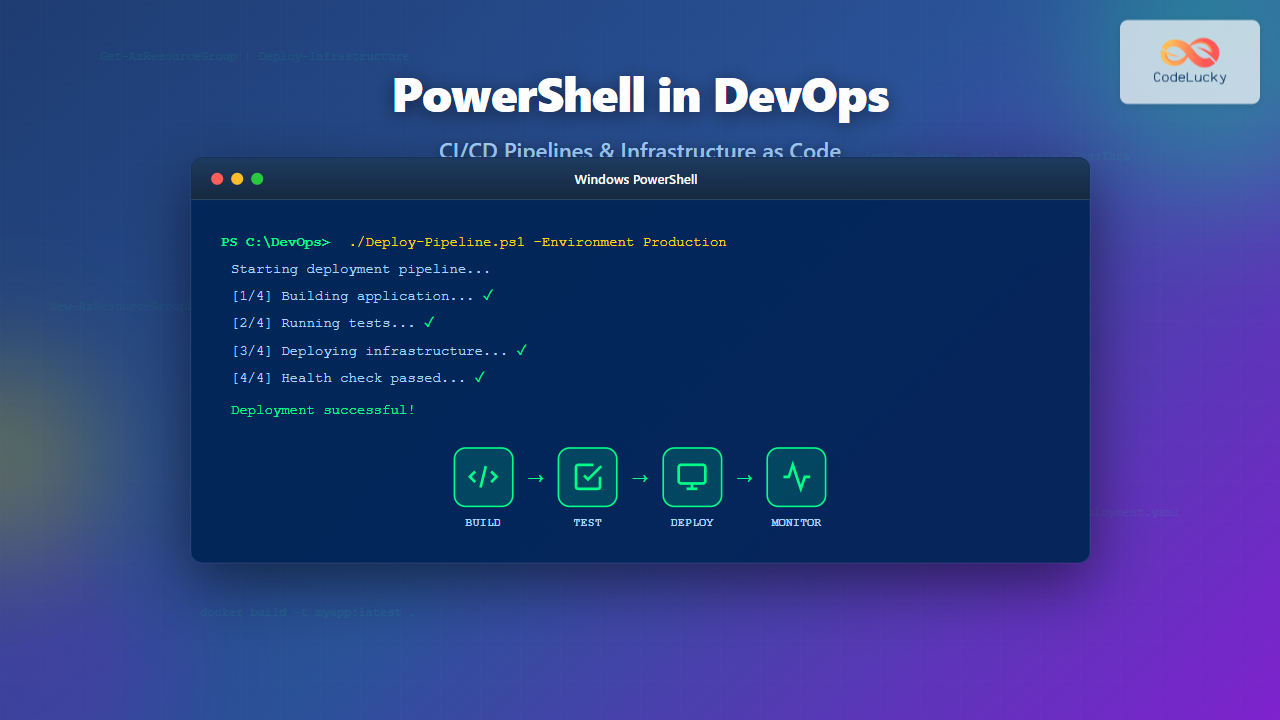
The CI/CD pipeline serves as the backbone of DevSecOps implementation, orchestrating various security tests and validations throughout the build and deployment process.
Automated Security Testing Strategies
Effective security testing in Agile environments requires a multi-layered approach that combines different testing methodologies:
Static Analysis Integration: SAST tools are integrated into the build pipeline to scan source code for security vulnerabilities. These tools analyze code without executing it, identifying potential security flaws such as SQL injection vulnerabilities, cross-site scripting issues, and insecure data handling practices.
Dynamic Security Testing: Dynamic Application Security Testing (DAST) tools test running applications to identify runtime security vulnerabilities. These tools simulate attacks against the application, uncovering issues that may not be apparent in static analysis.
Interactive Application Security Testing: IAST tools combine elements of both SAST and DAST, providing real-time security testing during application execution. This approach offers more accurate results with fewer false positives than traditional testing methods.
Container and Infrastructure Security: Security scanning extends beyond application code to include container images, infrastructure configurations, and deployment manifests. Tools like container vulnerability scanners and infrastructure-as-code security analyzers ensure that the entire application stack is secure.
Security Test Automation Framework
Building a comprehensive security test automation framework requires careful selection and integration of tools that align with the team’s technology stack and security requirements. The framework should provide fast feedback while maintaining high accuracy to avoid slowing down development cycles.
Test automation includes security unit tests that verify security controls and defensive mechanisms, integration tests that validate security across component boundaries, and end-to-end security tests that verify the application’s security posture in production-like environments.
Infrastructure Security and Configuration Management
Modern Agile teams increasingly rely on cloud infrastructure and containerized deployments, making infrastructure security a critical component of the overall security strategy.
Infrastructure as Code Security
Infrastructure as Code (IaC) practices enable teams to manage infrastructure configurations through version-controlled code, providing consistency and repeatability across environments. Security teams can implement security policies and configurations as code, ensuring that security standards are automatically enforced across all deployments.
IaC security scanning tools analyze infrastructure templates and configurations before deployment, identifying potential security misconfigurations such as overly permissive access controls, unencrypted storage, or insecure network configurations.
Configuration drift detection tools monitor deployed infrastructure to ensure that it remains compliant with security policies over time, alerting teams to any unauthorized changes that could introduce security risks.
Container Security in Agile Environments
Container security requires attention to multiple layers, from base images to runtime environments. Security practices include scanning container images for known vulnerabilities, implementing least-privilege access controls, and monitoring container runtime behavior for suspicious activities.
Container registries should be secured with access controls and vulnerability scanning, ensuring that only approved and secure images are deployed to production environments. Runtime security monitoring tools provide visibility into container behavior, detecting potential security incidents in real-time.
Monitoring and Incident Response
Effective Agile Security extends beyond development and deployment to include comprehensive monitoring and rapid incident response capabilities.
Security Monitoring Integration
Security monitoring in Agile environments requires real-time visibility into application behavior, user activities, and system performance. Security Information and Event Management (SIEM) systems aggregate security events from multiple sources, providing centralized monitoring and alerting capabilities.
Application Performance Monitoring (APM) tools are enhanced with security capabilities to detect anomalous behavior that may indicate security incidents. These tools provide insights into application performance and security posture, enabling teams to identify and respond to threats quickly.
Log aggregation and analysis tools collect and analyze security-relevant events from applications, infrastructure, and security tools, providing the foundation for threat detection and forensic analysis.
Agile Incident Response
Incident response in Agile environments emphasizes rapid detection, assessment, and remediation of security incidents. Response teams are cross-functional, including developers, operations personnel, and security specialists who can quickly understand and address security issues.
Incident response playbooks are automated where possible, enabling rapid execution of common response procedures. Post-incident reviews focus on improving security practices and preventing similar incidents in the future, with lessons learned integrated back into the development process.
Team Collaboration and Security Culture
Successful DevSecOps implementation requires fostering a security-conscious culture where all team members understand their role in maintaining application security.
Cross-Functional Team Integration
Security professionals are embedded within development teams rather than operating as a separate function. This integration ensures that security expertise is available throughout the development process and that security considerations are incorporated into daily development activities.
Regular security training and awareness programs help team members develop security skills and stay current with emerging threats and best practices. These programs should be tailored to different roles within the team, providing relevant and actionable security guidance.
Security champions programs identify and train team members who can serve as security advocates within their teams, helping to spread security knowledge and practices throughout the organization.
Communication and Feedback Loops
Effective communication channels ensure that security information flows freely between team members and stakeholders. Regular security reviews, retrospectives, and demos provide opportunities to discuss security topics and share lessons learned.
Feedback loops are established to ensure that security issues are identified and addressed quickly. This includes automated notifications of security scan results, regular security metrics reporting, and continuous improvement of security practices based on team feedback and incident analysis.
Tools and Technologies for DevSecOps
The DevSecOps toolchain encompasses a wide range of tools that automate security practices and provide visibility into security posture throughout the development lifecycle.
Essential Security Tools Integration
Source Code Analysis tools integrate with development environments and CI/CD pipelines to provide continuous security feedback. Popular options include SonarQube, Checkmarx, and Veracode, each offering different strengths in terms of language support, accuracy, and integration capabilities.
Dependency Management tools like OWASP Dependency-Check, Snyk, and WhiteSource scan third-party dependencies for known vulnerabilities and provide automated updates and remediation guidance.
Container Security platforms such as Twistlock, Aqua Security, and Sysdig provide comprehensive container security capabilities, including image scanning, runtime protection, and compliance monitoring.
Cloud Security Posture Management tools help teams maintain secure cloud configurations and detect security misconfigurations across multi-cloud environments.
Automation and Orchestration
Security orchestration platforms automate complex security workflows, enabling rapid response to security events and standardized execution of security procedures. These platforms integrate with existing security tools and provide centralized management of security processes.
API security testing tools ensure that application programming interfaces are secure and properly authenticated. These tools test API endpoints for common vulnerabilities such as broken authentication, excessive data exposure, and injection attacks.
Metrics and Measurement
Effective measurement of security practices enables teams to track progress, identify areas for improvement, and demonstrate the value of security investments.
Security Metrics in Agile Teams
Key security metrics include the number of security vulnerabilities identified and resolved, time to remediation for security issues, and the percentage of security tests automated. These metrics should be tracked over time to identify trends and measure improvement.
Security debt metrics help teams understand the accumulation of unresolved security issues and prioritize remediation efforts. This includes tracking the age of security vulnerabilities, the risk level of outstanding issues, and the rate of new vulnerability introduction.
Compliance metrics demonstrate adherence to security standards and regulatory requirements, providing visibility into the organization’s security posture and risk exposure.
Continuous Improvement
Regular retrospectives focus on security practices and identify opportunities for improvement. Teams should regularly assess their security tools, processes, and practices to ensure they remain effective and aligned with business objectives.
Benchmarking against industry standards and best practices helps teams identify gaps in their security practices and opportunities for enhancement. This includes participating in security maturity assessments and comparing practices with industry peers.
Challenges and Solutions
Implementing Agile Security and DevSecOps practices presents several common challenges that teams must address to achieve success.
Common Implementation Challenges
Tool Integration complexity often creates friction in the development process, with multiple security tools generating conflicting results or creating workflow bottlenecks. Teams should carefully evaluate tool compatibility and integration capabilities before implementation.
False Positive Management becomes critical as automated security tools can generate numerous false positives that waste developer time and create alert fatigue. Effective tuning and customization of security tools helps reduce false positives while maintaining security coverage.
Skills Gap challenges arise when team members lack the security knowledge necessary to effectively implement and maintain security practices. Comprehensive training programs and gradual skill development help address these gaps over time.
Cultural Resistance may occur when team members view security as a barrier to development velocity. Leadership support and clear communication of security value helps overcome resistance and build security-conscious culture.
Solutions and Best Practices
Gradual Implementation approaches help teams adopt DevSecOps practices incrementally, starting with high-impact, low-friction security measures and gradually expanding coverage over time. This approach reduces resistance and allows teams to build confidence with security practices.
Tool Standardization reduces complexity by selecting a core set of security tools that integrate well together and provide comprehensive coverage. Teams should prioritize tools that offer good API integration and support automation.
Regular Training and Knowledge Sharing ensures that team members develop the skills necessary to effectively implement security practices. This includes both formal training programs and informal knowledge sharing through pair programming and code reviews.
Future Trends in Agile Security
The field of Agile Security continues to evolve with new technologies, threats, and practices emerging regularly.
Emerging Technologies and Practices
Artificial Intelligence and Machine Learning are increasingly being applied to security tools to improve accuracy, reduce false positives, and automate threat detection. These technologies enable more sophisticated analysis of security data and faster response to emerging threats.
Zero Trust Architecture principles are being integrated into DevSecOps practices, assuming that no component of the system can be trusted by default and requiring continuous verification of security posture.
Serverless Security presents new challenges and opportunities as teams increasingly adopt serverless computing platforms. Security practices must evolve to address the unique characteristics of serverless environments.
Supply Chain Security becomes increasingly important as teams rely on third-party components and services. New tools and practices are emerging to provide better visibility and control over software supply chain security risks.
Conclusion
Agile Security and DevSecOps integration represents a fundamental shift in how organizations approach software security. By embedding security practices throughout the development lifecycle and fostering a culture of shared security responsibility, teams can deliver secure software at the speed of business.
Success requires careful planning, tool selection, and team development, but the benefits include improved security posture, faster time-to-market, and reduced security-related delays. Organizations that embrace these practices will be better positioned to address evolving security threats while maintaining development agility.
The key to success lies in viewing security not as a constraint on development velocity, but as an enabler of sustainable, high-quality software delivery. With proper implementation and continuous improvement, Agile Security practices become a competitive advantage that enables organizations to innovate rapidly while maintaining robust security protections.
Related Posts
DevOps and Agile: Extending Agility to Operations – Complete Guide for Modern Software Delivery
The evolution of software development has witnessed remarkable transformations, from traditional waterfall methodologies to Agile practices, and now to the...
Agile vs DevOps: Understanding the Relationship Between Two Powerful Software Development Methodologies
In today's fast-paced software development landscape, organizations are constantly seeking methodologies that can accelerate delivery while maintaining quality. Two prominent...
Configuration Management: Infrastructure as Code – Complete Guide to Modern DevOps Practices
Configuration Management and Infrastructure as Code (IaC) have revolutionized how modern organizations approach infrastructure deployment and management in Agile environments....
Agile Contracts: Complete Guide to Flexible Vendor Agreements for Modern Software Development
Understanding Agile Contracts in Modern Software Development Agile contracts represent a fundamental shift from traditional fixed-scope agreements to flexible, collaborative...
Scaled Agile Framework (SAFe): Complete Guide to Enterprise Agile Transformation
What is the Scaled Agile Framework (SAFe)? The Scaled Agile Framework (SAFe) is a comprehensive methodology designed to help large...
Mastering Git: The Cornerstone of DevOps Collaboration
Welcome back to our "DevOps from Scratch" series! In our previous post, we explored the fundamentals of DevOps and its...
DevOps Demystified: A Practical Guide to Transforming Your Development Process
Welcome to the first installment of our "DevOps from Scratch" series! Whether you're a seasoned developer looking to streamline your...
SAFe Certification: Complete Guide to Scaled Agile Framework Credentials and Career Benefits
The Scaled Agile Framework (SAFe) has emerged as the leading enterprise agile methodology, with over 20,000 enterprises worldwide adopting its...
Agile Risk Management: Adaptive Risk Response Strategies for Dynamic Projects
Risk management in traditional project management follows a rigid, plan-driven approach that often fails in today's dynamic software development environment....
Compliance in Agile: Complete Guide to Meeting Regulatory Requirements in Agile Development
Agile development has revolutionized software delivery, but meeting regulatory compliance requirements within Agile frameworks presents unique challenges. This comprehensive guide...
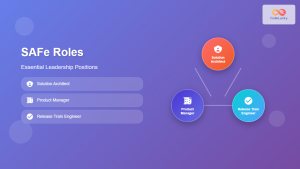
SAFe Roles: Solution Architect, Product Manager, Release Train Engineer – Complete Guide to Key Leadership Positions
The Scaled Agile Framework (SAFe) introduces several specialized roles that are crucial for successful enterprise-level agile implementation. Among these, three...
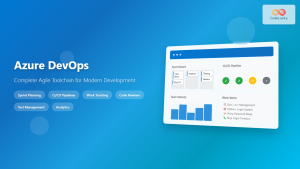
Azure DevOps: Complete Agile Toolchain for Modern Software Development
Azure DevOps has emerged as one of the most comprehensive platforms for implementing Agile methodologies in modern software development. This...