What is an Agile Release Train (ART)?
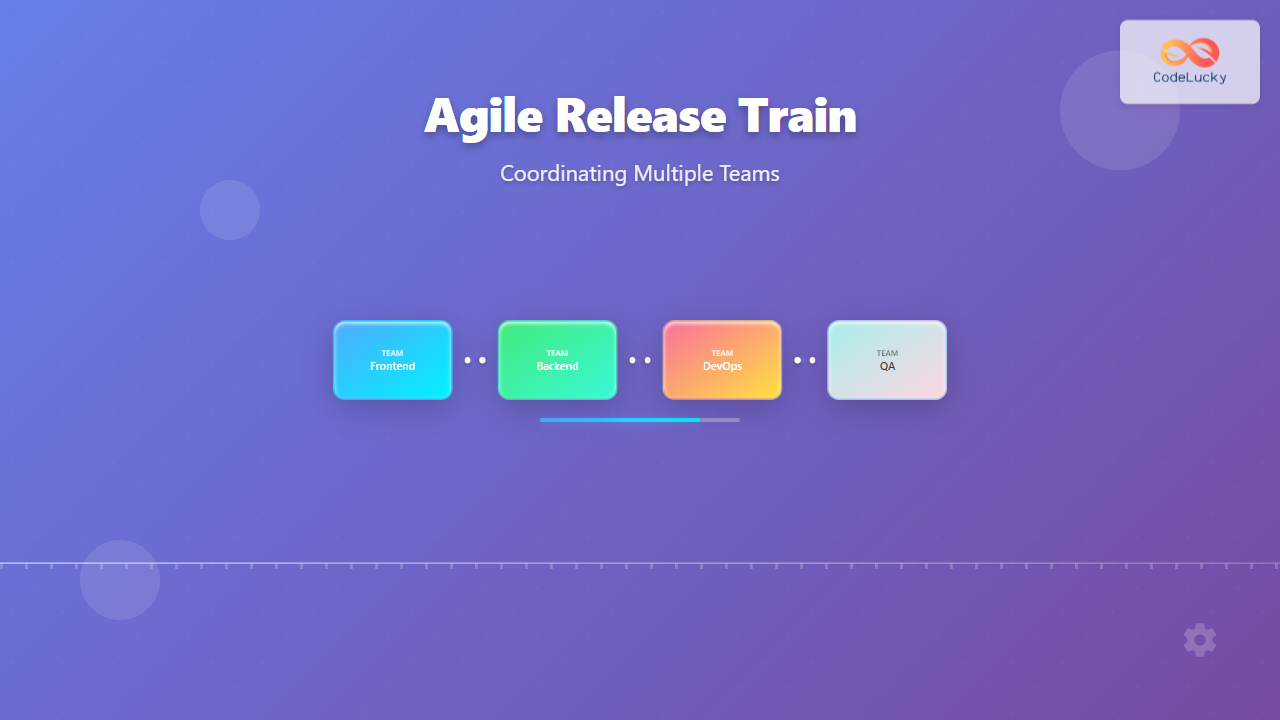
An Agile Release Train (ART) is a long-lived team of Agile teams that work together to deliver value in a regular, predictable cadence. As the primary value delivery construct in the Scaled Agile Framework (SAFe), an ART aligns multiple teams around a shared mission and vision, enabling organizations to scale agile practices beyond individual teams.
Think of an ART as a synchronized system where 5-12 Agile teams collaborate to build large-scale solutions. Each team maintains its autonomy while contributing to common objectives, creating a powerful mechanism for enterprise-level agile transformation.
Core Components of an Agile Release Train
Essential Roles in ART
The success of an Agile Release Train depends on clearly defined roles that facilitate coordination and value delivery:
Release Train Engineer (RTE): Acts as the chief Scrum Master for the ART, facilitating events, managing risks, and ensuring smooth operations across all teams. The RTE serves as a servant leader, coaching teams and removing impediments that span multiple teams.
Product Management: Defines the vision and roadmap for the ART, prioritizes features, and ensures alignment with business objectives. Product managers work closely with product owners to maintain a unified direction.
System Architect: Provides technical leadership and guidance, ensuring architectural consistency across teams and facilitating technical decision-making that affects multiple teams.
Business Owners: Represent stakeholder interests, participate in PI planning, and provide business context for feature prioritization and validation.
Team Structure and Organization
An effective ART typically consists of 50-125 people organized into cross-functional teams. Each team includes developers, testers, and other specialists needed to deliver working software. Teams are structured to minimize dependencies while maximizing collaboration opportunities.
The organizational structure follows these principles: teams are stable and long-lived, cross-functional capabilities exist within each team, and clear interfaces between teams are established to manage dependencies effectively.
Program Increment (PI) Planning: The Heartbeat of ART
Understanding PI Planning
Program Increment Planning is the cornerstone event that synchronizes all teams within an ART. Occurring every 8-12 weeks, PI Planning brings together all team members, stakeholders, and leadership to plan the next increment of work.
During PI Planning, teams collaborate to identify features, estimate work, assess dependencies, and commit to objectives. This face-to-face (or virtual) planning session typically spans two days and results in a coordinated plan that all teams can execute together.
PI Planning Process and Outcomes
The PI Planning process follows a structured agenda that maximizes collaboration and alignment. Day one focuses on vision presentation, team breakouts for initial planning, and draft plan reviews. Day two involves plan refinement, confidence voting, and final commitments.
Key outcomes include PI objectives for each team, a program board showing feature delivery timelines, identification of dependencies and risks, and a confidence vote indicating team commitment levels. These artifacts guide execution throughout the Program Increment.
Coordinating Multiple Teams Effectively
Dependency Management Strategies
Managing dependencies between teams is crucial for ART success. Effective dependency management starts with early identification during PI Planning, where teams map out interconnections and potential bottlenecks.
Successful ARTs implement several dependency management practices: regular Scrum of Scrums meetings to address cross-team issues, architectural runway development to reduce future dependencies, and clear communication protocols for dependency resolution.
Teams also utilize visual management tools like program boards and dependency matrices to maintain visibility into cross-team relationships and proactively address potential conflicts before they impact delivery.
Communication and Collaboration Frameworks
Effective communication is the foundation of successful team coordination. ARTs establish multiple communication channels to ensure information flows freely between teams, stakeholders, and leadership.
Regular ceremonies facilitate ongoing coordination: daily stand-ups within teams, weekly Scrum of Scrums for cross-team synchronization, and System Demos every two weeks to showcase integrated progress. These events create rhythm and predictability in communication patterns.
Additionally, ARTs leverage digital collaboration tools, shared documentation repositories, and common development environments to maintain alignment and reduce friction in cross-team interactions.
Key Benefits of Implementing ART
Enhanced Value Delivery
Agile Release Trains significantly improve value delivery by aligning multiple teams toward common objectives. This alignment eliminates conflicting priorities and ensures that all teams contribute to the same business goals.
Organizations implementing ARTs typically see faster time-to-market, improved quality, and better predictability in delivery. The synchronized approach allows for more efficient resource utilization and reduces waste from misaligned efforts.
Improved Scalability and Coordination
ARTs provide a proven framework for scaling agile practices beyond small teams. The structured approach to coordination enables organizations to maintain agility while growing their development capacity.
The predictable cadence and synchronization points make it easier to coordinate with external dependencies, plan resource allocation, and manage stakeholder expectations across large-scale initiatives.
Common Challenges and Solutions
Overcoming Implementation Hurdles
Organizations often face several challenges when implementing ARTs. Resistance to change, existing organizational silos, and lack of executive support can impede successful adoption.
Successful implementations address these challenges through comprehensive change management, executive coaching, and gradual transformation approaches. Starting with pilot ARTs and demonstrating value before scaling helps build organizational confidence and support.
Managing Team Dependencies
Dependency management remains one of the most complex aspects of ART coordination. Teams may struggle with unclear interfaces, competing priorities, and technical debt that creates unexpected dependencies.
Solutions include investing in architectural runway development, establishing clear team boundaries and interfaces, and implementing robust dependency tracking and resolution processes. Regular retrospectives help teams identify and address recurring dependency issues.
Best Practices for ART Success
Leadership and Culture
Strong leadership commitment is essential for ART success. Leaders must actively participate in ART events, support team autonomy, and model the behaviors they expect from teams.
Creating a culture of collaboration, transparency, and continuous improvement enables teams to work effectively together. This includes celebrating shared successes, learning from failures, and maintaining focus on customer value.
Continuous Improvement
Successful ARTs embrace continuous improvement through regular retrospectives, metrics analysis, and process refinement. Teams regularly assess their performance, identify improvement opportunities, and implement changes.
Key metrics for ART success include team velocity, predictability of delivery, quality metrics, and employee satisfaction. These metrics help identify areas for improvement and track progress over time.
Tools and Technologies for ART Coordination
Digital Collaboration Platforms
Modern ARTs leverage various digital tools to facilitate coordination and collaboration. Agile project management tools, communication platforms, and shared development environments support distributed team coordination.
Popular tools include Jira for work tracking, Confluence for documentation, Slack or Microsoft Teams for communication, and specialized SAFe tools for PI Planning and program management. The key is selecting tools that integrate well and support the team’s workflow.
Metrics and Reporting
Effective measurement is crucial for ART success. Teams use various metrics to track progress, identify issues, and make data-driven decisions about process improvements.
Important metrics include program predictability measures, team velocity trends, quality indicators, and cycle time analysis. These metrics provide insights into ART health and guide improvement efforts.
Future of Agile Release Trains
As organizations continue to embrace digital transformation, Agile Release Trains are evolving to meet new challenges. Remote and hybrid work models are driving innovations in virtual collaboration, while emerging technologies like AI and automation are being integrated into ART processes.
The future of ARTs will likely include more sophisticated tooling for dependency management, enhanced predictive analytics for planning, and greater integration with DevOps and continuous delivery practices. Organizations that master ART coordination today will be well-positioned for future scaling challenges.
Getting Started with Your ART Implementation
Beginning your ART journey requires careful planning and preparation. Start by assessing your current organizational readiness, identifying pilot teams, and securing executive sponsorship for the transformation.
Key steps include training key personnel in SAFe principles, establishing the necessary infrastructure and tools, and planning your first PI Planning event. Remember that ART implementation is a journey, not a destination, requiring ongoing commitment and continuous improvement.
Success with Agile Release Trains comes from understanding that coordination at scale requires both structure and flexibility. By implementing the practices and principles outlined in this guide, organizations can achieve the benefits of coordinated team collaboration while maintaining the agility that makes teams effective.
Related Posts
SAFe Roles: Solution Architect, Product Manager, Release Train Engineer – Complete Guide to Key Leadership Positions
The Scaled Agile Framework (SAFe) introduces several specialized roles that are crucial for successful enterprise-level agile implementation. Among these, three...
Agile Training: Complete Guide to Building High-Performance Team Capabilities
Agile training has become the cornerstone of modern software development and project management success. Organizations worldwide are investing heavily in...
Agile Coaching: Complete Guide to Developing High-Performance Teams and Individuals
What is Agile Coaching? Agile coaching is a specialized discipline that focuses on guiding teams and individuals through their agile...
Agile Team Dynamics: Building High-Performance Teams That Deliver Results
Agile team dynamics form the backbone of successful software development projects, determining whether teams thrive or struggle in today's fast-paced...
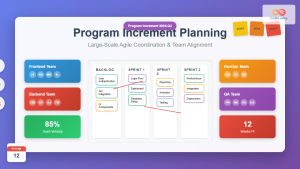
Program Increment (PI) Planning: Complete Guide to Large-Scale Agile Planning Success
What is Program Increment (PI) Planning? Program Increment (PI) Planning represents the heartbeat of large-scale Agile development, serving as a...
Scrum Development Team: Complete Guide to Roles, Responsibilities and Best Practices
What is a Scrum Development Team? The Scrum Development Team is the heart of any successful Agile project, consisting of...
DevOps and Agile: Extending Agility to Operations – Complete Guide for Modern Software Delivery
The evolution of software development has witnessed remarkable transformations, from traditional waterfall methodologies to Agile practices, and now to the...
Facilitation Skills: Essential Guide to Guiding Effective Agile Team Interactions
Effective facilitation is the cornerstone of successful Agile teams. Whether you're a Scrum Master, Product Owner, or team lead, mastering...
Confluence: Complete Knowledge Management Guide for Agile Teams
Knowledge management forms the backbone of successful Agile teams, and Confluence stands as one of the most powerful platforms for...
Spotify Model: Scaling Agile Culture for Modern Software Development Teams
The Spotify Model has emerged as one of the most influential approaches to scaling agile methodologies in modern software development....
Agile in Non-Software: Complete Guide to Implementation Beyond IT Applications
Introduction to Agile Beyond Software Development While Agile methodologies originated in software development, their core principles of flexibility, collaboration, and...
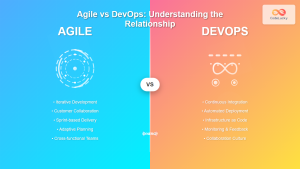
Agile vs DevOps: Understanding the Relationship Between Two Powerful Software Development Methodologies
In today's fast-paced software development landscape, organizations are constantly seeking methodologies that can accelerate delivery while maintaining quality. Two prominent...
- What is an Agile Release Train (ART)?
- Core Components of an Agile Release Train
- Program Increment (PI) Planning: The Heartbeat of ART
- Coordinating Multiple Teams Effectively
- Key Benefits of Implementing ART
- Common Challenges and Solutions
- Best Practices for ART Success
- Tools and Technologies for ART Coordination
- Future of Agile Release Trains
- Getting Started with Your ART Implementation